Chest · Home or gym
Resistance band chest press: a home-gym chest builder
A standing chest press using a resistance band anchored behind you, useful when you do not have a bench, dumbbells or a gym nearby. Here is how to anchor it and press with good form.
- Primary
- Chest
- Secondary
- TricepsFront delts
- Level
- Beginner
- Type
- Compound · Both sides together
- Sets × reps
- 3 × 12-15 reps
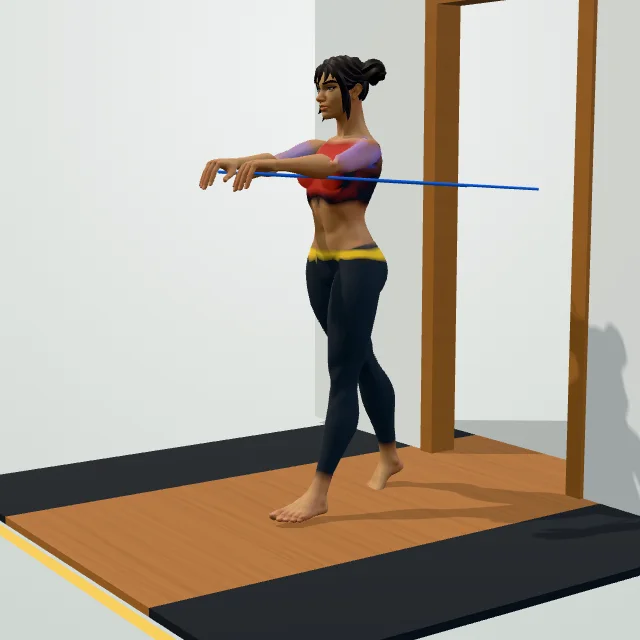
How to do it
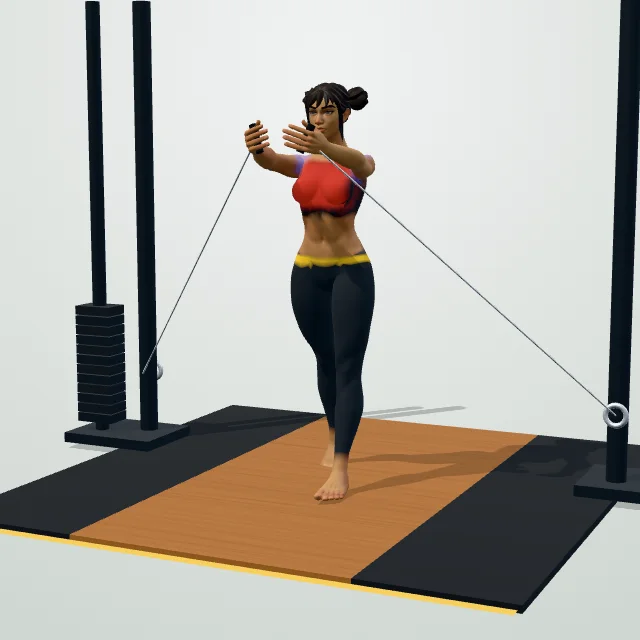
- Anchor the band at chest height behind you and hold a handle in each hand.
- Step forward until there is tension in the band, feet staggered.
- Brace your core with elbows bent at chest height.
- Press both hands forward and slightly inward until arms extend.
- Squeeze your chest at full extension.
- Control the return back to the starting position.
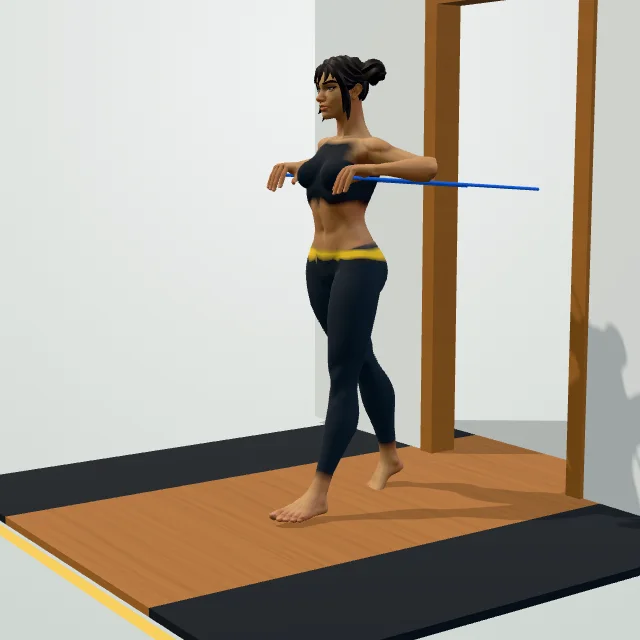
Coach cues
- Anchor behind you, step forward for tension.
- Brace your core, staggered stance.
- Press forward and slightly inward, squeeze your chest.
- Control the band back to the start.
Breathing: Breathe out as you press forward, breathe in as you control the return.
Common mistakes
Make it easier / Make it harder
Sets and reps by goal
| Goal | sets | reps | Rest |
|---|---|---|---|
| Strength | 3–5 | 3–6 | 2–4 min |
| Muscle growth | 3–4 | 6–12 | 90–150 s |
| Endurance | 2–3 | 15–20 | 30–60 s |
The resistance band chest press copies the pressing motion of a bench press or push-up using only a length of elastic resistance band, anchored behind you at chest height. Because bands are light, portable and cheap, it is one of the most searched ways to train the chest at home, in a hotel room, or anywhere a gym is not available.
What muscles does the band chest press work
The chest is the prime mover, driving your arms forward and across your body, with the front delts and triceps assisting elbow extension — the same muscle pattern as a dumbbell or barbell press. The main difference is how the resistance behaves: a band gets harder to stretch the further you press, so the hardest part of the rep is at full extension rather than near your chest, which is the opposite loading curve to a free-weight press.
Benefits of the band chest press
- Trains the chest with no bench, bar or dumbbells needed, which directly answers "can you do chest press with resistance bands" — yes, and it is a legitimate way to build strength, not just a filler exercise.
- Constant tension through the band means the muscle rarely gets a full rest at any point in the rep, which some lifters find increases the burn compared with free weights.
- Joint-friendly, since bands do not have the sudden loading of a dropped dumbbell and let you stop mid-rep safely.
- Easy to adjust by changing the band's resistance level, your stance distance from the anchor, or the anchor height, without needing a rack of different weights.
How to anchor a resistance band for chest press
Loop the band around a sturdy anchor point at roughly chest height — a door anchor, a pole, a squat rack upright, or a securely fixed pull-up bar all work. Face away from the anchor and step forward until you feel tension in the band even with your arms bent at your sides; this starting tension is what makes the exercise effective, so do not stand so close that the band goes slack at the start of the rep. If you have no anchor at all, a variation with the band looped behind your upper back and held in both hands can substitute, though a proper anchor gives a more consistent, controllable resistance curve.
How to do the band chest press correctly
Stance
Stand in a staggered stance, one foot slightly forward, knees soft, core braced — this stops your body swaying forward as you press against the band's pull. Hold a handle in each hand at chest height, elbows bent and just below shoulder level.
The rep
Press both hands forward and slightly inward until your arms are extended in front of you, squeezing your chest at the top of the movement. Control the return, letting your hands come back to the start position without letting the band snap you backward.
What you should feel
You should feel the chest working hardest near full extension, where the band tension peaks, rather than near your chest as with a barbell press. If you feel it mainly in the shoulders, check that your elbows are not drifting too high or too far back at the start of the rep.
Sets, reps and how often to train it
For muscle and strength work, 3 sets of 12–15 reps with a band that makes the last few reps genuinely challenging works well; if you can do more than 20 reps with ease, use a heavier band or stand further from the anchor to increase tension rather than just adding reps indefinitely. Rest 60–90 seconds between sets and train chest pressing 2–3 times a week with a rest day between sessions for the same muscles. It fits well in a resistance band full-body workout, paired with a pulling exercise for balance. See how many sets and reps and progressive overload for building a full plan, or the plan builder to schedule it automatically.
Variations and progressions
Standing further from the anchor increases starting tension and makes the exercise harder without needing a new band; standing closer makes it easier for beginners. You can also change the angle: anchoring the band lower and pressing up and across trains the exercise like an incline press, biasing the upper chest, while a higher anchor pressed downward mimics a decline press. Once bands feel limiting, moving to push-ups or a dumbbell bench press when equipment is available lets you keep progressing with more precise load increases.
Safety and who should modify it
Check your band and anchor for cracks, fraying or a loose knot before every set — a snapped band under tension can whip back toward your face. Anyone with shoulder impingement or a history of shoulder dislocation should keep the elbows lower than shoulder height and avoid pressing directly overhead. Stop if you feel sharp pain in the shoulder, elbow or wrist, and if you are pregnant, recovering from surgery, or have a diagnosed shoulder condition, check with a doctor or physiotherapist before starting a new resistance routine.
Workout plans with this exercise
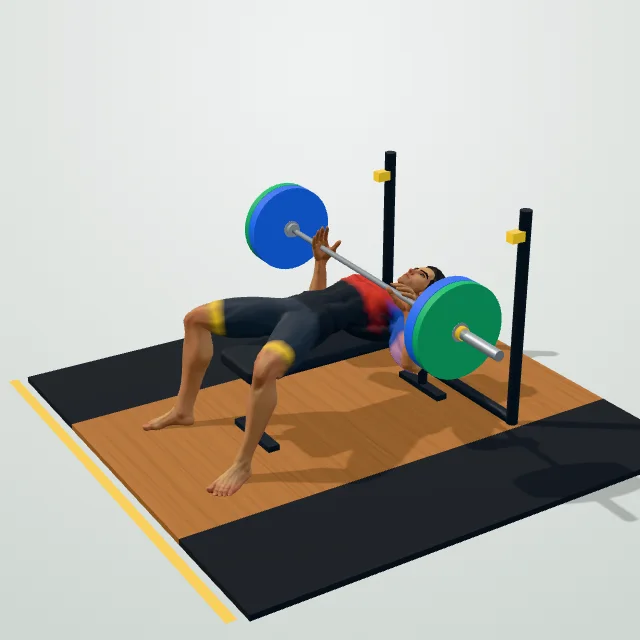
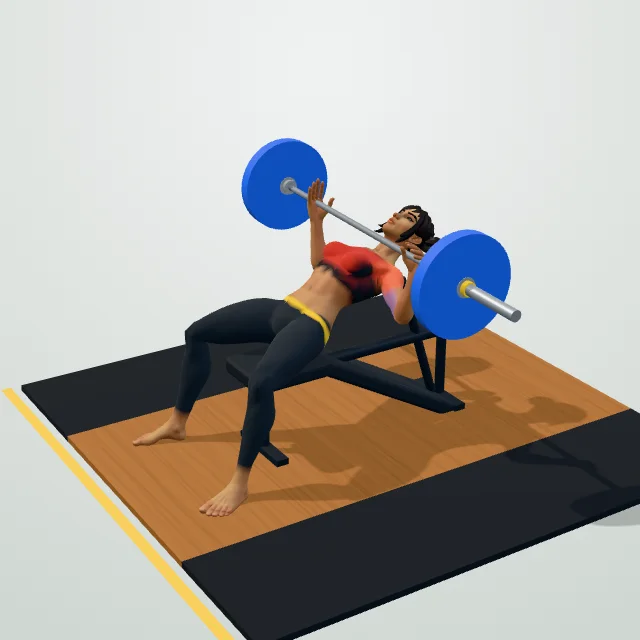
Questions people ask
Can you build chest muscle with a resistance band chest press?
How do you anchor a band for a chest press?
What muscles does the band chest press work?
Is the band chest press as effective as a bench press?
How many band chest press reps should I do?
Can I do a band chest press without an anchor?
Is the band chest press safe for the shoulders?
General fitness information, not medical advice. Check with a doctor or physiotherapist before starting if you have a health condition, an injury or are pregnant. Stop if you feel chest pain, dizziness or sharp pain.