Chest · Home or gym
Dumbbell bench press: press with a fuller range of motion
The dumbbell bench press trains the chest with each arm moving independently, which is friendlier on the shoulders and a natural fit for home gyms. Here is how to set it up and load it.
- Primary
- Chest
- Secondary
- TricepsFront delts
- Level
- Beginner
- Type
- Compound · Both sides together
- Sets × reps
- 3 × 8-12 reps
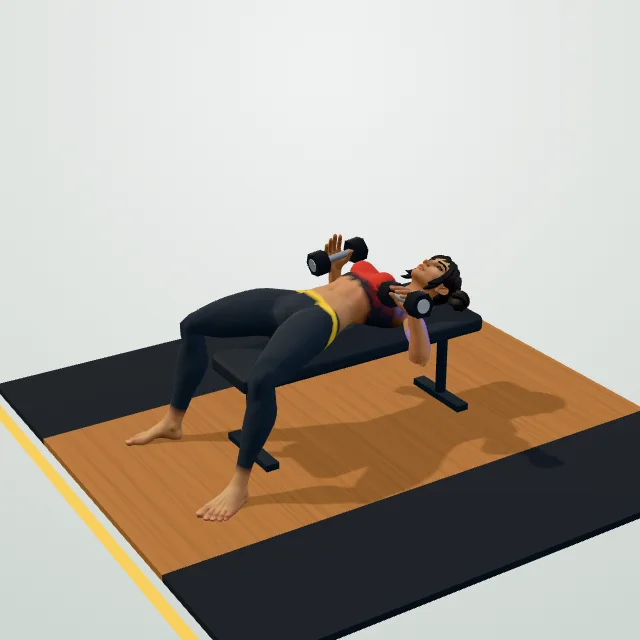
How to do it
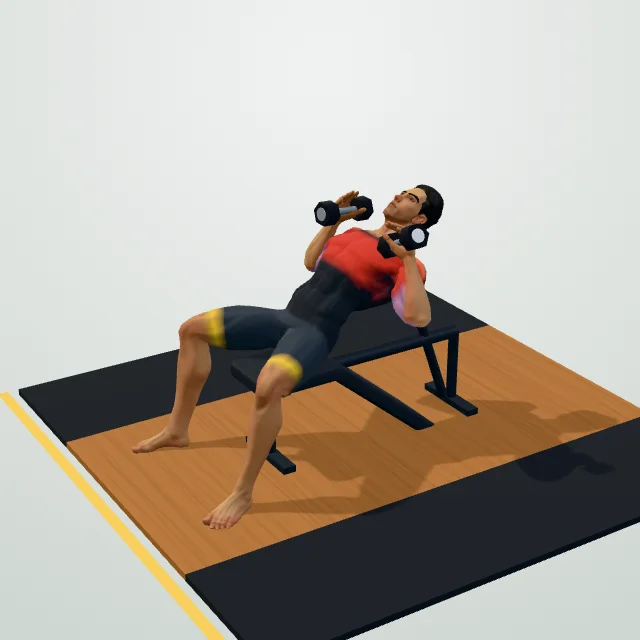
- Sit on the bench holding a dumbbell on each thigh.
- Kick the dumbbells up one at a time as you lie back.
- Position them over your shoulders, arms straight, feet flat on the floor.
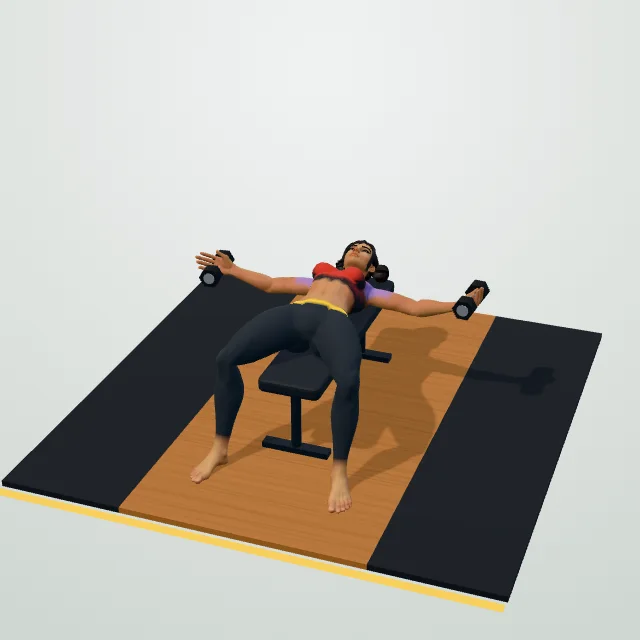
- Lower them until your upper arms are level with your torso.
- Press them back up and slightly inward until your arms are straight.
- Bring your knees up to help lower the dumbbells safely when you finish the set.
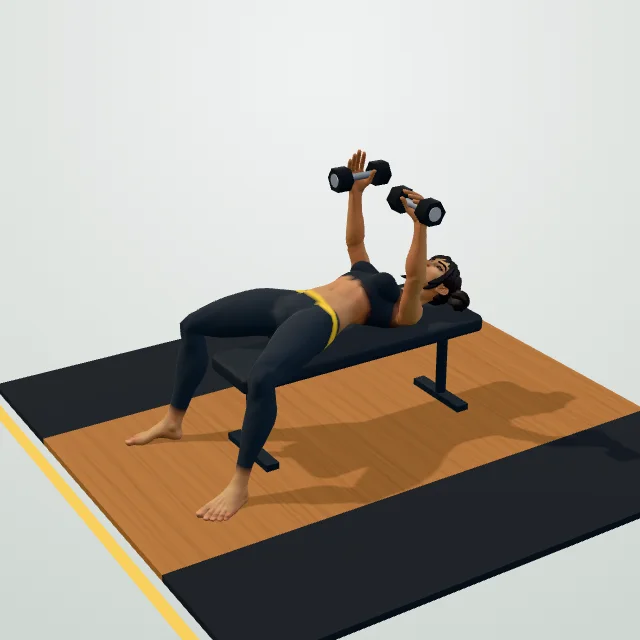
Coach cues
- Shoulder blades together, chest up.
- Lower with control, elbows at about 45°.
- Press up and slightly inward.
- Keep the weights level, do not let them tip.
Breathing: Breathe in as you lower the dumbbells, then breathe out as you press them back up.
Common mistakes
Make it easier / Make it harder
Sets and reps by goal
| Goal | sets | reps | Rest |
|---|---|---|---|
| Strength | 3–5 | 3–6 | 2–4 min |
| Muscle growth | 3–4 | 6–12 | 90–150 s |
| Endurance | 2–3 | 15–20 | 30–60 s |
The dumbbell bench press is a lying chest press done with a dumbbell in each hand instead of a barbell. Because your arms aren't locked to a single bar, each side has to balance and move independently, which trains the chest through a longer, more natural range and is a common first choice for home gyms and beginners.
Muscles worked and why
The main mover is the chest, with the front shoulders and triceps assisting through the press. Because a barbell forces both arms into one fixed path, it can let a stronger side quietly do more work; dumbbells remove that shortcut, since each arm has to control its own weight from setup to lockout, which is why people often describe dumbbells as feeling harder for the same weight per hand.
Benefits
Dumbbells let your hands travel slightly inward and rotate as you press, following a more natural arm path than a fixed bar, and the range of motion at the bottom is longer since there is no bar to stop your hands early. This can mean a bit more chest stretch per rep. It is also a practical option if you train at home: two dumbbells and a bench (or even the floor) let you train the same muscles as a barbell bench press without a rack or a spotter.
Setup and technique
Rest a dumbbell on each thigh, kick them up one at a time as you lie back, and get them into position over your shoulders before you start the set — this getting-into-position step is where most people feel unsteady the first few times, so take it slowly rather than rushing. Keep your feet flat on the floor and your shoulder blades pulled together on the bench.
Lower the dumbbells until your upper arms are roughly level with your torso or just below, with your elbows at about 45–60° from your body. Press them back up and slightly inward, so they finish close together over your chest rather than drifting wide. Keep the path controlled on the way down — dumbbells give you more freedom of movement than a bar, which also means more room to let the weights wobble if you rush.
How to program it
For strength, 3–4 sets of 6–10 reps with 90 seconds to 2 minutes of rest works well; for muscle size, 3–4 sets of 8–15 reps with 60–90 seconds is a common range. Leave 1–2 reps in reserve rather than pushing every set to failure — the RPE and RIR guide explains how to judge that. Add small jumps in weight once your reps feel controlled and complete, following the same idea as progressive overload.
Variations and progressions
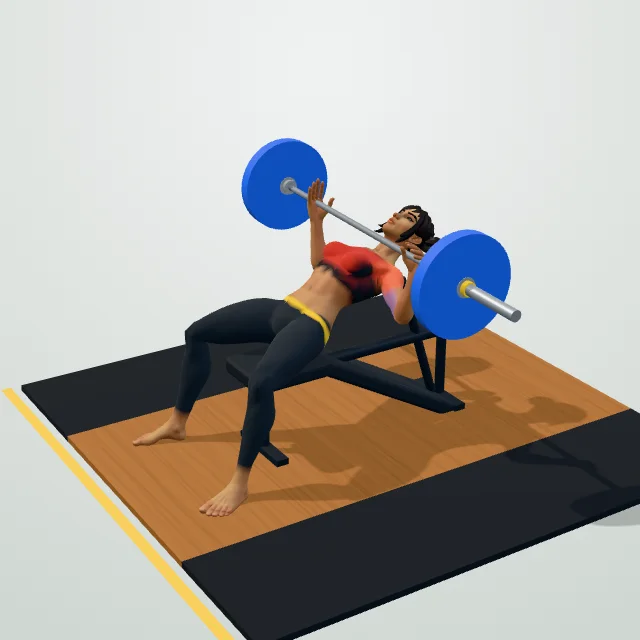
Tilt the bench up for the incline dumbbell press to bring in more upper chest, or press with palms facing each other (neutral grip) if a normal grip bothers your shoulders. For a bodyweight regression, the push-up trains the same muscles with no equipment at all, and for more total load, the barbell bench press lets you progress in smaller, more precise increments once dumbbells run out of weight plates at home.
Dumbbell vs barbell bench press
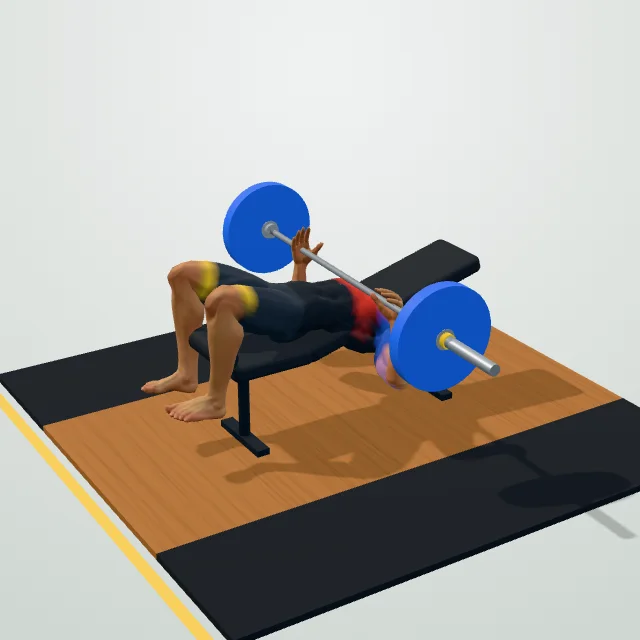
A barbell usually lets you lift more total weight and is easier to track in small steps, which is why it is the standard strength-testing lift. Dumbbells trade some of that raw loading capacity for a longer range of motion, independent arm control, and an easier, safer way to train close to failure without a spotter — you can simply drop the dumbbells to the sides if a rep fails. Many programs use the barbell as the main strength lift and dumbbells as an accessory, or the other way around for lifters who feel better on dumbbells.
Safety: who should modify it
Getting heavy dumbbells into and out of position is one of the riskier parts of this lift, so use a weight you can control confidently through that step, and ask a training partner for a hand with heavier loads. If you feel pinching at the front of the shoulder, try a neutral (palms-facing) grip or shorten the range slightly. Warm up with a lighter set before your working weight, and increase load in small, gradual steps.
Questions people ask
What muscles does the dumbbell bench press work?
Is dumbbell bench press better than barbell bench press?
How do I get dumbbells into position for the bench press?
Can I do dumbbell bench press without a bench?
How much weight should I use for dumbbell bench press?
Why do dumbbells feel harder than a barbell for the same weight?
Is the dumbbell bench press a good beginner exercise?
General fitness information, not medical advice. Check with a doctor or physiotherapist before starting if you have a health condition, an injury or are pregnant. Stop if you feel chest pain, dizziness or sharp pain.