Chest · Home or gym
Incline dumbbell press: upper chest with a natural path
The incline dumbbell press builds the upper chest while letting each arm find its own path, which many lifters find easier on the shoulders than an incline barbell press.
- Primary
- ChestFront delts
- Secondary
- Triceps
- Level
- Beginner
- Type
- Compound · Both sides together
- Sets × reps
- 3 × 8-12 reps
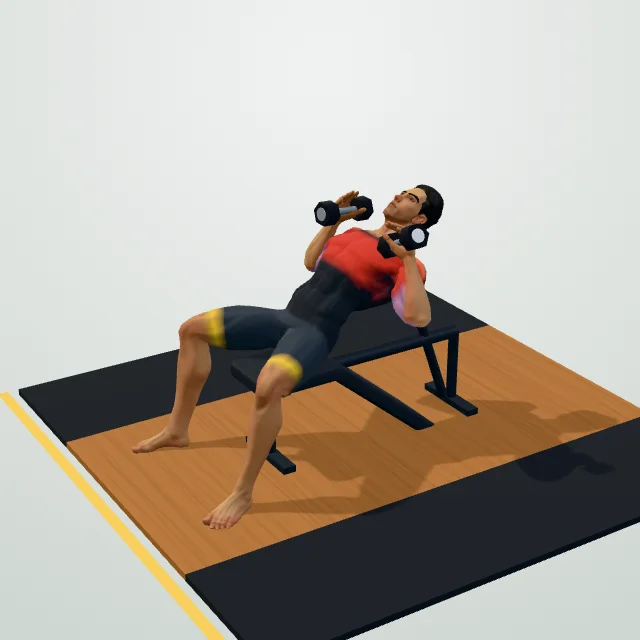
How to do it
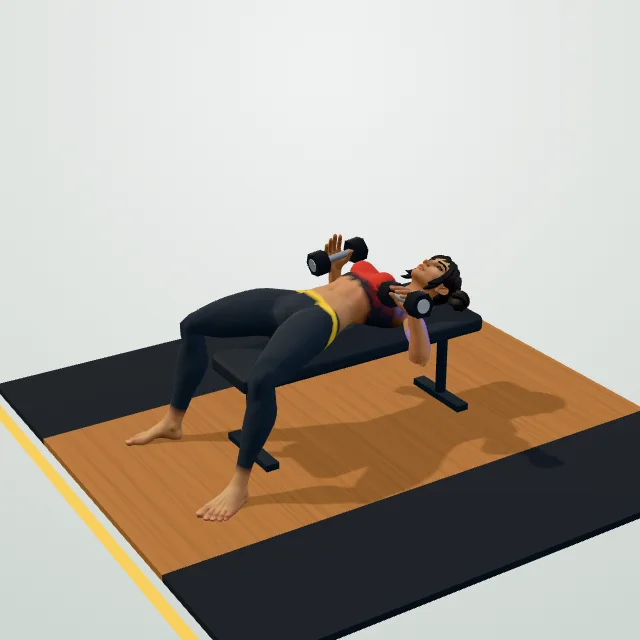
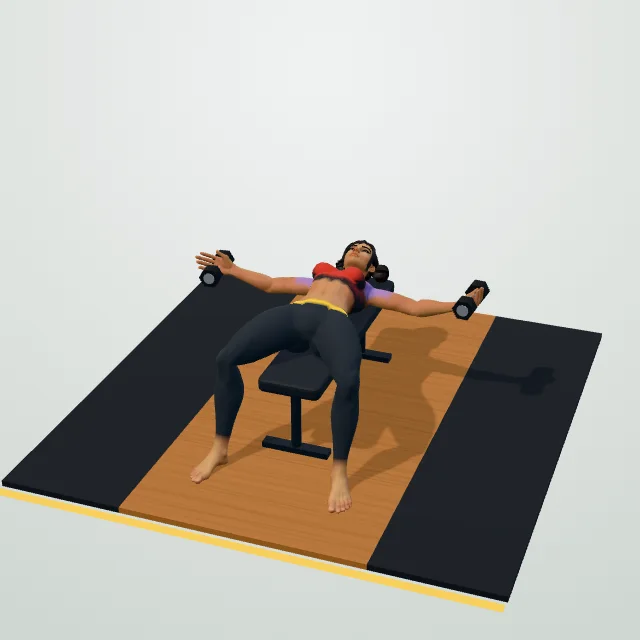
- Set the bench to 15–30° and sit with a dumbbell on each thigh.
- Kick the dumbbells up one at a time as you lie back.
- Hold them over your upper chest, arms straight, feet flat on the floor.
- Lower them until your upper arms are level with your torso.
- Press them back up and slightly inward until your arms are straight.
- Bring your knees up to lower the dumbbells safely once you finish.
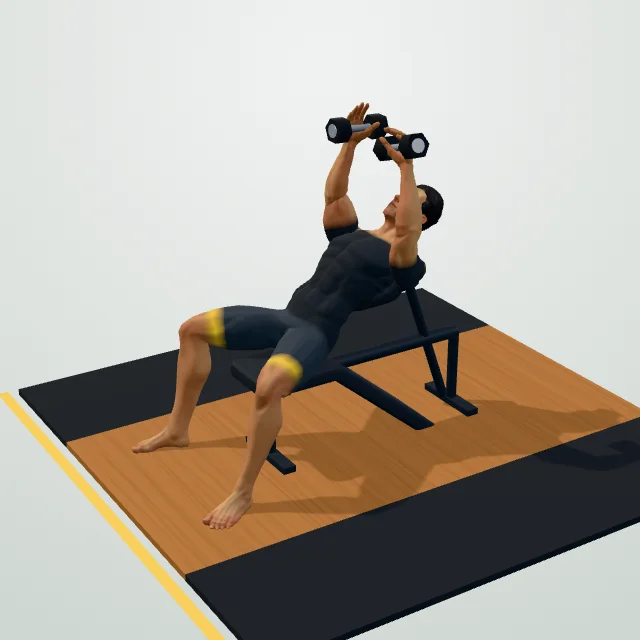
Coach cues
- Shoulder blades set, chest lifted.
- Lower to a stretch across the upper chest.
- Elbows at about 45°, not flared wide.
- Press up and slightly inward.
Breathing: Breathe in as you lower the dumbbells to your upper chest, then breathe out as you press up.
Common mistakes
Make it easier / Make it harder
Sets and reps by goal
| Goal | sets | reps | Rest |
|---|---|---|---|
| Strength | 3–5 | 3–6 | 2–4 min |
| Muscle growth | 3–4 | 6–12 | 90–150 s |
| Endurance | 2–3 | 15–20 | 30–60 s |
The incline dumbbell press is an upper-chest press done on a tilted bench, using a dumbbell in each hand instead of a barbell. It combines the angle benefit of incline pressing with the freer arm path of dumbbells, and it is a common choice for lifters whose shoulders do not enjoy an incline barbell press.
Muscles worked and why
Tilting the bench pulls in more of the upper (clavicular) fibers of the chest and more of the front shoulders than a flat press, with the triceps finishing the lockout. Because each dumbbell moves independently, your shoulder can settle into whatever rotation feels natural for it, rather than being locked to the fixed path a barbell forces on both arms at once.
Benefits
Most people's upper chest gets far less work than the rest, since flat pressing and push-ups mostly miss it. This exercise fills that gap while giving a longer stretch at the bottom than an incline barbell press allows, since there is no bar to stop your hands early. It is also a useful option if a barbell incline press causes shoulder discomfort — dumbbells let your wrists and elbows find a more comfortable line.
Bench angle and technique
Set the bench between 15° and 30°; lower angles keep more tension on the chest, while steeper settings shift more work onto the shoulders, so try a flatter setting first if you feel this mostly in your shoulders. Get the dumbbells into position the same way as a flat dumbbell press: rest them on your thighs, kick them up one at a time as you lie back, then hold them over your upper chest to start.
Lower the dumbbells until your upper arms are roughly level with your torso, elbows at about 45–60° from your body, feeling a stretch across your upper chest. Press them back up and slightly inward, finishing with the dumbbells close together above your upper chest rather than your face. A neutral grip (palms facing each other) is a good option if a normal, palms-forward grip bothers your shoulders.
How to program it
Use it as your main upper-chest exercise, either first if upper chest is a priority or after flat pressing if it is not. 3–4 sets of 8–12 reps with 60–90 seconds of rest suits most goals; for strength, 3–4 sets of 6–8 reps with slightly longer rest works well. Leave 1–2 reps in reserve rather than grinding every set to failure — see the RPE and RIR guide — and add small amounts of weight as your reps feel solid, in line with progressive overload.
Variations and progressions
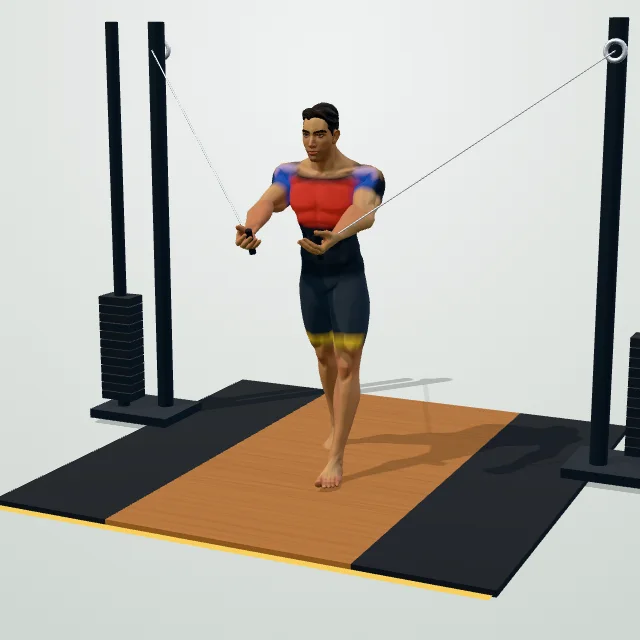
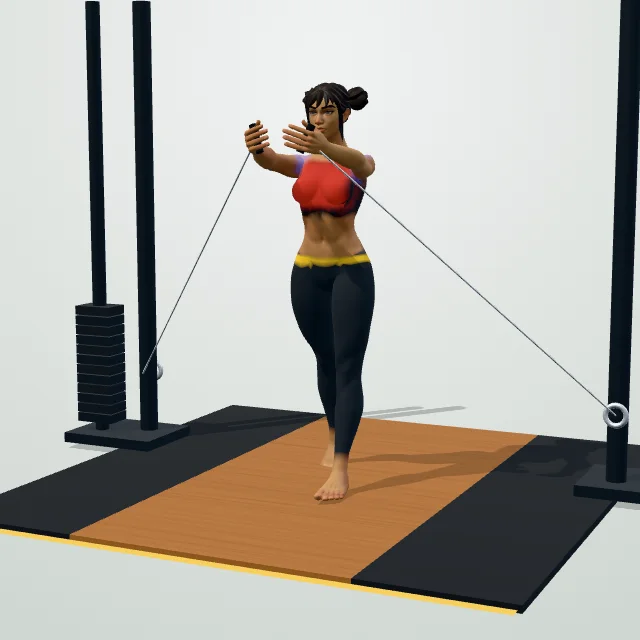
The incline barbell bench press lets you load more total weight once you are ready for it, and the low-to-high cable fly isolates the same upper chest fibers with constant tension and no lockout needed. The decline push-up is a bodyweight option that shifts load toward the upper chest in a similar direction. Try a single-arm version, one side at a time, if you want extra core stability work alongside the press.
Dumbbell vs barbell incline press
The barbell version usually allows heavier total loads and is simpler to track in small increments. The dumbbell version gives a longer range of motion, lets each shoulder rotate into its own natural path, and is generally kinder on the joints — which is why many lifters use dumbbells for incline pressing even if they prefer a barbell for flat pressing.
Safety: who should modify it
Getting dumbbells into position on an incline bench is the trickiest part of the lift, so choose a weight you can control confidently through that step and ask for help with heavier loads. If you feel pinching at the front of the shoulder, lower the bench angle, try a neutral grip, or shorten the range slightly. Warm up with a lighter set first and increase load gradually.
Training it at home
Because it only needs a bench and a pair of dumbbells, the incline dumbbell press is one of the more practical upper-chest exercises for a home gym, where a full power rack for an incline barbell press is often impractical. An adjustable bench that folds flat also doubles as your flat dumbbell bench press and decline setup, which makes it an efficient piece of equipment for a small space. If you do not have an adjustable bench, propping one end of a flat bench on a sturdy block or stack of plates can approximate a low incline in a pinch.
Workout plans with this exercise
General fitness · Beginner
Beginner Full-Body Gym Workout
Build muscle · Intermediate
Push Pull Legs Split (6 Days)
Strength · Intermediate
Upper/Lower Split (4 Days)
Build muscle · Intermediate
4-Day Muscle-Building Workout Plan
Build muscle · Intermediate
5-Day Body-Part Split (Bro Split)
Build muscle · Intermediate
Chest and Triceps Workout
Questions people ask
What muscles does the incline dumbbell press work?
What angle should I set the bench to for incline dumbbell press?
Is incline dumbbell press better than incline barbell press?
How do I get dumbbells into position on an incline bench?
Why does incline dumbbell press feel easier on my shoulders than the barbell version?
Can I do incline dumbbell press with a neutral grip?
How heavy should incline dumbbell press be compared to flat?
General fitness information, not medical advice. Check with a doctor or physiotherapist before starting if you have a health condition, an injury or are pregnant. Stop if you feel chest pain, dizziness or sharp pain.