Chest · Gym
Barbell bench press: how to build a bigger, stronger chest
The barbell bench press is the standard test of upper-body pushing strength and the anchor lift of most chest workouts. Here is the setup, the bar path and the numbers that make it work.
- Primary
- Chest
- Secondary
- TricepsFront delts
- Level
- Intermediate
- Type
- Compound · Both sides together
- Sets × reps
- 4 × 6-10 reps
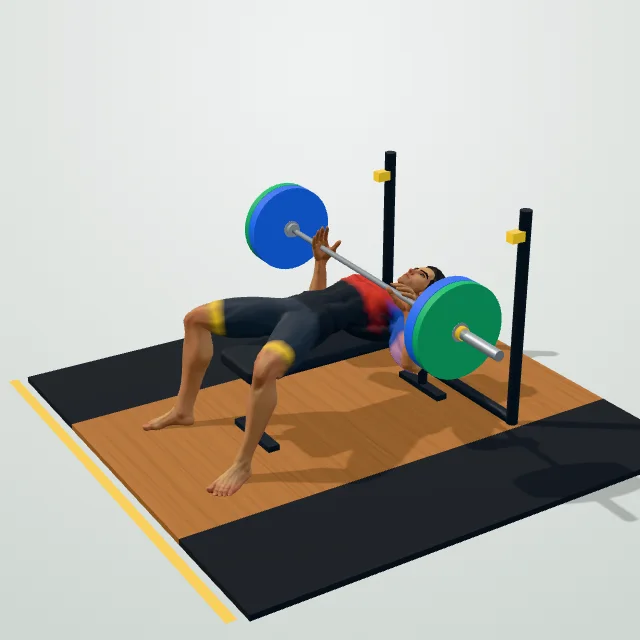
How to do it
- Lie on the bench with eyes under the bar and feet flat on the floor.
- Grip the bar just outside shoulder width and pull your shoulder blades together.
- Unrack the bar over your shoulders, arms straight.
- Lower the bar in a straight line to your lower chest, elbows at about 45–75°.
- Press the bar back up in a slight arc until your arms are straight.
- Re-rack the bar over the hooks after your last rep.
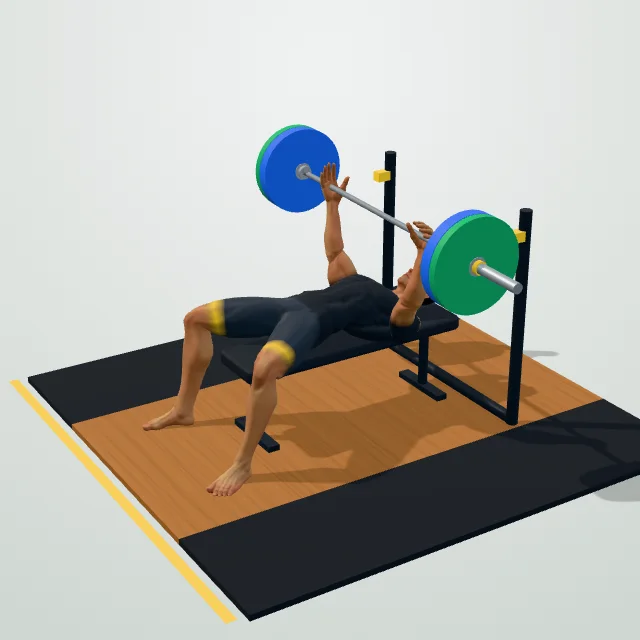
Coach cues
- Shoulder blades pulled together, chest up.
- Bar to lower chest, elbows tucked, not flared.
- Feet planted, whole body tight.
- Drive the bar back up to lockout.
Breathing: Breathe in as you lower the bar to your chest, then breathe out as you press it back up.
Common mistakes
Make it easier / Make it harder
Sets and reps by goal
| Goal | sets | reps | Rest |
|---|---|---|---|
| Strength | 3–5 | 3–6 | 2–4 min |
| Muscle growth | 3–4 | 6–12 | 90–150 s |
| Endurance | 2–3 | 15–20 | 30–60 s |
The barbell bench press is a compound lift for the chest, front shoulders and triceps, done lying on a flat bench and pressing a loaded barbell from the chest to arms-length. It earns its place in almost every gym program because it lets you load the pressing muscles heavier than most other exercises, with a fixed bar path that makes progress easy to track week to week.
Muscles worked and why
The prime mover is the chest (pectoralis major), which drives the arms across and in front of the body. The front shoulders (anterior deltoid) assist through the whole range, and the triceps finish the lockout once the elbows pass 90°. Your upper back and lats work isometrically to keep the shoulder blades pinned to the bench, which is what gives you a stable base to press from — a common reason beginners feel shaky is that this bracing is missing, not that they lack pressing strength.
Benefits
Because the bar path is fixed, the barbell bench press lets you add small amounts of weight reliably, which makes it one of the clearest ways to track upper-body strength over months. It builds pushing strength that carries over to daily tasks (pushing doors, furniture, getting up from the floor) and to other lifts like the overhead press and dips. It's also one of three lifts used in powerlifting competition, so if you like a number to chase, this is the one.
Setup, grip and bar path
Lie back so your eyes sit roughly under the bar. Pull your shoulder blades down and together and keep that squeeze for the whole set — this is your base, not something you do once and forget. Plant your feet flat on the floor, wide enough that your shins are close to vertical, and keep a small, natural arch in your lower back rather than flattening it into the bench.
Grip width is usually just outside shoulder width — wide enough that your forearms are roughly vertical under the bar at the bottom, which protects the shoulders and keeps the bar over your mid-chest rather than your neck or stomach. Unrack the bar over your shoulders, then lower it in a straight line to your lower chest, letting your elbows tuck to about 45–75° from your torso rather than flaring to 90°. Press back up in a slight arc so the bar finishes over your shoulders, not your face.
Keep your feet pushed into the floor throughout — this "leg drive" isn't about kicking the bar up, it's about keeping your whole body tight so more of your effort goes into the bar instead of leaking out through a loose torso.
How to program the bench press
For strength, 3–5 sets of 3–6 reps with 2–3 minutes of rest lets you lift heavier and recover between sets; for muscle size, 3–4 sets of 6–12 reps with 60–90 seconds of rest is the more efficient range. Either way, pick a weight that leaves 1–3 reps in reserve on your working sets rather than grinding out a maximal single every session — that's the RPE approach used across the RPE and RIR guide. Most lifters bench 2–3 times a week as part of a wider push routine; add small jumps in weight (about 2.5–5%) once you can complete all your reps with good form, which is the idea behind progressive overload.
Variations and progressions
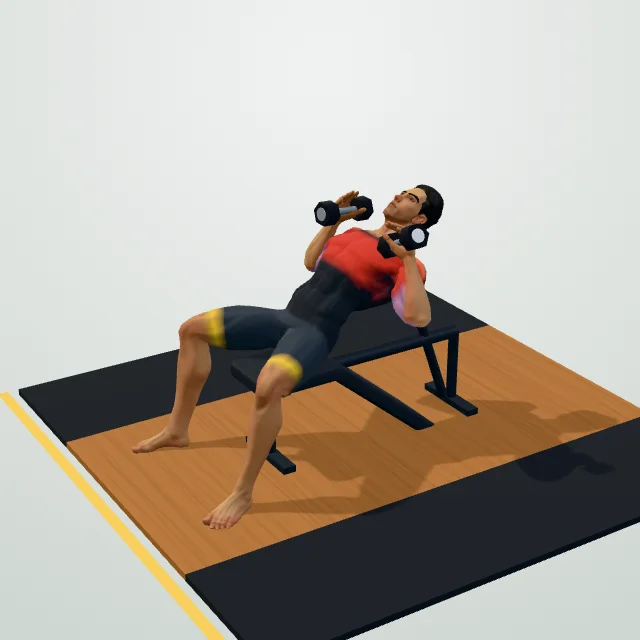
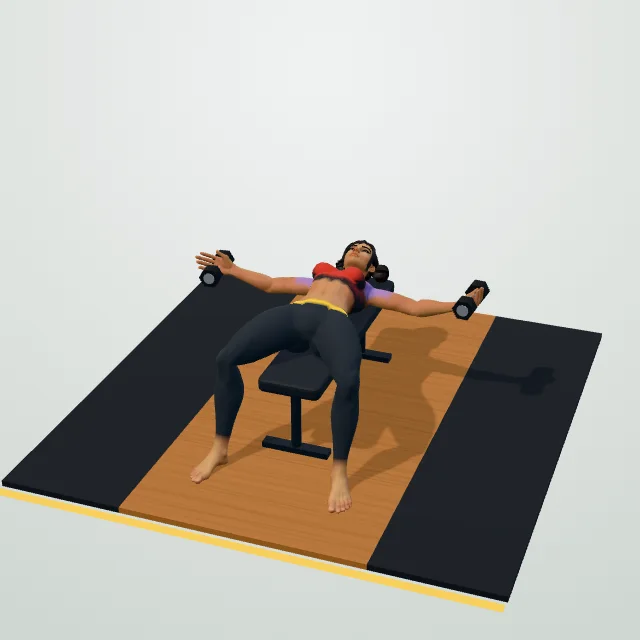
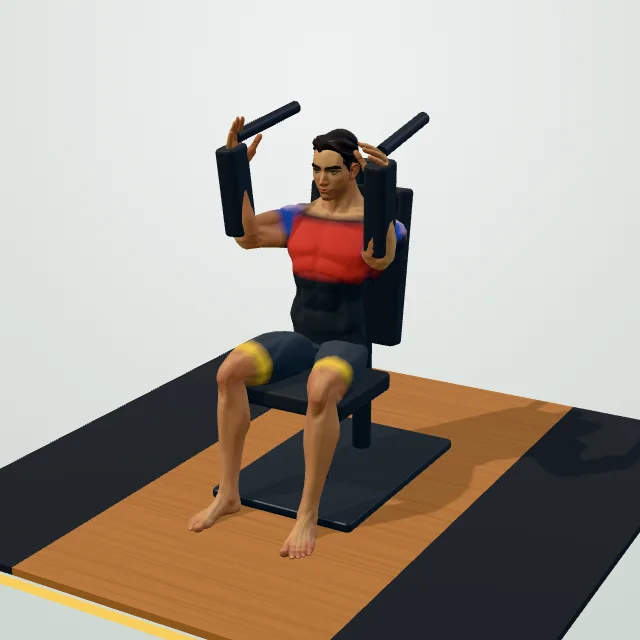
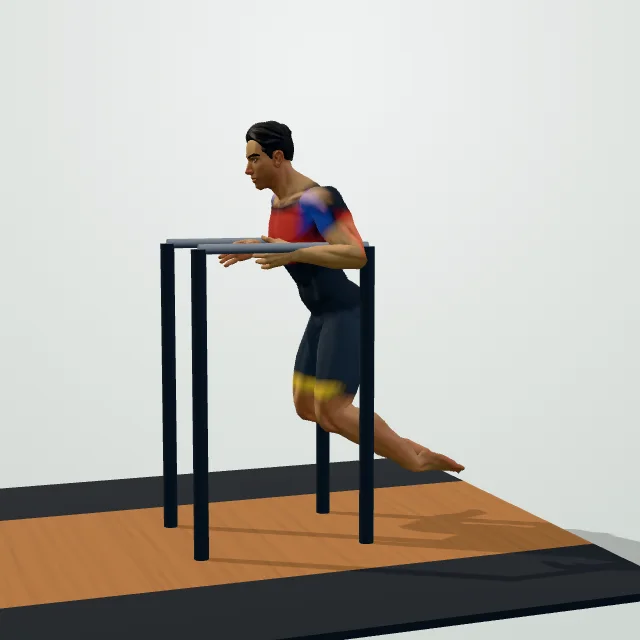
Change the bench angle to shift the emphasis: the incline bench press brings in more upper chest and shoulder, and the decline bench press shortens the range and leans on the lower chest. If you train at home or don't have a rack and spotter, the dumbbell bench press gives each arm an independent, slightly longer range of motion, and the push-up works the same muscles with just your bodyweight. Machines like the chest press machine are a safer way to train close to failure without a spotter.
Barbell vs dumbbell bench press
The barbell usually lets you lift more total weight and is easier to track in small increments, which is why it's the standard strength-testing lift. Dumbbells let each side move independently, so a slightly weaker side can't be bailed out by the stronger one, and the extra stretch at the bottom can add a bit more chest stimulus per rep. Many lifters use both: barbell for the main strength work, dumbbells as an accessory or for lifters who feel shoulder discomfort with a fixed bar.
Safety: who should modify it
Always bench inside a rack with the safety pins set just below chest height, or with a spotter, especially as weights get heavy — getting pinned under a bar is the single biggest risk with this lift. If you feel pinching or sharp pain at the front of the shoulder, stop, shorten your range, or switch to dumbbells or a machine press for a while and check with a physiotherapist if it doesn't settle. People with uncontrolled high blood pressure or heart conditions should avoid holding their breath on heavy near-maximal lifts; breathe out on the press instead. Warm up with a few light sets before loading up, and increase weight gradually, in roughly 5–10% steps.
Workout plans with this exercise
Build muscle · Intermediate
Push Pull Legs Split (6 Days)
Strength · Intermediate
Upper/Lower Split (4 Days)
Build muscle · Intermediate
4-Day Muscle-Building Workout Plan
Build muscle · Intermediate
5-Day Body-Part Split (Bro Split)
Strength · Intermediate
5×5 Strength Program
Build muscle · Intermediate
Chest and Triceps Workout
Questions people ask
What muscles does the barbell bench press work?
How much should a beginner bench press?
Is the barbell bench press better than dumbbells?
How do I bench press without a spotter?
Why do my shoulders hurt during bench press?
What is a good grip width for bench press?
How often should I bench press each week?
General fitness information, not medical advice. Check with a doctor or physiotherapist before starting if you have a health condition, an injury or are pregnant. Stop if you feel chest pain, dizziness or sharp pain.