Chest · Home, no equipment
Push-up: the no-equipment chest exercise that scales
The push-up needs no equipment and scales from a wall to a weighted vest, which is why it stays in almost every home workout. Here is the form that makes it count.
- Primary
- Chest
- Secondary
- TricepsFront deltsAbs
- Level
- Beginner
- Type
- Compound · Both sides together
- Sets × reps
- 3 × 8-15 reps
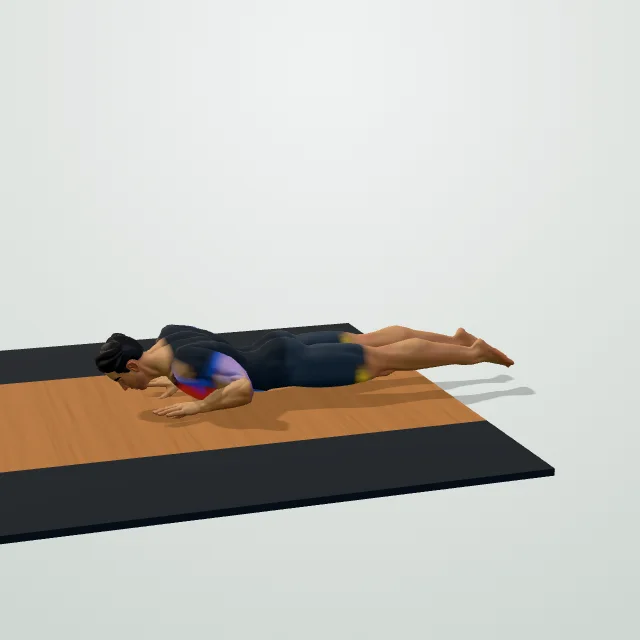
How to do it
- Set hands slightly wider than shoulder width, fingers forward.
- Straighten your body from head to heels, brace your abs and glutes.
- Lower your chest toward the floor, elbows at about 45°.
- Keep your body straight, do not let your hips sag or pike.
- Press back up until your arms are straight.
- Repeat, keeping the same body line every rep.
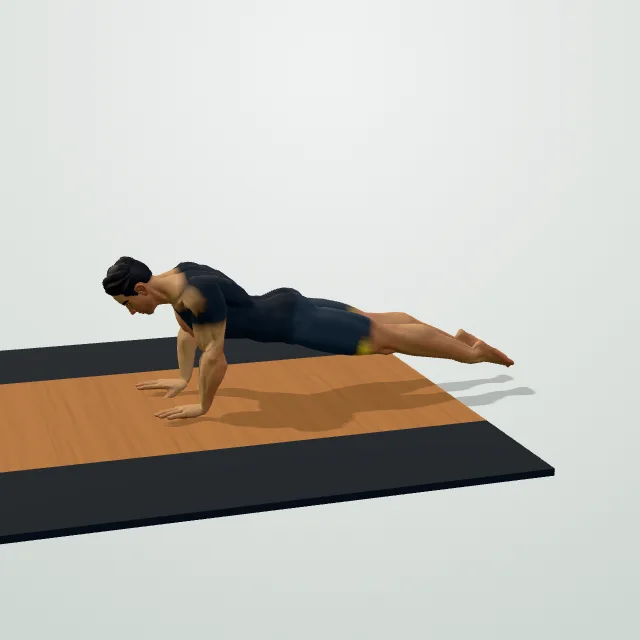
Coach cues
- Body straight, head to heels.
- Lower with elbows at about 45°.
- Chest close to the floor.
- Press up, keep the body line.
Breathing: Breathe in as you lower your chest to the floor, then breathe out as you press back up.
Common mistakes
Make it easier / Make it harder
Sets and reps by goal
| Goal | sets | reps | Rest |
|---|---|---|---|
| Strength | 4–5 | 3–6 | 2–4 min |
| Muscle growth | 3–4 | 6–12 | 90–150 s |
| Endurance | 2–3 | 15–25+ | 30–60 s |
The push-up is a bodyweight press done face-down, lowering your chest toward the floor and pressing back up, and it remains one of the most useful exercises anywhere because it needs no equipment and scales easily from beginner to advanced. Done with full range and a straight body line, it trains the chest as hard as many machine exercises.
Muscles worked and why
The chest is the prime mover, with the front shoulders and triceps assisting through the press. Your abs and glutes work isometrically to keep your body in a straight line from head to heels — this is why a proper push-up is also a core exercise, not just an upper-body one, and why sagging hips make the whole rep less effective.
Benefits
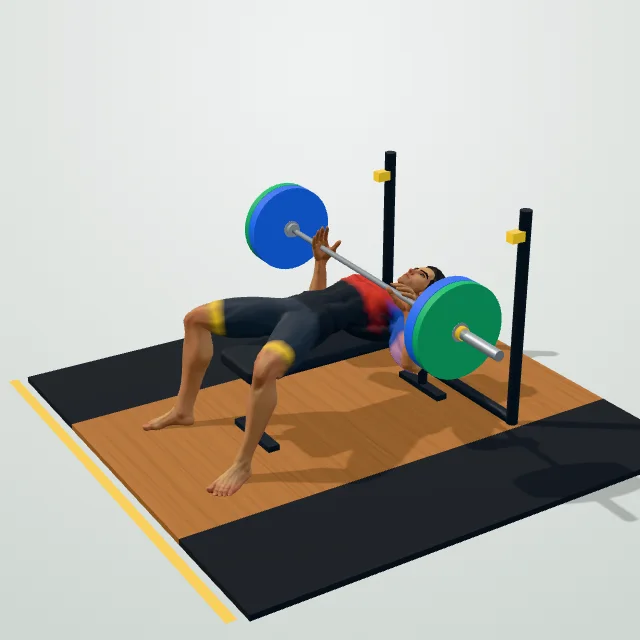
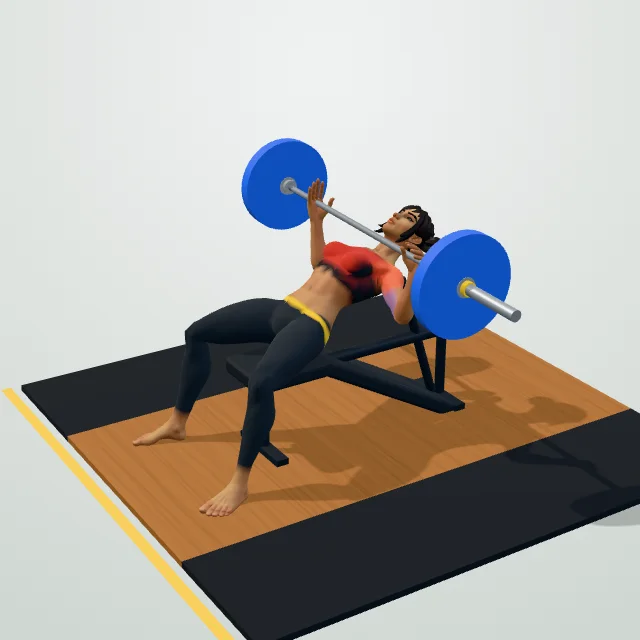
Because it needs no equipment, the push-up works anywhere — hotel rooms, parks, living rooms — and it scales in both directions: elevate your hands for an easier version, elevate your feet for a harder one, or add a weighted vest once bodyweight reps stop being challenging. It also builds the same pressing pattern as a bench press, which is why it is a common substitute when a gym is not available.
Hand position, depth and body line
Set your hands slightly wider than shoulder width, fingers pointing forward, directly under or just outside your shoulders. Keep your body in a straight line from head to heels — squeeze your glutes and brace your abs so your hips do not sag or pike up.
Lower your chest until it is close to the floor, elbows tracking at roughly 45° from your torso rather than flaring straight out to the sides, which stresses the shoulder more than it needs to. Press back up until your arms are straight, without letting your hips lead the movement or your head drop forward. Full range — chest close to the floor — trains the chest through more of its length than a shallow, half-range push-up does.
How to program it
For strength and size, 3–4 sets of 8–15 reps with 60–90 seconds of rest works well; once you can comfortably do more than 20 clean reps, add a harder variation or extra weight rather than just chasing higher rep counts. Leave a couple of reps in reserve on most sets (see the RPE and RIR guide), and progress by adding reps first, then a harder version, following progressive overload.
Progressions for beginners
If a standard push-up is too demanding yet, start with the incline push-up (hands on a bench or step) or the knee push-up, both of which reduce the percentage of your bodyweight you are pressing. Work through easier variations for full, controlled reps before moving to the standard version, then to the decline push-up (feet elevated) once that feels manageable, which increases the load again.
Variations
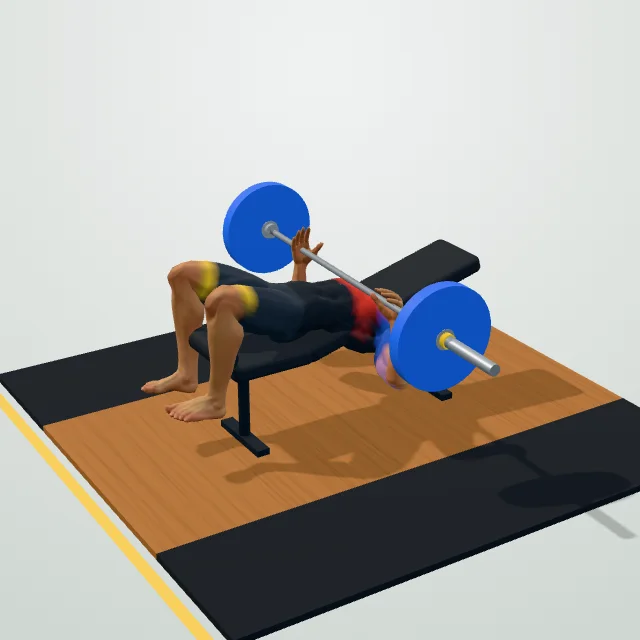
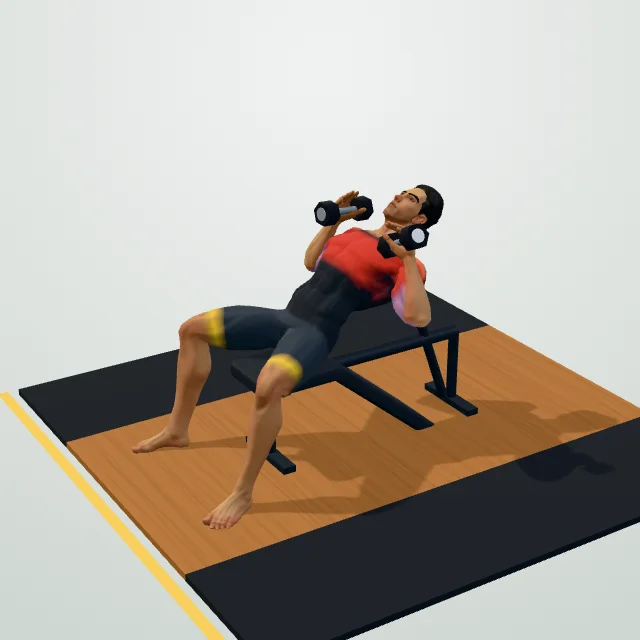
A wider hand position shifts slightly more work to the chest and shoulders; a narrower, diamond hand position shifts more toward the triceps. Elevating your feet (decline) increases the load and shifts emphasis toward the upper chest and shoulders; elevating your hands (incline) reduces the load and is a common regression. For a heavier equivalent once bodyweight push-ups feel easy, the dumbbell bench press lets you keep adding weight in small steps.
Safety: who should modify it
Keep your body straight rather than letting your hips sag, which strains the lower back over many reps. If your wrists hurt, try push-up handles or fists on a soft mat to keep your wrists in a more neutral position. Anyone recovering from a wrist, shoulder or chest injury, or in the later stages of pregnancy, should check with a doctor or physiotherapist about which variation is appropriate before training push-ups regularly.
Push-ups as a fitness test
Because push-ups need no equipment, they are a common measure of upper-body endurance in fitness tests, usually counted as the maximum number of full-range reps completed with a straight body line before form breaks down. A test number is only a snapshot on one day, though — it depends on how rested you are, your bodyweight, and how strictly form is judged, so treat it as one data point rather than a fixed label of your strength. If you want a genuine test number, warm up first, use the same strict form every time, and compare your result to your own past attempts rather than to other people.
Workout plans with this exercise
General fitness · Beginner
30-Day Home Workout Plan (No Equipment)
Build muscle · Intermediate
5-Day Body-Part Split (Bro Split)
Build muscle · Beginner
Full-Body Dumbbell Workout Plan
Fat loss · Intermediate
15-Minute HIIT Workout (No Equipment)
Fat loss · Advanced
20-Minute Tabata Workout
Fat loss · Beginner
4-Week Fat-Loss Workout Plan
Questions people ask
What muscles does the push-up work?
How many push-ups should a beginner do?
How do I do a push-up correctly?
What if I cannot do a full push-up yet?
Why do my wrists hurt during push-ups?
Are push-ups as good as bench press?
How can I make push-ups harder?
General fitness information, not medical advice. Check with a doctor or physiotherapist before starting if you have a health condition, an injury or are pregnant. Stop if you feel chest pain, dizziness or sharp pain.