Legs · Home, no equipment
How to do jumping lunges safely and explosively
Jumping lunges — also called lunge jumps or split jumps — turn a normal lunge into a plyometric move by switching legs mid-air. They build power fast, but they also demand good landing mechanics first.
- Secondary
- CalvesHamstrings
- Level
- Advanced
- Type
- Compound · Alternate sides
- Sets × reps
- 3 × 8-12 reps per side
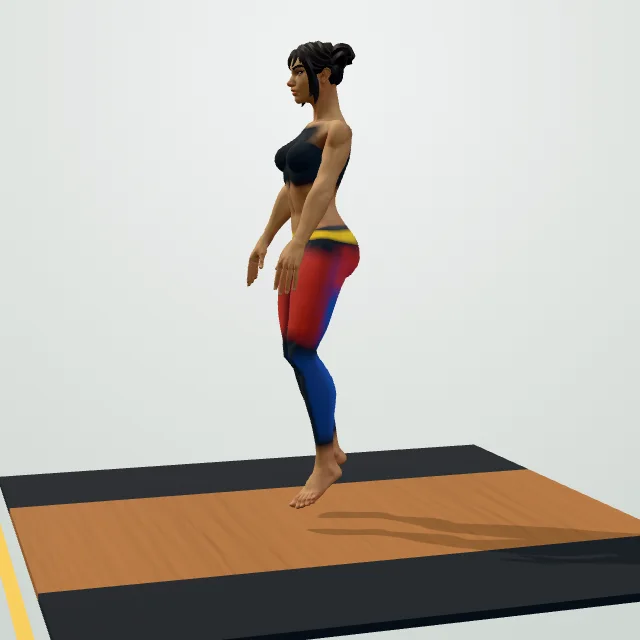
How to do it
- Start in a split stance, front and back knee both bent to about 90 degrees.
- Brace your core and swing your arms back to load the jump.
- Drive through both feet and jump straight up.
- Switch your front and back leg while in the air.
- Land softly on the balls of your feet, absorbing through ankles, knees and hips.
- Sink straight into the next rep, or reset if your balance is off.
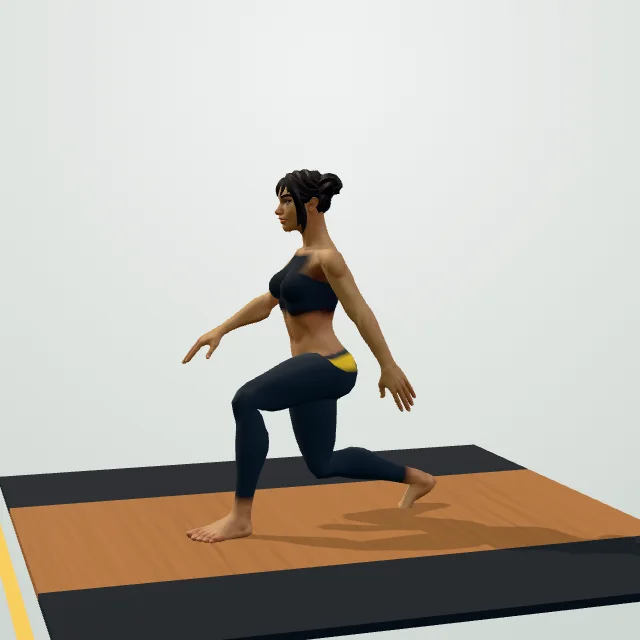
Coach cues
- Bend both knees to about ninety degrees.
- Jump up, switch your legs in the air.
- Land soft, knee over your toes.
- Sink straight into the next rep.
Breathing: Breathe out sharply as you jump, and breathe in as you land and settle into the next rep.
Common mistakes
Make it easier / Make it harder
Sets and reps by goal
| Goal | sets | reps | Rest |
|---|---|---|---|
| Strength | 4–5 | 3–6 | 2–4 min |
| Muscle growth | 3–4 | 6–12 | 90–150 s |
| Endurance | 2–3 | 15–25+ | 30–60 s |
Jumping lunges take the split-stance position of a regular lunge and add an explosive jump that switches your front and back leg in mid-air. Because you leave the ground on every rep, they train the same quads and glutes as a walking lunge but ask for far more power, coordination and landing control, which is why they are usually reserved for people who already lunge well.
What muscles do jumping lunges work?
The quads and glutes of your front leg drive most of the upward jump, while both legs' quads and glutes absorb the landing on the way down. The calves and hamstrings assist with the push-off and with decelerating your body weight, and your core works isometrically the whole time to keep your torso upright as you switch legs. This mix of concentric power and eccentric landing control is what makes jumping lunges feel far more demanding than a standard leg exercise for the same rep count.
Jumping lunges benefits
- Explosive leg power. The jump trains the fast-twitch muscle fibers that slow, controlled lunges do not reach.
- Better landing mechanics. Repeated single-leg landings build the ankle, knee and hip control that carries over to sport and to other jumping movements.
- Cardio and conditioning. Continuous jumping lunges raise your heart rate quickly, making them a useful finisher in a HIIT workout.
- No equipment required. Like most bodyweight exercises, they need only enough room to jump.
Jumping lunges proper form
Start in a split stance, one foot forward and one back, both knees bent to about a right angle as in a static lunge. Drive through both feet to jump straight up, swinging your arms for momentum, and switch your leg position in the air so the opposite leg lands in front. Land softly on the balls of your feet first, letting your ankles, knees and hips bend to absorb the impact, and sink straight back into the next lunge rather than bouncing stiff-legged. Keep your torso upright and your front knee tracking over your toes on every landing, the same as you would in a slow lunge.
Quality of landing matters more than height or speed. If your knees are wobbling inward or your torso is tipping forward by the last few reps, that is the signal to stop the set rather than grinding out more.
How to program jumping lunges
| Goal | Sets | Reps (total, both legs) | Rest |
|---|---|---|---|
| Power development | 3-4 | 6-10 | 90-120 sec |
| Conditioning / HIIT | 3 | 20-30 sec of work | 30-45 sec |
Because jumping lunges are a high-impact, high-skill plyometric move, quality reps beat high volume — stop a set as soon as your landings lose control, well before muscle fatigue alone would stop you. Two sessions a week is enough, placed early in a leg or full-body workout while you are fresh, never on tired legs at the end of a long session. Build up from forward lunges and jump squats before adding jumping lunges to your program.
Jumping lunge variations and progressions
If full jumping lunges are too much impact right now, regress to alternating forward lunges done quickly without leaving the ground, then add a small hop, before progressing to a full jump. Loading jumping lunges with dumbbells or a barbell is not recommended for most people — the extra weight increases landing forces on the knees and spine without much extra power benefit; if you want to load this pattern, a heavier reverse or forward lunge done slowly is a safer choice. Advanced athletes sometimes add a jumping side lunge or lengthen the set toward a short conditioning interval instead of adding weight.
Safety and who should modify it
Jumping lunges are a high-impact, advanced exercise. Master bodyweight lunges and jump squats with good knee control first, and build up gradually.
Avoid this exercise if you have knee, ankle or hip pain, a recent lower-body injury, or are early in a return from injury — a physiotherapist can tell you when jumping movements are appropriate again. Land on a surface with some give, keep your knees tracking over your toes, and stop immediately for sharp joint pain (normal muscle burn is fine, joint pain is not). People who are pregnant or have osteoporosis should generally avoid jumping exercises unless a doctor has cleared it. See our exercise safety guide for more on when to stop and modify a workout.
More exercises for legs
Questions people ask
How do you do jumping lunges?
What muscles do jumping lunges work?
Are jumping lunges effective?
Do jumping lunges build muscle?
How do you make jumping lunges harder?
Are jumping lunges the same as split jumps?
Can beginners do jumping lunges?
General fitness information, not medical advice. Check with a doctor or physiotherapist before starting if you have a health condition, an injury or are pregnant. Stop if you feel chest pain, dizziness or sharp pain.