Legs · Home, no equipment
How to do the jump squat with safe landing form
The jump squat turns a bodyweight squat into an explosive, plyometric power move. Landing softly matters as much as the jump itself, so here is the technique, programming and who should hold off.
- Secondary
- CalvesHamstrings
- Level
- Intermediate
- Type
- Compound · Both sides together
- Sets × reps
- 3 × 10-12 reps
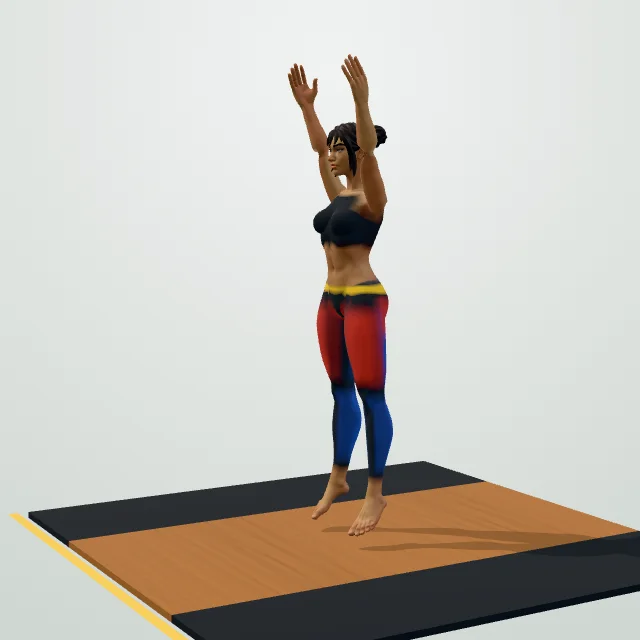
How to do it
- Stand with feet shoulder-width apart, as in a normal squat.
- Squat down to about your normal squat depth.
- Drive explosively through your whole foot and jump straight up.
- Swing your arms up or forward for extra momentum.
- Land softly on the balls of your feet, absorbing through ankles, knees and hips.
- Sink smoothly into the next squat, resetting your balance if needed.
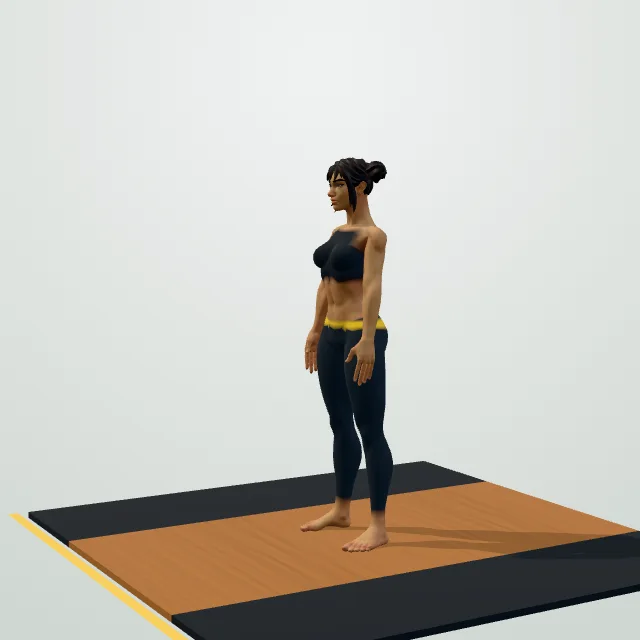
Coach cues
- Squat down to your normal depth.
- Drive up hard, jump straight up.
- Land soft and quiet, knees bending.
- Sink straight into the next rep.
Breathing: Breathe out sharply as you jump, and breathe in as you land and settle into the next rep.
Common mistakes
Make it easier / Make it harder
Sets and reps by goal
| Goal | sets | reps | Rest |
|---|---|---|---|
| Strength | 4–5 | 3–6 | 2–4 min |
| Muscle growth | 3–4 | 6–12 | 90–150 s |
| Endurance | 2–3 | 15–25+ | 30–60 s |
The jump squat is a plyometric variation of the bodyweight squat: instead of just standing up, you extend explosively and leave the ground, then absorb the landing before the next rep. It trains power rather than pure strength, and because you leave the floor on every rep, how well you land matters just as much as how high you jump.
What muscles does the jump squat work?
The quads and glutes drive the explosive extension that gets you off the ground, and both muscle groups switch to absorbing force the instant you land. The calves and hamstrings assist the push-off and help decelerate your body weight on the way down, and your core and hips work hard to keep you balanced through the landing. This combination of fast concentric power and eccentric landing control is what makes jump squats far more demanding on the joints than a slow bodyweight squat for the same number of reps.
Jump squat benefits
- Explosive power. The jump trains fast-twitch muscle fibers and rate of force development that a slow, controlled squat does not reach.
- Vertical jump and athletic training. Athletes use jump squats as a staple in vertical jump and change-of-direction programs, since the movement pattern transfers directly to sprinting and jumping sports.
- A conditioning stimulus. Short sets of jump squats raise your heart rate quickly, which is why they show up in HIIT-style circuits.
- No equipment needed. Like the bodyweight squat it builds on, jump squats need only body weight and enough overhead room.
Jump squat technique: the jump and the landing
Set up as you would for a bodyweight squat, feet shoulder-width apart. Squat down to about the depth of a normal squat, then drive explosively through your whole foot to jump straight up, swinging your arms overhead or forward for momentum. In the air, keep your body relatively tall rather than tucking hard. The landing is the technical part: touch down first with the balls of your feet, then let your ankles, knees and hips bend to absorb the impact quietly — a loud, stiff-legged landing means too much force is going straight into your joints. Sink smoothly into the next squat rather than bouncing, and reset your breathing and balance before the following rep if needed.
How to program jump squats
| Goal | Sets | Reps | Rest |
|---|---|---|---|
| Power development | 3-4 | 5-8 | 90-120 sec |
| Conditioning / HIIT | 3 | 10-12 or timed | 45-60 sec |
Because jump squats are a high-skill, high-impact movement, quality reps beat high volume: stop the set once your landings get louder or less controlled, well before your legs are fully fatigued. Two sessions a week, placed early in a workout while you are fresh, is enough for most people — never do them on already-tired legs at the end of a long session. See the warm-up guide for preparing your ankles, knees and hips before jumping.
Who should avoid or modify jump squats
Jump squats are not a beginner exercise. Build a base of clean, controlled bodyweight squat strength first, since the landing forces are much higher than a standing squat.
Skip or modify jump squats if you have knee, hip or ankle pain, are new to strength training, or have been told to avoid high-impact movements for a joint or bone condition — a physiotherapist can suggest a lower-impact power alternative in that case. People who are pregnant or have osteoporosis should generally avoid jumping exercises unless a doctor has cleared them. Stop immediately for sharp joint pain, dizziness or chest pain, and land on a surface with a little give rather than bare concrete when possible.
Jump squat vs bodyweight squat vs box jump
A bodyweight squat is the strength and mobility foundation you should own with good depth and knee control before adding a jump. A box jump uses the same explosive drive but lands on a raised platform instead of the floor, which can reduce landing impact since you do not have to absorb the full descent back to the ground. Jump squats sit between the two: more explosive than a standard squat, but with a harder landing than a box jump.
Jump squat variations
Once bodyweight jump squats feel controlled, most people should progress volume, height or speed before adding load — a weighted jump squat with dumbbells or a barbell increases landing forces on the knees and spine more than it adds useful power for most lifters. If you want more challenge without extra weight, focus on jumping higher, adding a brief pause in the bottom squat position before each jump, or shortening rest between sets. A jump squat that lands into a lunge, or alternates into a split-stance jump, is a more advanced single-leg progression for lifters who already move well.
More exercises for legs
Questions people ask
What is a jump squat?
Are jump squats good for beginners?
What muscles do jump squats work?
Are jump squats considered cardio?
How do you land a jump squat safely?
How many jump squats should I do?
Should I add weight to jump squats?
General fitness information, not medical advice. Check with a doctor or physiotherapist before starting if you have a health condition, an injury or are pregnant. Stop if you feel chest pain, dizziness or sharp pain.