Legs · Gym
Front squat: train your quads with an upright torso
The front squat racks the bar across your shoulders instead of your back, forcing a taller torso and putting more of the work on your quads. It takes more mobility to set up than a back squat, but it is one of the best quad and core builders once you have it dialed in.
- Primary
- Quads
- Secondary
- GlutesAbsUpper back
- Level
- Advanced
- Type
- Compound · Both sides together
- Sets × reps
- 4 × 4-6 reps
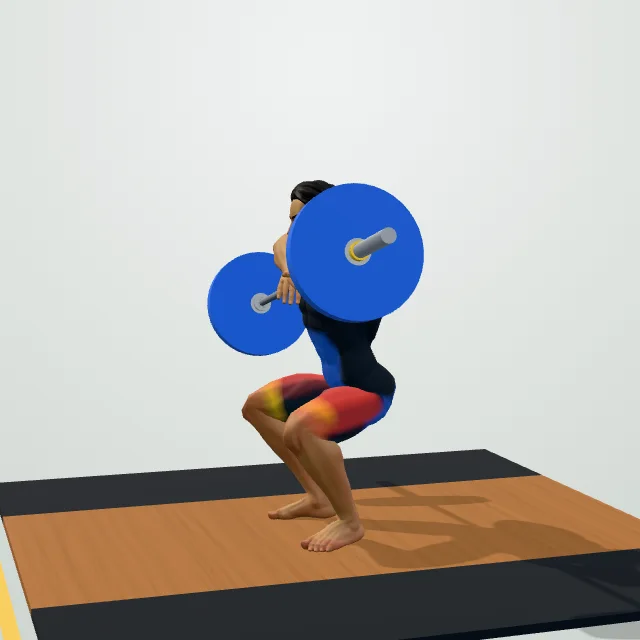
How to do it
- Set the bar in a rack at about collarbone height.
- Take a clean grip or cross your arms over the bar, elbows driven up.
- Unrack the bar and step back into your stance.
- Brace your core and sit straight down, torso upright, elbows high.
- Drive up through your whole foot, keeping your elbows up.
- Re-rack the bar after your last rep.
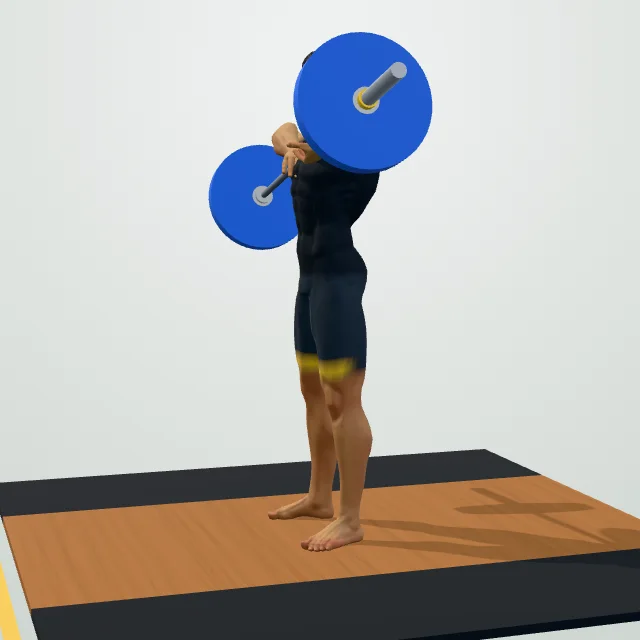
Coach cues
- Elbows up, bar on your shoulders.
- Chest tall, sit straight down.
- Knees track your toes.
- Drive up, elbows stay high.
Breathing: Brace with a breath before you descend, just like a back squat, and avoid holding your breath hard with high blood pressure or a heart condition.
Common mistakes
Make it easier / Make it harder
Sets and reps by goal
| Goal | sets | reps | Rest |
|---|---|---|---|
| Strength | 3–5 | 3–6 | 2–4 min |
| Muscle growth | 3–4 | 6–12 | 90–150 s |
| Endurance | 2–3 | 15–20 | 30–60 s |
The front squat racks a loaded barbell across the front of your shoulders instead of your upper back, which forces your torso to stay much more upright and shifts more of the work onto your quads — it's a squat variation that rewards good front-rack mobility and punishes bad habits, like a collapsing torso, much faster than a back squat does.
Front squat muscles worked and why the position matters
Because the bar sits in front of your shoulders, your torso has to stay close to vertical to keep the weight balanced — if you lean forward like you would on a back squat, the bar rolls off. That upright position shifts more of the work onto your quads, the clear prime mover, while your glutes assist less than in a back squat. Your abs and upper back work hard isometrically to resist collapsing forward under the bar, which is why front squats build genuinely useful core and upper-back strength alongside leg strength.
Front squat benefits
The clearest front squat benefits are quad strength and size with less strain on the lower back than a back squat of the same relative weight, since the upright torso reduces the leverage the bar has over your spine. It also builds serious core and upper-back strength from holding the position under load, and it is the squat pattern used to stand up from a clean in Olympic weightlifting, so it carries over directly to that skill.
Front rack grip: clean grip vs. crossed-arm
There are two common ways to hold the bar in the front rack. The clean grip wraps your fingers loosely under the bar with your elbows driven up high — it needs good wrist and shoulder mobility, and many lifters' wrists feel it before their legs do while they build that mobility. The crossed-arm grip rests the bar on your shoulders with your arms crossed over the top to hold it in place, taking almost all the load off your wrists — a good starting option if wrist or shoulder mobility is limiting you. Lifting straps looped over the bar and held in each hand are another option that reduces wrist strain. Some lifters compare the front squat vs zercher squat, which holds the bar in the crook of the elbows instead of the rack; it needs even less wrist mobility but is harder on the front of the elbows. Whichever grip you use, keep your elbows up and the bar resting on your shoulders, not hanging from your hands.
Setup and depth
Good front squat technique is really about the elbows: keep them up and everything else follows. Set the bar in a rack at about collarbone height, take your grip, then drive your elbows up until your upper arms are close to parallel with the floor before you unrack it. Step back with a stance similar to your back squat, brace, and sit straight down, keeping your torso as vertical as you can and your knees tracking your toes. Aim for the same depth standard as a back squat — hip crease below the top of your knee — then drive up while keeping your elbows high the whole way; if your elbows drop, the bar and your torso will tip forward with them. Front squat breathing technique is the same brace-and-hold pattern as a back squat: a breath and a hard brace before you descend, released once you are past the hardest part of the rep.
How to program it
Because the front rack position is demanding and technical, most lifters use slightly lower reps and lighter absolute weight than their back squat — front squats are commonly loaded at roughly 80–85% of a lifter's back squat weight. Three to five sets of 4–6 reps with 2–3 minutes of rest works well for strength; 3–4 sets of 8–10 reps suits muscle-building goals, per the sets and reps guide. Once or twice a week is usually enough, added in gradual, small weight jumps as in progressive overload.
Front squat vs. back squat
The front squat vs back squat question comes down to torso angle and muscle emphasis. The back squat generally allows more total weight and is more forgiving on the wrists and shoulders, which is why it is the more common main strength lift. The front squat is more quad-dominant, more upright, and lighter on the lower back for the same effort, which makes it a useful option for lifters managing lower-back sensitivity, or for building the specific position needed for Olympic lifting. Many lifters use both across a training week rather than picking one permanently.
Safety: mobility limits and when to regress
If your wrists, shoulders or ankles are too tight for a comfortable front rack, do not force it. If the front squats vs goblet squats question comes up for you because of wrist pain, start with the goblet squat instead — it builds the same upright torso and depth without any wrist demand at all. Use a spotter or set safety pins just below your squat depth, stop if you feel sharp wrist or shoulder pain rather than a stretch, and add weight in small steps once your position holds steady rep after rep.
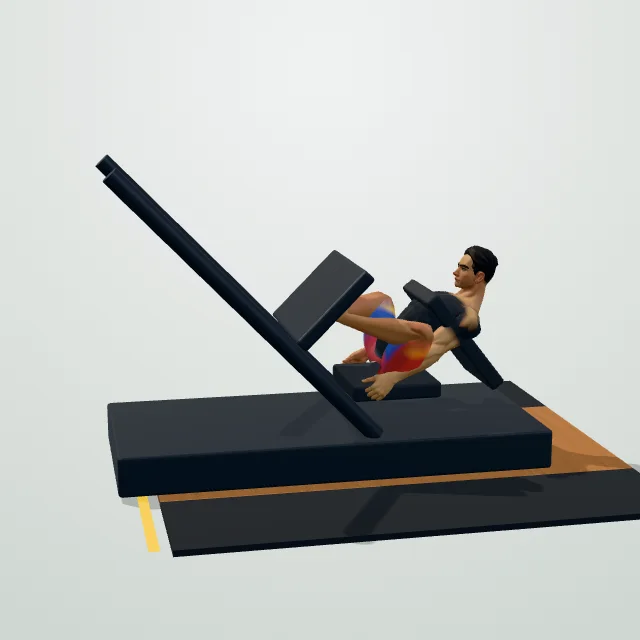
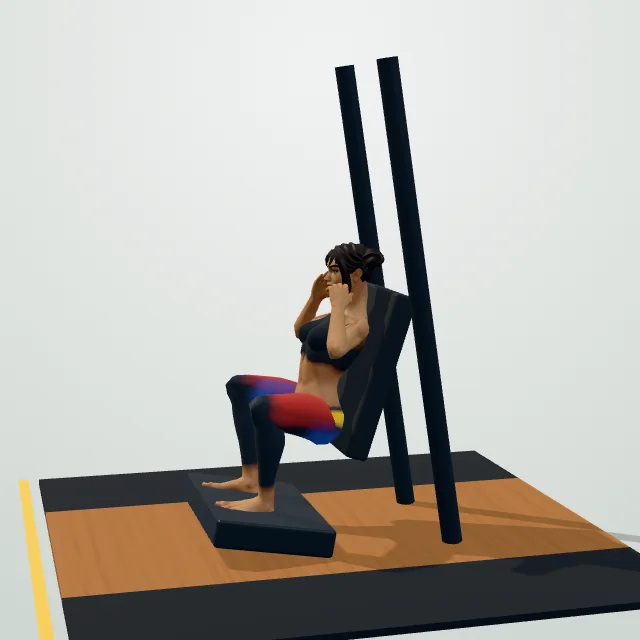
More exercises for legs
Questions people ask
What is the difference between a front squat and back squat?
Why do my wrists hurt during front squats?
Clean grip or crossed-arm grip — which is better for front squats?
Is the front squat harder than the back squat?
What muscles does the front squat work?
I can't get into a good front rack position — what should I do?
General fitness information, not medical advice. Check with a doctor or physiotherapist before starting if you have a health condition, an injury or are pregnant. Stop if you feel chest pain, dizziness or sharp pain.