Legs · Home or gym
How to do walking lunges with dumbbells
Walking lunges are a continuous, alternating lunge that travels forward across the room instead of staying in one spot. Here is the dumbbell form, the muscles worked, and how to program them.
- Secondary
- HamstringsInner thighsCalves
- Level
- Intermediate
- Type
- Compound · Alternate sides
- Sets × reps
- 3 × 10-12 reps per side
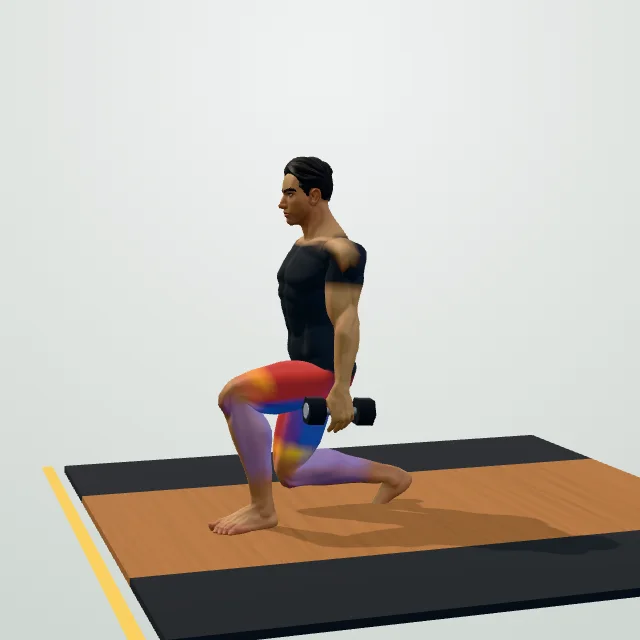
How to do it
- Stand tall holding one dumbbell in each hand at your sides.
- Step forward into a lunge, letting your back knee drop toward the floor.
- Push through your whole front foot to stand up out of the lunge.
- Bring your back foot through and step straight into the next lunge.
- Keep walking forward for your target number of steps.
- Turn around and lunge back if you run out of room.
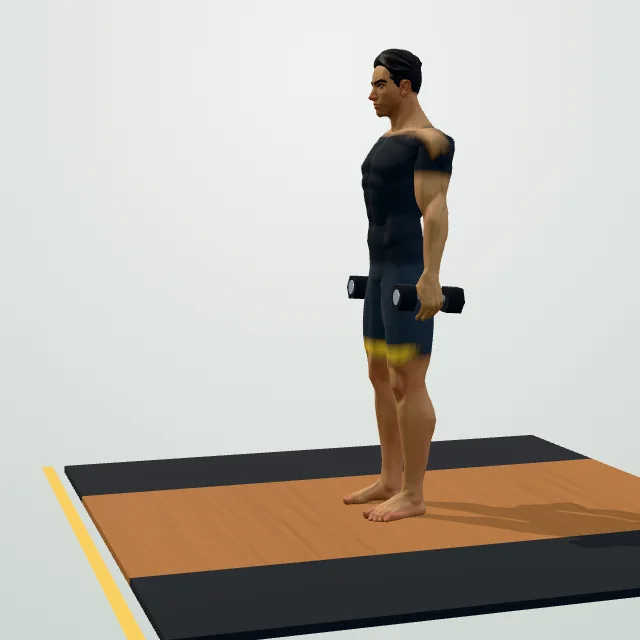
Coach cues
- Step forward, both knees bend toward ninety degrees.
- Keep your chest tall, don’t lean over the front knee.
- Front knee tracks over your toes.
- Push through your whole foot into the next step.
Breathing: Breathe in as you step into the lunge, and breathe out as you drive up and step through.
Common mistakes
Make it easier / Make it harder
Sets and reps by goal
| Goal | sets | reps | Rest |
|---|---|---|---|
| Strength | 3–5 | 3–6 | 2–4 min |
| Muscle growth | 3–4 | 6–12 | 90–150 s |
| Endurance | 2–3 | 15–20 | 30–60 s |
Walking lunges are a moving, alternating lunge: instead of returning to a fixed spot after every rep, you step straight into the next lunge and travel forward across the floor. Holding a dumbbell in each hand, farmer-carry style, turns this bodyweight pattern into a genuine strength exercise for the legs while keeping your heart rate up between sets.
What muscles do walking lunges work?
Each step loads the front leg's quads and glutes through a long range of motion, from the deep bottom position back up to standing, while the trailing leg's hip extends behind you. The hamstrings and adductors help control the descent and keep your hips level as you shift weight from one leg to the other, and the calves fire on every push-off. Because you never pause in a fixed stance, walking lunges also ask more of your balance and leg and glute stabilizers than a stationary lunge does for the same number of reps.
Dumbbell walking lunge benefits
- Unilateral strength. Training one leg at a time exposes and helps fix side-to-side strength imbalances that a barbell squat can hide.
- A built-in conditioning element. The continuous walking pattern raises your heart rate more than a lunge you reset between reps, so it doubles as light cardio.
- Everyday carryover. The forward step-and-drive pattern mirrors walking, climbing stairs and getting up off the floor.
- Grip and posture work for free. Carrying dumbbells at your sides also trains your grip and an upright, braced torso.
Walking lunge technique: stride, torso and knee tracking
Hold one dumbbell in each hand, arms relaxed at your sides. Step forward far enough that your back knee can drop straight down toward the floor rather than forward past it — a stride that is too short pitches your torso forward and shortens the front knee's range. Keep your chest tall and your ribs stacked over your hips instead of leaning over the front leg, and let your front knee track in line with your middle toes rather than caving inward. Push through the whole front foot, not just the toes, to stand up out of the lunge and bring your back leg through into the next step.
A dumbbell walking lunge held at your sides is more shoulder- and back-friendly for beginners than a barbell walking lunge, which rests the bar across the upper back and demands more thoracic and core stability under load. If you only have one dumbbell, holding it goblet-style at your chest works too, though it shifts more of the balance demand forward.
How much space do walking lunges need?
Unlike a stationary lunge, this is not a "stay in place" exercise — you need enough clear floor to travel. Most gyms and living rooms are too short for a full set in one direction, so the standard fix is to do the set "down and back": walk a set number of steps across the room or down a hallway, turn around, and lunge back to your starting point to finish the set. If space is tight, count total steps instead of a fixed distance, or do the movement as a stationary reverse lunge until you have more room.
How to program walking lunges
| Goal | Sets | Reps (total steps, both legs) | Rest |
|---|---|---|---|
| Strength | 3-4 | 10-16 | 90 sec |
| Muscle / hypertrophy | 3 | 16-24 | 60-75 sec |
| Endurance / conditioning | 2-3 | 24-30 | 30-45 sec |
Pick a dumbbell weight that lets you keep your torso upright and your knee tracking clean for the last few steps of the set, with about two reps in reserve — if your form falls apart before the target step count, the weight is too heavy. Most lifters do walking lunges once or twice a week as an accessory after a main squat or hinge exercise; use the one-rep max calculator and progressive overload guide to plan how to add weight over time.
Walking lunges vs reverse lunges vs Bulgarian split squats
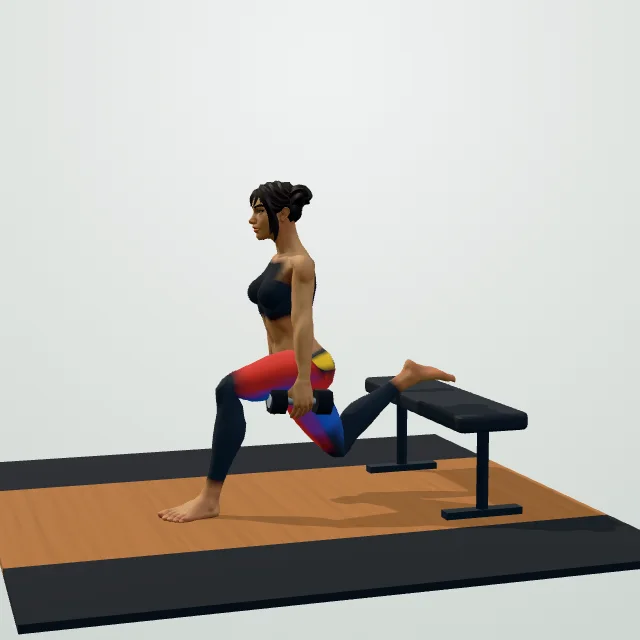
A reverse lunge steps back and returns to the same spot each rep, which is easier to balance and gentler on the front knee, making it a common regression from walking lunges. A forward lunge is the same stationary idea stepping forward instead. The Bulgarian split squat removes the stepping motion entirely by elevating the back foot on a bench, which lets you load one leg much more heavily since balance is easier — a good choice once continuous walking lunges feel too light for your strength level. None of the three is strictly "better"; walking lunges add a conditioning and coordination demand the other two do not.
Walking lunge variations
Once dumbbell walking lunges feel controlled, a barbell across your back adds more load for the same pattern, though it needs a stable core and enough shoulder mobility to hold the bar comfortably. A single dumbbell held overhead on one side (an overhead walking lunge) adds a heavy core-stability challenge and is best kept for lifters who already own the basic pattern. For beginners or home workouts without any dumbbells, bodyweight walking lunges — or the stationary forward and reverse lunge — build the same movement pattern before you add load.
Safety and who should modify it
Warm up your hips and ankles before loading walking lunges, and start with light or no weight until your balance and knee tracking are consistent.
If you have knee, hip or ankle pain, or you are pregnant, check with a doctor or physiotherapist before adding dumbbells to this movement, since the single-leg landing loads the front knee more than a standing squat. Stop the set for sharp joint pain, dizziness or chest pain rather than pushing through it — normal muscle fatigue in the front thigh and glute is expected, joint pain is not.
More exercises for legs
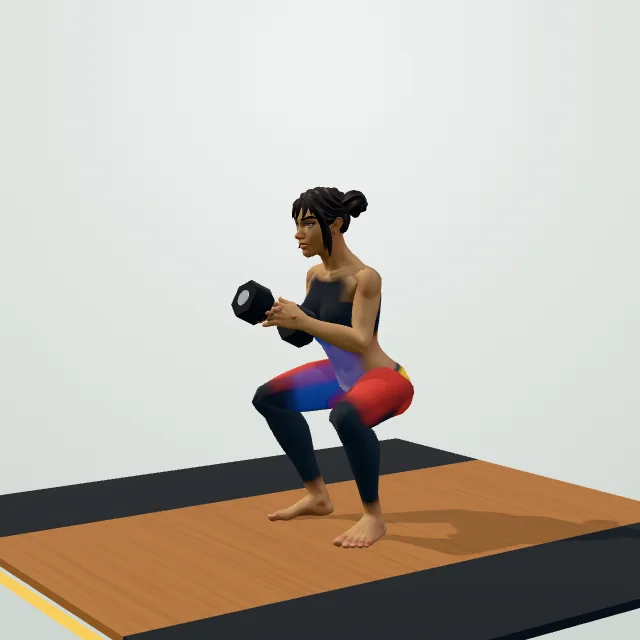
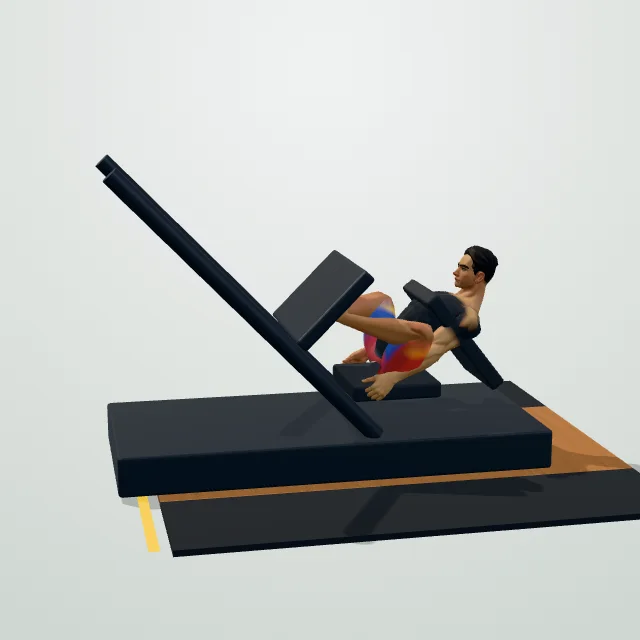
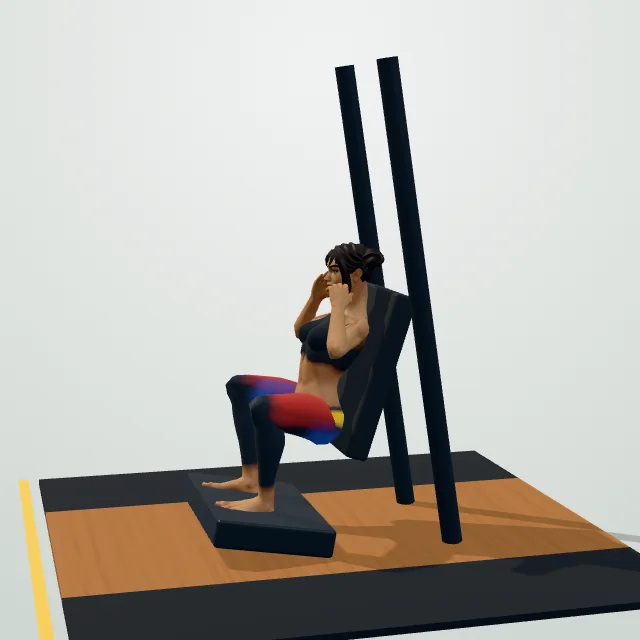
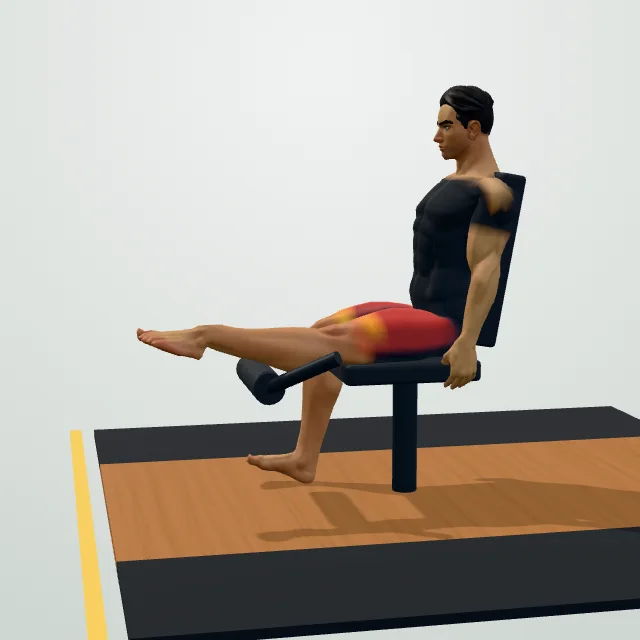
Questions people ask
What muscles do dumbbell walking lunges work?
Are walking lunges better than regular lunges?
How many reps of walking lunges should I do?
Can you do walking lunges without dumbbells?
Walking lunges vs squats: which is better for the legs?
Do walking lunges build muscle?
What is a good walking lunge alternative if I have no space?
General fitness information, not medical advice. Check with a doctor or physiotherapist before starting if you have a health condition, an injury or are pregnant. Stop if you feel chest pain, dizziness or sharp pain.