Legs · Gym
Leg extension: isolated quad strength, seated
The leg extension is a single-joint machine exercise that works only your quads, with no hip or balance demand getting in the way. Here is how to set the pad and seat back, and where it fits around your compound lifts.
- Primary
- Quads
- Level
- Beginner
- Type
- Isolation · Both sides together
- Sets × reps
- 3 × 12-15 reps
How to do it
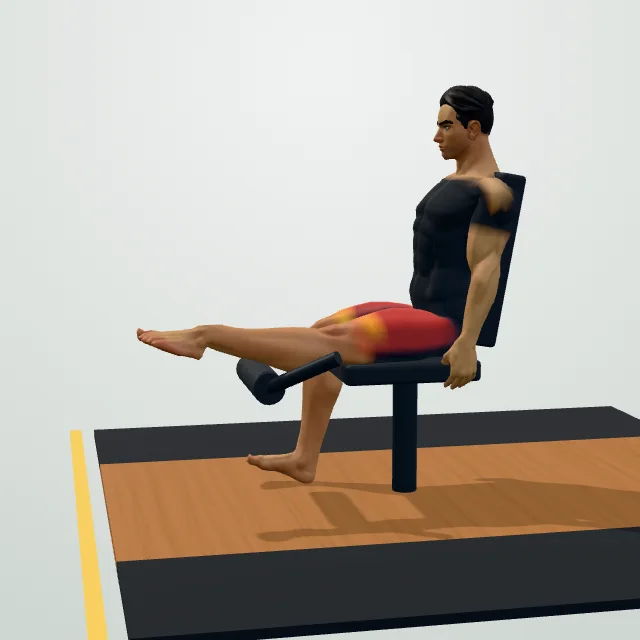
- Sit on the machine with your back against the pad and knees at the pivot.
- Hook your shins under the pad, just above your ankles.
- Grip the side handles and brace your torso against the seat.
- Straighten your legs under control until they are almost fully extended.
- Pause briefly at the top without locking out hard.
- Lower back down slowly to the starting position.
Coach cues
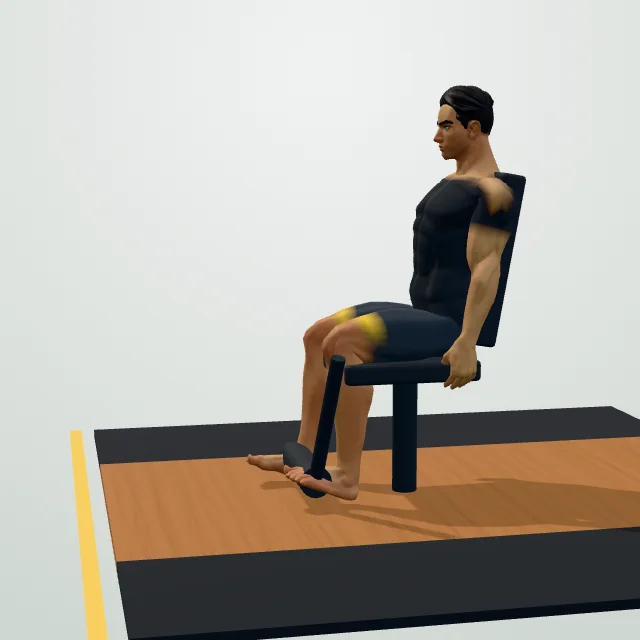
- Shins set just above your ankles.
- Straighten your legs without swinging your torso.
- Pause at the top, do not lock out hard.
- Lower slowly, control the whole way down.
Breathing: Breathe out as you straighten your legs, and breathe in as you lower back down.
Common mistakes
Make it easier / Make it harder
Sets and reps by goal
| Goal | sets | reps | Rest |
|---|---|---|---|
| Strength | 3–5 | 6–8 | 90–120 s |
| Muscle growth | 3–4 | 10–15 | 60–90 s |
| Endurance | 2–3 | 15–20 | 30–60 s |
The leg extension is a seated machine exercise, sometimes called quad extensions, that moves only your knee joint, straightening your leg against a padded lever while your hips and back stay fixed in place. Because no other joint is involved, it isolates the quads more directly than almost any other quad exercise, which makes it a common finishing move after squats, the leg press, or lunges.
Leg extension muscles worked: a true single-joint movement
The quads do essentially all the work here — there's no hip flexion or extension, so your glutes and hamstrings barely engage at all. That single-joint isolation is exactly the point: compound leg exercises always spread effort across the quads, glutes, and hamstrings together, so the leg extension is one of the few ways to push the quads specifically to a hard, controlled level of fatigue on their own.
Benefits
Because it isolates the quads, the leg extension is useful for adding extra quad-focused volume once your compound lifts are done, without your hips or lower back becoming the limiting factor. It's also easy to control precisely — you can adjust the weight in small increments and slow the tempo down, which makes it a good tool for building mind-muscle awareness in the quads for lifters who feel compound squats more in their hips.
Setup: pad position and seat back
Adjust the seat back so your knees line up with the machine's pivot point — sit too far forward or back and the leverage feels wrong and can stress the knee unnecessarily. Set the shin pad just above your ankles, not on top of your feet, then straighten your legs under control until your knees are almost fully extended, without slamming into lockout. Lower back down slowly rather than letting the weight stack drop; the lowering phase is where a lot of the muscle benefit happens, and it's also the part most people cut short.
How to program it
Because it's an isolation exercise, higher reps work well: 3 sets of 12–15 reps with 45–60 seconds of rest is a common default, and some lifters go as high as 15–20 reps for a finishing burn. Use it after your main compound lifts like the leg press, hack squat, or squats, not before — pre-fatiguing the quads on an isolation machine can leave you weaker for the heavier compound work that follows. Add weight gradually, and avoid using so much weight or momentum that you have to swing your torso or slam the stack to complete a rep.
Leg extension vs leg press and hack squat
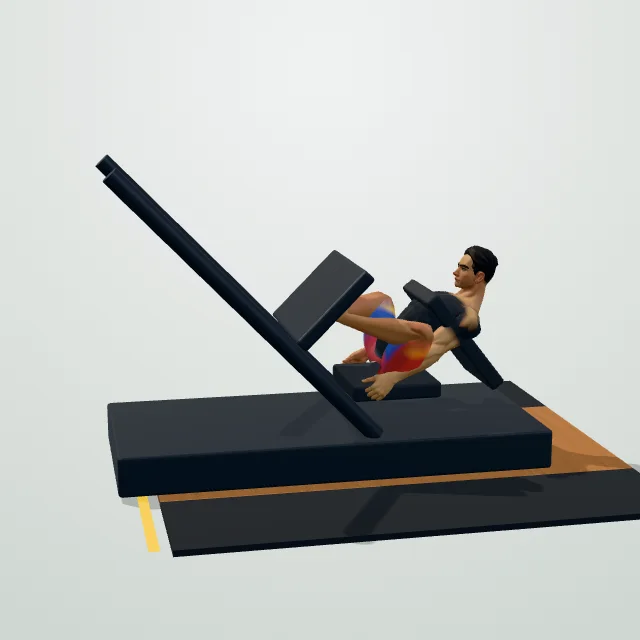
The leg press and hack squat are compound movements — they bend both the hip and the knee, sharing the load across the quads, glutes, and hamstrings, and they let you lift far heavier total weight. The leg extension trades that heavier loading for pure isolation: less total weight, but effort that goes entirely into the quads. Most leg workouts use compound lifts as the main driver of strength and the leg extension as an accessory to finish the quads off — see our guide to compound vs isolation exercises for more on how the two work together.
A note on knee health
Leg extensions are sometimes used in supervised rehab settings to rebuild quad strength after a knee injury or surgery, because the machine lets you control load and range very precisely — but that is something to do under the guidance of a physiotherapist or doctor, not a general recommendation if you are searching for leg extension for knee pain relief on your own. For general training, keep the weight and range within what feels like normal muscle fatigue; sharp or pinching pain around the kneecap is a sign to reduce the weight, shorten the range, or stop and get it checked rather than push through it. If you manage ongoing knee pain, get guidance before loading this machine heavily.
Variations
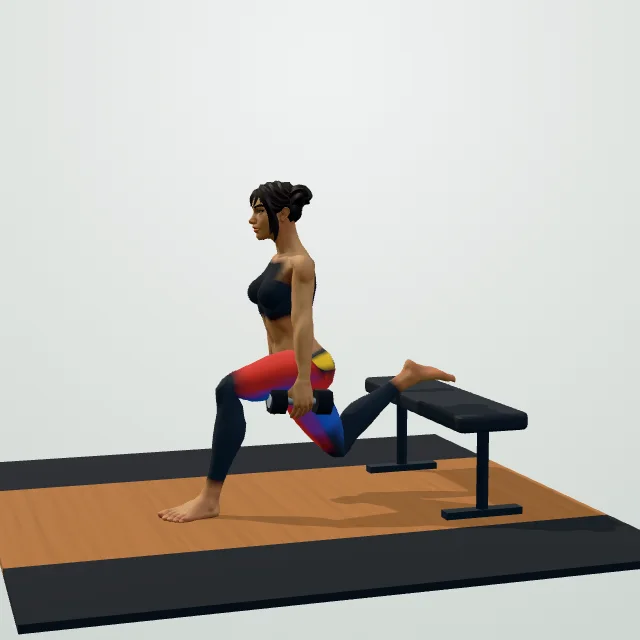
A single-leg extension lets you focus on one side at a time and check for a strength difference between legs. If you don't have access to a machine, a resistance band anchored behind you is a workable leg extension alternative for loading the same knee-extension movement for leg extensions at home, though with less resistance than a weight stack. The wall sit and split squat are good compound alternatives for building quad strength without any machine at all.
More exercises for legs
Questions people ask
What muscles does the leg extension work?
Is the leg extension a compound exercise?
Is the leg extension bad for your knees?
Should I do leg extensions before or after squats?
Can leg extensions help with knee rehab?
Can I do leg extensions at home without a machine?
General fitness information, not medical advice. Check with a doctor or physiotherapist before starting if you have a health condition, an injury or are pregnant. Stop if you feel chest pain, dizziness or sharp pain.