Legs · Home or gym
Bulgarian split squat: single-leg strength and balance
The Bulgarian split squat loads one leg at a time with your rear foot up on a bench, building serious glute and quad strength while exposing any side-to-side imbalance. It is notoriously tough on balance at first, so here is how to make it manageable.
- Secondary
- HamstringsInner thighs
- Level
- Intermediate
- Type
- Compound · One side, then the other
- Sets × reps
- 3 × 8-10 reps per side
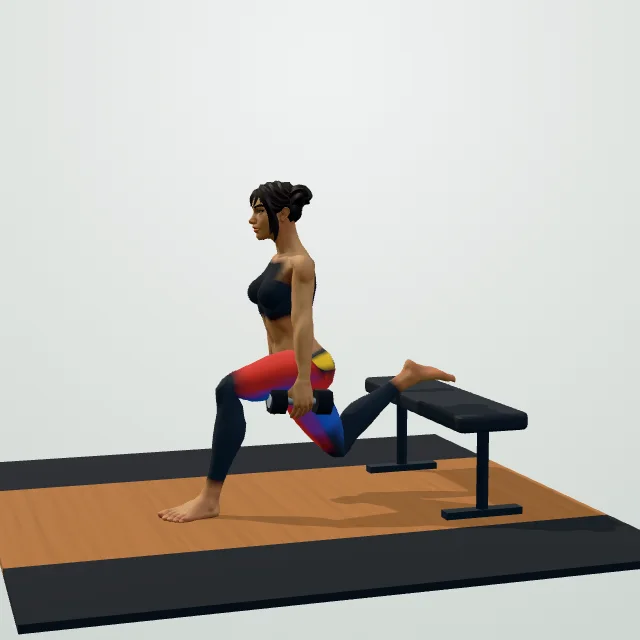
How to do it
- Stand a long stride in front of a bench, facing away from it.
- Rest the top of your rear foot on the bench behind you.
- Set your front foot far enough forward that your shin stays upright.
- Lower straight down until your front thigh nears parallel to the floor.
- Drive up through your front heel and midfoot to standing.
- Complete all reps on one leg before switching sides.
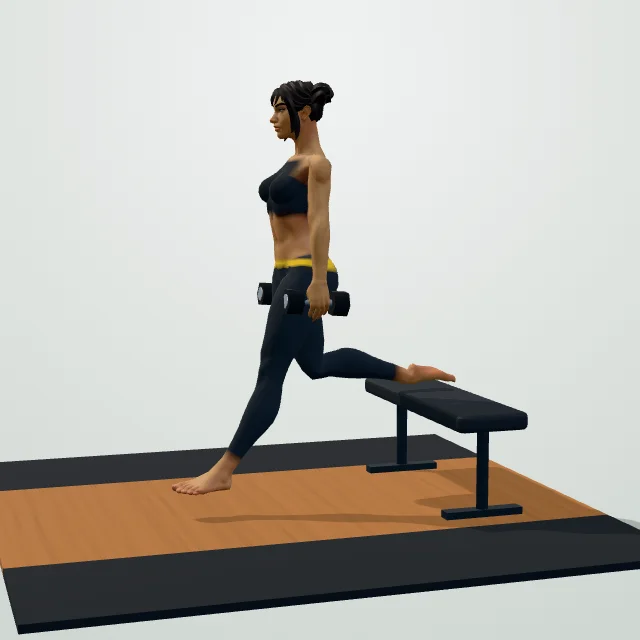
Coach cues
- Front knee tracks over your toes.
- Back knee drops straight down, not forward.
- Drive up through your front heel.
- Keep your torso tall and braced.
Breathing: Breathe in as you lower down, and breathe out as you drive back up to standing.
Common mistakes
Make it easier / Make it harder
Sets and reps by goal
| Goal | sets | reps | Rest |
|---|---|---|---|
| Strength | 3–5 | 3–6 | 2–4 min |
| Muscle growth | 3–4 | 6–12 | 90–150 s |
| Endurance | 2–3 | 15–20 | 30–60 s |
The Bulgarian split squat is a single-leg squat done with your rear foot resting on a bench behind you, so nearly all of your bodyweight and any added load travels through the front leg. It is sometimes called the rear foot elevated split squat (RFESS) in strength training. Because each leg works independently, it builds real strength and stability that a two-legged squat can hide, and it is one of the more demanding balance challenges in a typical leg workout before you even add weight.
Bulgarian split squat muscles worked
The front leg's quads and glutes are the prime movers, extending the hip and knee to lift you back up, with the hamstrings and adductors assisting to control the knee and stabilize the hip. Because you are balancing on one leg, your hip abductors and core also work hard just to keep you from tipping sideways — work you do not get from a standard two-legged squat.
Bulgarian split squat benefits
Training one leg at a time makes it much harder for a stronger leg to cover for a weaker one, which makes this one of the best tools for finding and fixing a side-to-side strength imbalance. It builds a big glute and quad stimulus per leg with relatively light weight, since all the load goes through one limb, and the balance demand carries over well to running, change-of-direction sports, and everyday single-leg stability.
Setup: bench height and front foot distance
Good bulgarian split squat form starts with distance, not weight. Stand a comfortably long stride in front of a bench, rest the top of your rear foot (laces down) on it, and adjust your front foot's distance until your front shin stays close to vertical at the bottom of the rep — too close and your knee travels too far forward, too far and you will feel unstable. Front foot distance and torso lean both change the emphasis: standing more upright with your front foot a bit further forward shifts more work to the glutes, while leaning your torso forward with a closer front foot shifts more onto the quads.
Technique
Lower straight down until your front thigh is close to parallel with the floor, letting your back knee drop toward the ground without touching it, and keep your front knee tracking in line with your toes rather than letting it drift inward. Drive back up through your front heel and midfoot, not your toes, and keep your torso reasonably upright and braced rather than letting it collapse forward as you fatigue. Because one leg works at a time, treat your working sets per side — the dose is per leg, not per set.
How to program it
Three sets of 8–10 reps per leg is a solid default for building muscle and strength together, resting about 90 seconds between sides. Because balance limits how heavy you can safely go before technique breaks down, most lifters progress load more slowly here than on a squat or leg press — small, steady jumps in dumbbell weight work better than big ones. Do it once or twice a week, either as your main single-leg lift or after squats or deadlifts, and see the sets and reps guide for how this fits a wider program.
Regressions for beginners
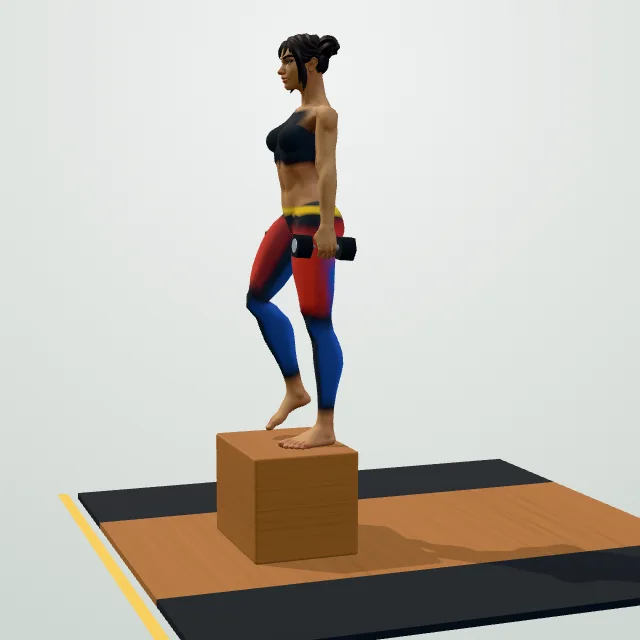
These regressions make the Bulgarian split squat for beginners far more approachable. If balance is the limiting factor rather than strength, hold onto a wall, rack, or sturdy chair with one hand while you learn the movement — this lets you focus on depth and knee position without worrying about tipping over. A shorter step, with your rear foot lower on the bench or on a low step instead, reduces the balance and mobility demand further. If a full bench feels like too much too soon, the split squat, with your rear foot flat on the floor, trains the same pattern with far less balance challenge.
Progressions
Once bodyweight feels controlled, try Bulgarian split squats with dumbbells held at your sides, or a single dumbbell or kettlebell held at your chest for a more upright torso. Raising your front foot on a small plate or block — a front foot elevated split squat variation — increases the range of motion and the stretch on the glutes and hamstrings at the bottom. From there, heavier dumbbells or a barbell across your back are the natural next steps once your balance and control are solid.
Bulgarian split squat vs lunge
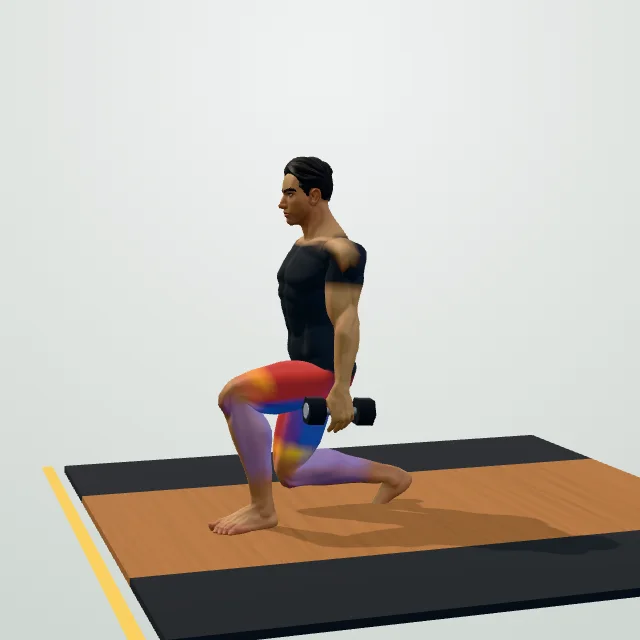
A reverse lunge or forward lunge moves your rear foot with every rep, which adds a coordination and momentum element that the Bulgarian split squat removes by fixing your rear foot on the bench. That fixed rear foot lets you focus entirely on the front leg's strength and control, and usually lets you load the front leg harder per rep than a moving lunge does.
Safety
Keep something sturdy nearby to hold onto while you are still finding your balance — a fall is the main real risk here, not the load itself. Keep your front knee tracking over your toes rather than caving inward, and stop if you feel sharp pain in the front knee or hip rather than the expected muscle fatigue; check with a physiotherapist if it does not settle within a few days. Warm up your hips and ankles first, and add weight in small steps once your balance is consistent.
Workout plans with this exercise
Strength · Intermediate
Upper/Lower Split (4 Days)
Build muscle · Intermediate
4-Day Muscle-Building Workout Plan
Build muscle · Beginner
Full-Body Dumbbell Workout Plan
Build muscle · Beginner
Glute Workout Plan (Gym and Home)
More exercises for legs
Questions people ask
What muscles does the Bulgarian split squat work?
Why is the Bulgarian split squat so hard to balance?
How do I make the Bulgarian split squat easier?
Bulgarian split squat vs lunge: what is the difference?
How much weight should I use for a Bulgarian split squat?
Does the Bulgarian split squat work quads or glutes more?
General fitness information, not medical advice. Check with a doctor or physiotherapist before starting if you have a health condition, an injury or are pregnant. Stop if you feel chest pain, dizziness or sharp pain.