Legs · Gym
Hack squat: build quad size without loading your spine
The hack squat machine locks you into a squat pattern with your back against a pad, so you can push your quads hard without balancing a bar or bracing your spine. Here is how to set it up and where it fits next to the leg press and squat.
- Primary
- Quads
- Secondary
- GlutesInner thighs
- Level
- Intermediate
- Type
- Compound · Both sides together
- Sets × reps
- 3 × 8-12 reps
How to do it
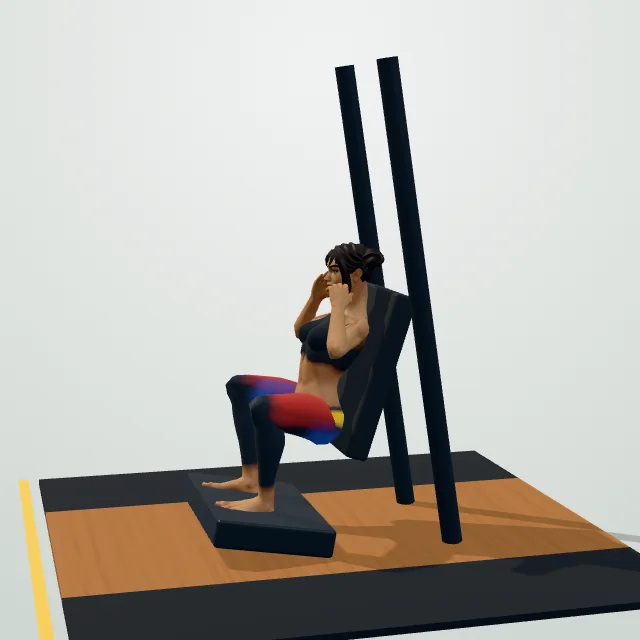
- Step onto the platform with shoulders and back flat against the pad.
- Set your feet at the width and angle you want to emphasize.
- Release the safety handles and unlock the sled.
- Lower until your hips and knees reach about 90 degrees.
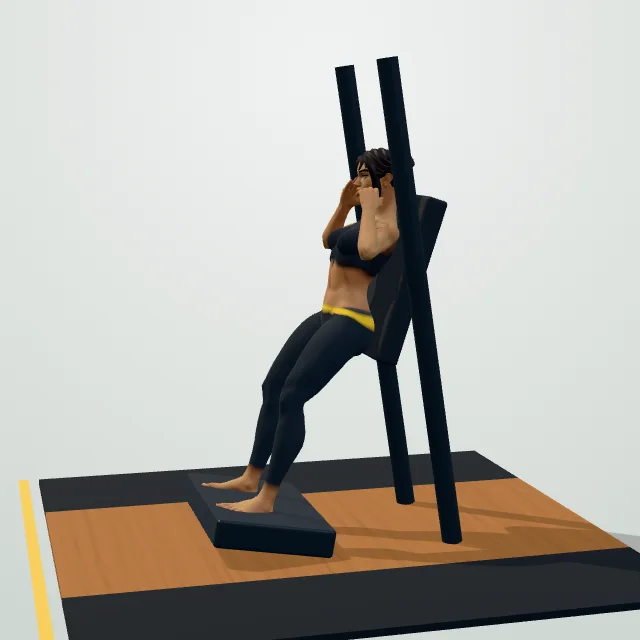
- Drive through your whole foot back to the top without locking your knees hard.
- Re-engage the safety handles after your last rep.
Coach cues
- Back flat against the pad the whole set.
- Knees track over your toes.
- Lower to about knee height, under control.
- Drive up through your whole foot.
Breathing: Breathe in as you lower the sled, then breathe out as you drive back up.
Common mistakes
Make it easier / Make it harder
Sets and reps by goal
| Goal | sets | reps | Rest |
|---|---|---|---|
| Strength | 3–5 | 3–6 | 2–4 min |
| Muscle growth | 3–4 | 6–12 | 90–150 s |
| Endurance | 2–3 | 15–20 | 30–60 s |
The hack squat is a machine squat where you stand on an angled platform with your back and shoulders braced against a pad, moving a fixed sled up and down a rail instead of balancing a free bar. Because the machine carries your spine's stabilizing job, nearly all of the effort goes straight into your quads, which is why it's one of the most direct ways to add quad size and strength without needing squat mobility or a spotter — a common choice on leg day.
Muscles worked
The quads are the prime mover, straightening the knee through almost the whole range, while the glutes and adductors assist, especially near the top of the rep. Because your torso is pinned to the backrest, your lower back and core do far less stabilizing work than in a free squat, so almost none of your effort leaks into balance or bracing — it goes straight into the quads instead.
Benefits
The hack squat lets you add real squat-pattern training volume without the balance, back comfort, or ankle and hip mobility that a barbell back squat demands, which makes it a common substitute when someone's squat form or mobility is holding them back. Because the path is fixed, it's also a safe way to train close to failure without a spotter, and the back support removes most of the spinal loading of a standing squat, so it suits lifters managing lower-back sensitivity who still want to load their quads hard. These are the same benefits of squat machine training that show up across most fixed-path leg machines.
Technique: back position, stance and depth
Set your shoulders and upper back flat against the pad before you unlock the sled, and keep them pinned there for the whole set — this is what protects your lower back. A narrower, lower foot stance shifts more emphasis onto the quads and the front of the thigh; a wider stance with toes turned out slightly brings in more glutes and inner thigh. Lower until your hips and knees reach roughly 90 degrees, keeping your knees tracking in line with your toes rather than caving inward, then drive back up through your whole foot without locking your knees out hard at the top.
How to program the hack squat
For building muscle, 3–4 sets of 8–12 reps with 60–90 seconds of rest is a solid default; for more strength-focused work, 3–4 sets of 6–8 reps with slightly longer rest builds control at heavier loads. Leave 1–3 reps in reserve on your working sets rather than grinding to failure every time — see the RPE and RIR guide for how to judge that. Train it once a week as your main quad lift, or add it as accessory volume after squats, and increase the weight in small steps of about 5–10% once a set feels controlled, following the progressive overload approach.
Hack squat vs leg press
Both machines fix the bar path and support part of your body, but they load you differently. The leg press has you seated or reclined and pushing a platform away from your hips, which lets you load very heavy total weight and shift emphasis with foot placement. The hack squat keeps you upright with your back against the pad and asks your knees to travel forward over your toes through a true squat pattern, which usually hits the quads a little harder per pound lifted. Many lifters use both: hack squat for a squat-specific stimulus, leg press for higher-volume, heavier accessory work.
Hack squat vs front squat and back squat
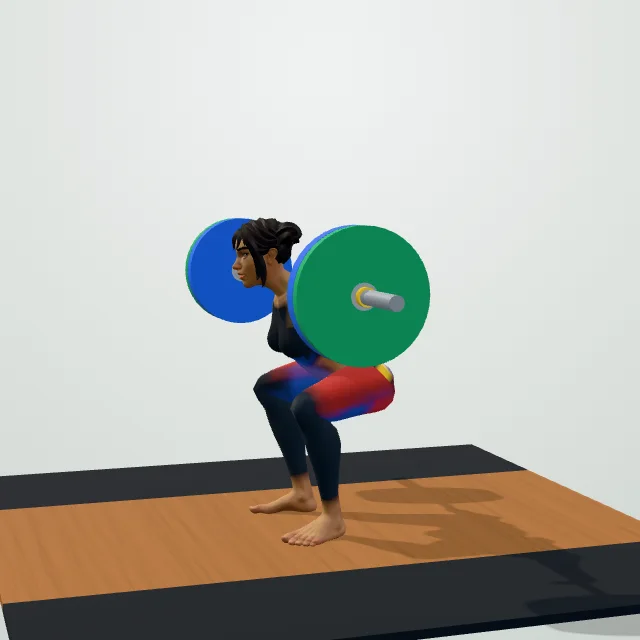
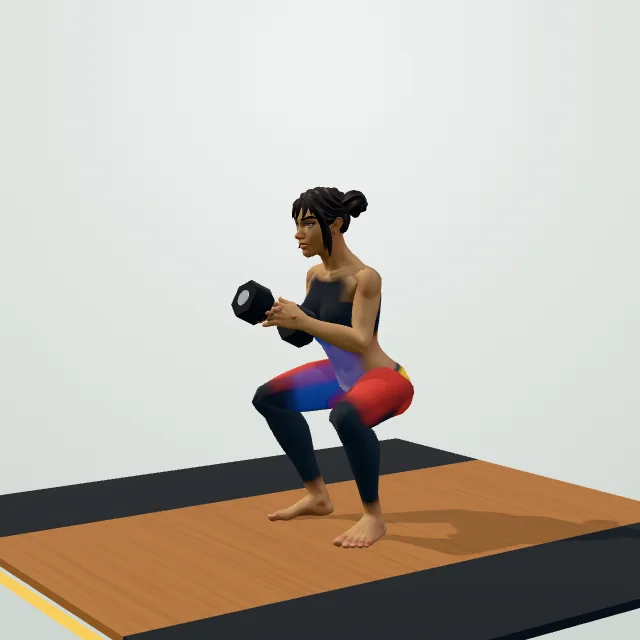
A front squat or barbell back squat demands balance, bracing, and enough ankle and hip mobility to squat with a bar on your body, and it trains that stabilizing strength along with your legs. The hack squat removes that requirement, isolating the quads more directly, which makes it a useful stand-in when a lifter's squat technique or mobility isn't there yet, or as extra quad volume alongside normal squatting.
Variations
A reverse hack squat, where you face the machine with your chest against the pad, shifts even more of the load onto the quads and glutes and takes some pressure off the knees on the way down. Narrow or wide stances, as described above, are the simplest way to change the emphasis without changing machines. If no hack squat machine is available, the leg press or a front squat can train a similar pattern.
Safety
Keep your knees tracking over your toes and avoid letting them collapse inward, particularly as the weight increases. Stop if you feel sharp pain in the front of the knee, and check with a physiotherapist if knee pain doesn't settle within a few days rather than pushing through it. Don't hold your breath through a heavy set if you have high blood pressure or a heart condition — breathe out as you drive up instead. Warm up with a lighter set before loading the sled, and add weight gradually.
Workout plans with this exercise
Questions people ask
What muscles does the hack squat work?
Is the hack squat better than the leg press?
Is the hack squat a good substitute for squats?
How much weight should I use on a hack squat?
What is a reverse hack squat?
Is the hack squat bad for your knees?
General fitness information, not medical advice. Check with a doctor or physiotherapist before starting if you have a health condition, an injury or are pregnant. Stop if you feel chest pain, dizziness or sharp pain.