Legs · Gym
Barbell back squat: master depth and bracing
The barbell back squat is the most tested lower-body lift in the gym: a bar on your back, a hip crease that drops below your knee, and a stronger squat every few weeks if you load it right. Here is the setup, the depth standard, and how to keep your spine safe.
- Secondary
- HamstringsInner thighsLower backAbs
- Level
- Intermediate
- Type
- Compound · Both sides together
- Sets × reps
- 4 × 5-8 reps
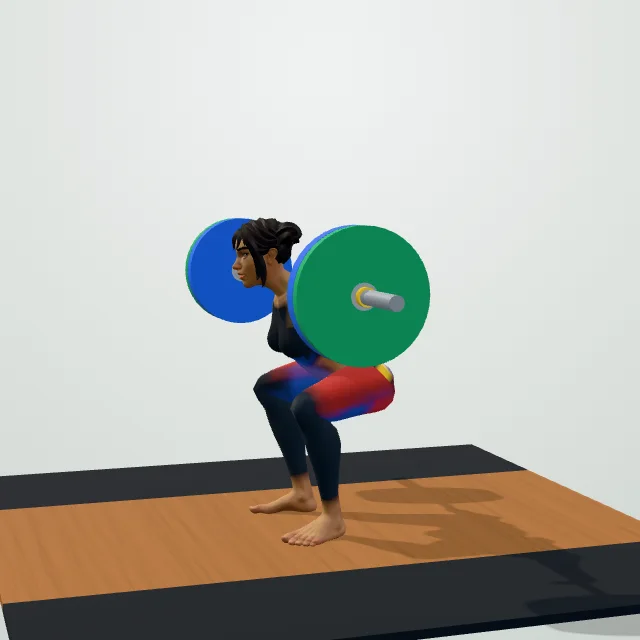
How to do it
- Set the bar on a rack at upper-chest height.
- Step under it and rest it high across your traps, hands just outside shoulder width.
- Unrack the bar, step back, and set a shoulder-width stance, toes slightly out.
- Take a big breath and brace your core.
- Sit back and down until your hip crease drops below your knee.
- Drive up through your whole foot to standing.
- Re-rack the bar after your last rep.
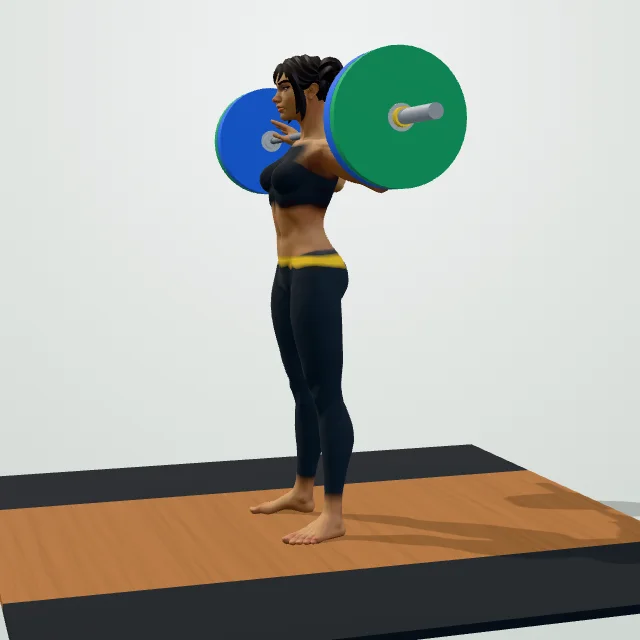
Coach cues
- Big breath in, brace your core.
- Sit back and down, chest up.
- Hips drop just below your knees.
- Drive up through your whole foot.
Breathing: Take a big breath and brace before you descend, hold it through the hardest part of the rep, then breathe out near the top; avoid hard breath-holding with high blood pressure or heart disease.
Common mistakes
Make it easier / Make it harder
Sets and reps by goal
| Goal | sets | reps | Rest |
|---|---|---|---|
| Strength | 3–5 | 3–6 | 2–4 min |
| Muscle growth | 3–4 | 6–12 | 90–150 s |
| Endurance | 2–3 | 15–20 | 30–60 s |
The barbell back squat loads a barbell across your upper back and asks your legs, hips and spine to work together to stand back up from a full squat — it is the main lower-body strength lift in most gym programs, and the one most often used to test how strong someone's legs really are.
Muscles worked and why bracing matters
Knowing barbell back squat muscles worked helps explain why bracing matters as much as raw leg strength. The quads straighten the knee out of the bottom of the squat and are the prime mover, working alongside the glutes, which drive hip extension and become more involved the lower and heavier you squat. Your hamstrings and adductors (inner thigh) assist through the hip, while your abs and lower back brace hard for the entire rep to keep your spine rigid under load — this bracing, not just leg strength, is often what limits how much beginners can lift safely.
Benefits
Because it loads the biggest muscles in the body through a full range of motion, the back squat builds more total lower-body strength per session than almost any other exercise, and that strength transfers to sprinting, jumping and everyday tasks like standing up from a low chair or lifting something off the floor. It is one of the three competition lifts in powerlifting, so it also gives you a clear number to track progress against over months.
Bar position: keep it simple with high-bar
Whether you call it a back squat with barbell or just "squats," bar position is where good technique starts. Most lifters should begin with a high-bar squat: the bar rests across the top of your traps, just below the base of your neck, held with hands just outside shoulder width. This keeps your torso more upright and is easier to learn than the low-bar position (bar lower, across the rear delts, with a wider grip and more forward lean), which some competitive powerlifters use to shift more load onto the hips. Unless a coach has a specific reason to change it, high-bar is the more straightforward default and works well for both strength and muscle goals.
Depth and bracing
Depth is measured at the hip, not the knee: aim for your hip crease to drop just below the top of your kneecap at the bottom of the rep, often described as "below parallel." Stopping well above this point trains a smaller range and a different muscle balance, so it is worth working on ankle and hip mobility if you cannot reach it comfortably. Before you descend, take a big breath into your belly and brace your abs hard, as if bracing for a punch — this Valsalva technique stiffens your spine under the bar. Hold that brace through the hardest part of the rep and breathe out once you are past it. If you have high blood pressure, heart disease, or are pregnant, ask your doctor before using hard breath-holding under load, and use a lighter, more controlled breathing pattern instead.
How to program it: strength vs. muscle
For pure strength, 3–5 sets of 3–6 reps with 2–3 minutes of rest, at a weight that leaves 1–3 reps in reserve, builds the most force output over time; for muscle size, 3–4 sets of 8–12 reps with 60–90 seconds of rest is more efficient, per the sets and reps guide. Most lifters squat once or twice a week as their main lower-body lift, adding small jumps in weight — about 5–10% — once every set moves well, in line with progressive overload. Programs like the 5×5 strength program build an entire routine around this single lift for exactly this reason.
Front squat, goblet squat and other alternatives
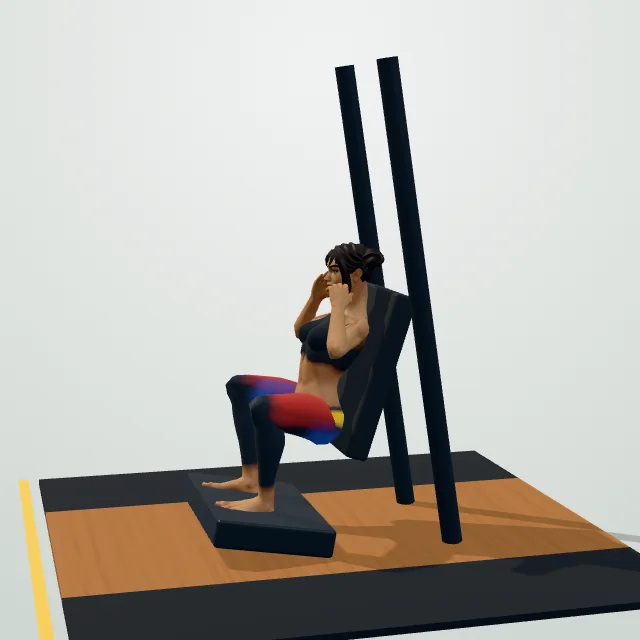
If you are looking for barbell squat alternatives, the front squat moves the bar to the front of your shoulders, forcing a more upright torso and shifting even more work onto the quads — a good variation once your back squat technique is solid. The goblet squat, holding one dumbbell or kettlebell at your chest, is the easiest way to groove the same squat pattern with no bar and no rack, and it is a good regression if a loaded barbell is not available or comfortable yet. If your gym has one, a leg press trains the quads and glutes hard with the machine supporting your spine, useful on days your back needs a break from direct loading.
Safety: spotting, pain and when to stop
Always squat inside a squat rack with the safety pins or straps set just below your lowest depth, or use a spotter, especially as the weight gets heavy — getting stuck under a bar is the main real risk with this lift. Sharp pain in the knees or lower back is not normal and is a sign to lower the weight, check your depth and bracing, or see a physiotherapist; general muscle fatigue and burn is expected, sharp joint pain is not. Warm up with the empty bar and a few lighter sets before your working weight, and add load in small, gradual steps rather than big jumps.
Workout plans with this exercise
Build muscle · Intermediate
Push Pull Legs Split (6 Days)
Strength · Intermediate
Upper/Lower Split (4 Days)
Build muscle · Intermediate
5-Day Body-Part Split (Bro Split)
Strength · Intermediate
5×5 Strength Program
Build muscle · Intermediate
Leg Day Workout (Gym)
More exercises for legs
Questions people ask
What is a barbell back squat?
What muscles does the barbell back squat work?
Are barbell squats bad for your back?
How deep should I squat?
High-bar or low-bar squat — which should I use?
What is a good alternative to the barbell back squat?
How much should a beginner back squat?
General fitness information, not medical advice. Check with a doctor or physiotherapist before starting if you have a health condition, an injury or are pregnant. Stop if you feel chest pain, dizziness or sharp pain.