Abs and core · Home, no equipment
Crunches: the short-range move that isolates your abs
A crunch lifts only your shoulder blades off the floor, a small range that keeps the tension on your abs instead of your hip flexors. Here is how to do it well.
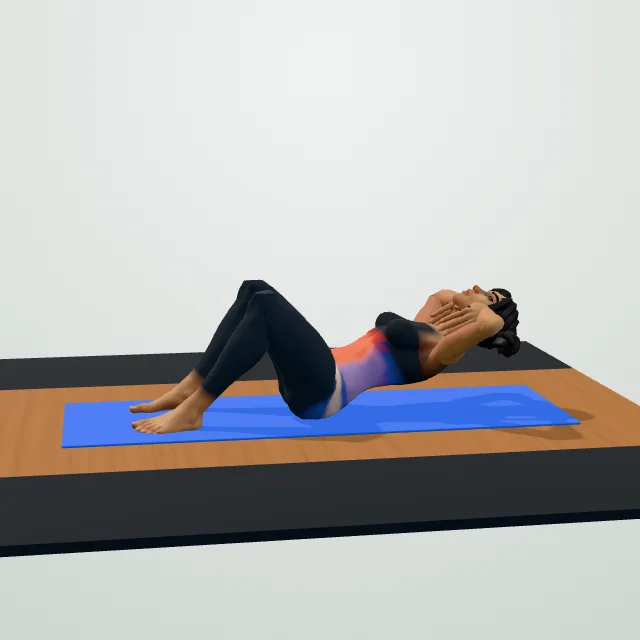
How to do it
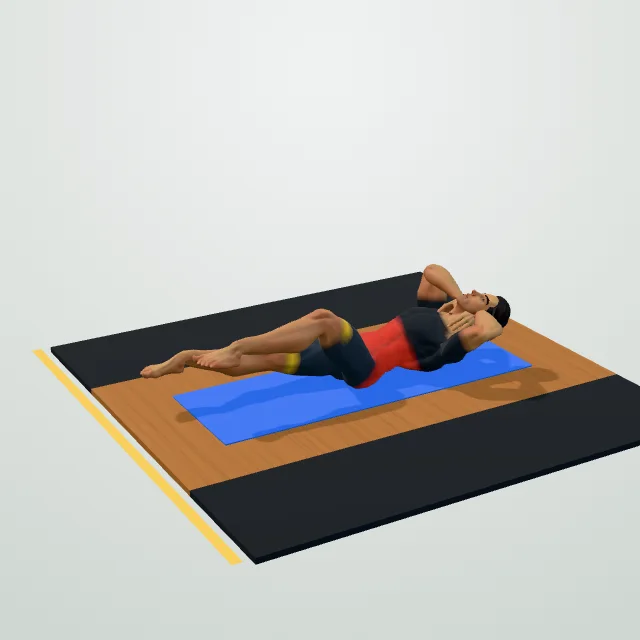
- Lie on your back, knees bent, feet flat on the floor.
- Rest fingertips lightly behind your ears.
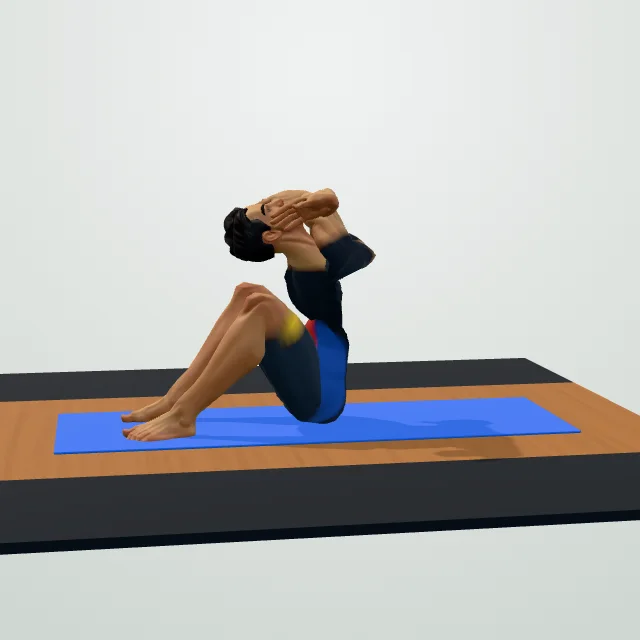
- Exhale and curl your shoulder blades off the floor.
- Lead with your ribs moving toward your hips.
- Pause briefly at the top of the curl.
- Lower back down under control.
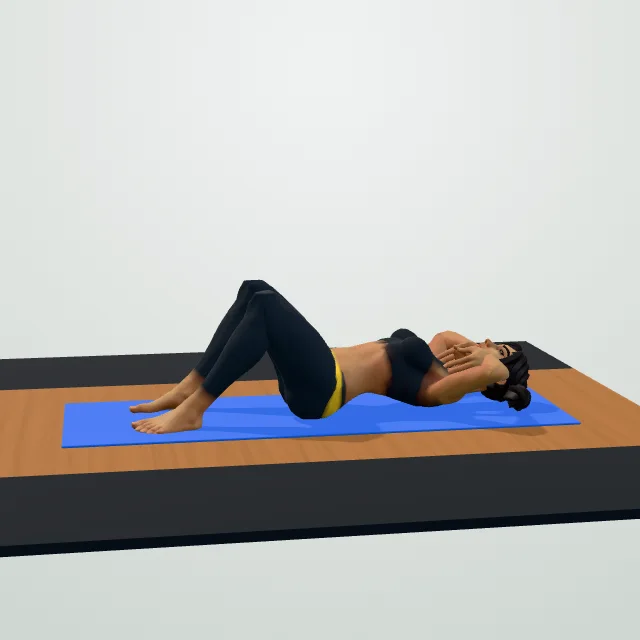
Coach cues
- Knees bent, feet flat on the floor.
- Curl your shoulder blades up, exhale.
- Lead with your ribs, not your chin.
- Lower back down slowly.
Breathing: Exhale as you curl up, inhale as you lower back down.
Common mistakes
Make it easier / Make it harder
Sets and reps by goal
| Goal | sets | reps | Rest |
|---|---|---|---|
| Strength | 4–5 | 6–8 | 90–120 s |
| Muscle growth | 3–4 | 10–15 | 60–90 s |
| Endurance | 2–3 | 15–25+ | 30–60 s |
The crunch is a short-range ab exercise: lying on your back with your knees bent, you curl your shoulder blades a few inches off the floor and lower back down. Compared with a full sit-up, the range is deliberately small, which is exactly what keeps almost all of the work on your abs instead of letting your hip flexors take over partway through the rep.
What muscles does a crunch work?
The crunch is close to a pure isolation exercise for the rectus abdominis, the "six-pack" muscle running down the front of your torso, which shortens to curl your ribs toward your pelvis. Your obliques assist to stabilize the movement, especially if you angle your elbow toward the opposite knee in a cross-body crunch. Unlike a sit-up, a well-performed crunch barely uses your hip flexors, because your hips do not flex through a large range, this is the main reason people choose crunches when they want to target the abs specifically rather than the hip flexors.
Benefits
- Targeted ab work. The short range keeps tension on the rectus abdominis without much hip flexor involvement, useful for people whose hip flexors already feel overworked from sit-ups or running.
- Low equipment and low skill. A crunch needs no equipment and is easy to learn correctly, which makes it a common starting point for ab training.
- Easy to load or scale. Adding a weight plate, a cable, or changing the range makes crunches suitable from complete beginners to advanced lifters.
- Lower spinal load than a full sit-up. Because the range of motion is smaller, crunches put less repeated flexion through the lower spine than a full sit-up, which can matter for people managing back sensitivity.
Crunch technique
Lie on your back with your knees bent and feet flat on the floor, hip-width apart. Rest your fingertips lightly behind your ears or cross your arms over your chest, do not clasp your hands and pull on your neck. Exhale and curl your head, neck and shoulder blades a few inches off the floor, leading with your ribs moving toward your hips rather than your chin jutting toward your knees. Keep a small gap between your chin and chest throughout the movement to protect your neck. Lower back down under control rather than dropping, and keep your lower back gently pressed into the floor for the whole set instead of arching.
How to program crunches
For muscle endurance and general ab conditioning, 2-4 sets of 15-25 reps works well, with 30-60 seconds of rest, done 2-4 times a week as part of a broader abs workout. Because crunches use a small range and light resistance, they respond well to slowing the tempo (a 2-3 second lift and lower) or adding load, rather than only chasing higher rep counts. Treat crunches as one part of a core routine rather than the whole routine, pairing them with an anti-extension move like the plank and a rotation move like the Russian twist covers more of what your core actually does.
Crunch variations
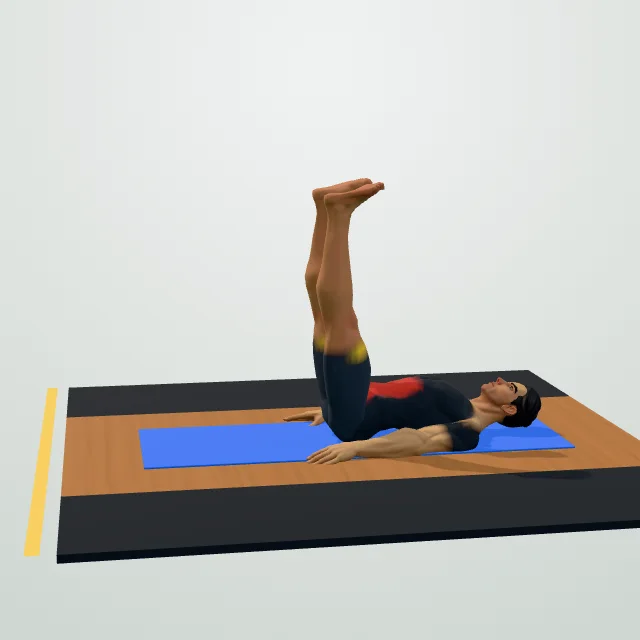
- Reverse crunch: curls your hips toward your ribs instead of the other way round, see the reverse crunch for the full technique.
- Bicycle crunch: adds rotation and alternating leg extension for more oblique involvement, covered in the bicycle crunch guide.
- Weighted crunch: hold a light plate across your chest once bodyweight crunches feel easy for 25+ reps.
- Cable crunch: kneeling with a cable behind your head lets you add resistance smoothly through a similar range of motion.
- Decline crunch: performed on a decline bench for a slightly longer range and added resistance from the angle.
Crunch vs sit-up
Both curl your torso, but a crunch stops after a few inches while a sit-up brings your whole torso up to your knees. That extra range in a sit-up recruits far more hip flexor, so a sit-up is more of a compound movement while a crunch is closer to an isolation exercise for the abs. Neither is universally "better": crunches suit people who want to target the abs directly with less hip flexor and lower-back involvement, while sit-ups build more overall trunk-flexion strength.
Safety: neck and lower back
Stop if you feel sharp pain in your neck or lower back. A burning feeling in your abs is normal fatigue.
Neck strain during crunches almost always comes from pulling on your head with your hands, keep your hands light and let your abs do the lifting, not your arms. If you have a current lower back injury, are pregnant, or have diastasis recti, check with a doctor or physiotherapist before doing crunches, as some cases call for a different core exercise entirely. Crunches will tone and strengthen the muscle underneath your stomach, but they will not by themselves reveal visible abs or reduce fat from that specific area, that depends on your overall body fat, which comes from your total diet and activity rather than any one exercise.
More exercises for abs and core
Questions people ask
How many crunches should I do a day?
What muscles do crunches work?
Are crunches bad for your back?
Do crunches give you a flat stomach or six-pack abs?
What is the difference between crunches and sit-ups?
Why does my neck hurt during crunches?
Can beginners do crunches?
General fitness information, not medical advice. Check with a doctor or physiotherapist before starting if you have a health condition, an injury or are pregnant. Stop if you feel chest pain, dizziness or sharp pain.