Abs and core · Home, no equipment
Reverse crunch: curl from your hips, not your neck
The reverse crunch flips the standard crunch: instead of lifting your shoulders, you curl your hips and knees up toward your ribs, taking the strain off your neck.
- Primary
- Abs
- Secondary
- Hip flexorsObliques
- Level
- Beginner
- Type
- Isolation · Both sides together
- Sets × reps
- 3 × 12-15 reps
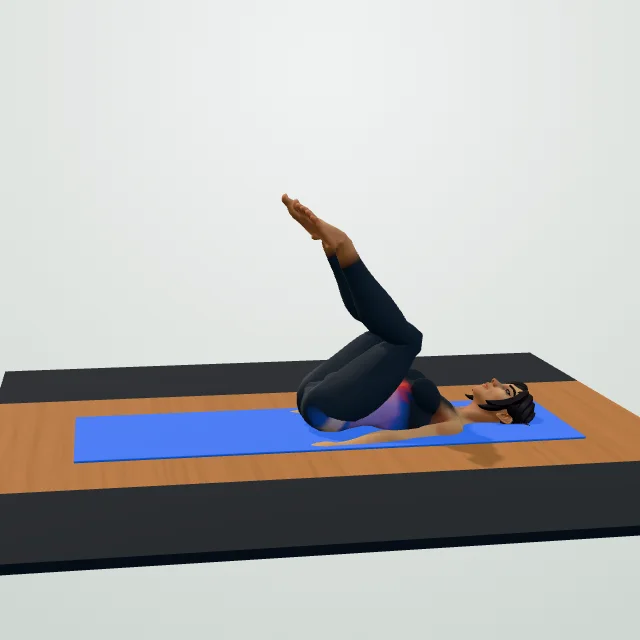
How to do it
- Lie on your back, knees bent, shins parallel to the floor.
- Rest your arms flat by your sides.
- Exhale and curl your hips off the floor.
- Draw your knees up and in toward your chest.
- Pause briefly at the top of the curl.
- Lower back down slowly under control.
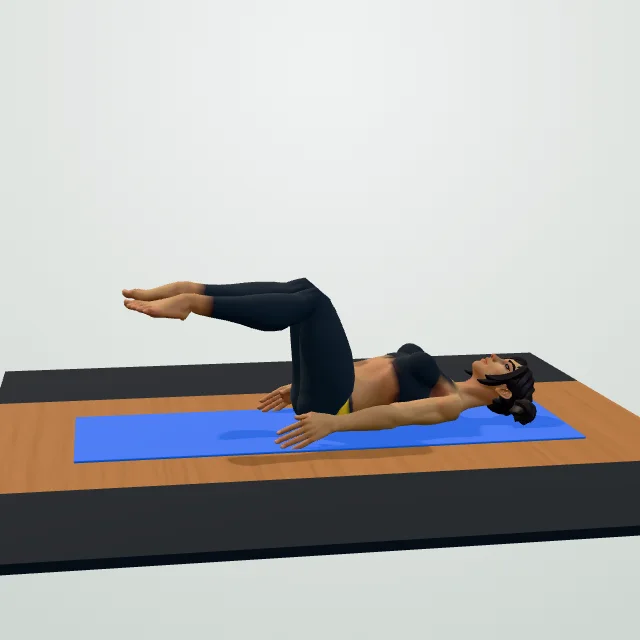
Coach cues
- Knees bent, shins parallel to the floor.
- Curl your hips up, not your legs swinging.
- Draw your knees toward your chest.
- Lower slowly, stay controlled.
Breathing: Exhale as you curl your hips up, inhale as you lower back down.
Common mistakes
Make it easier / Make it harder
Sets and reps by goal
| Goal | sets | reps | Rest |
|---|---|---|---|
| Strength | 4–5 | 6–8 | 90–120 s |
| Muscle growth | 3–4 | 10–15 | 60–90 s |
| Endurance | 2–3 | 15–25+ | 30–60 s |
The reverse crunch curls in the opposite direction from a standard crunch: instead of lifting your shoulders off the floor, you lift your hips and knees up toward your ribs while your upper body stays still. It is a common substitute or addition for people chasing "lower ab" results, since it shifts the emphasis toward the bottom portion of the abdominal wall and takes almost all the strain off your neck.
What muscles does the reverse crunch work?
There is no separate "lower ab" muscle, the rectus abdominis is one continuous muscle from your ribs to your pelvis, but the reverse crunch does emphasize its lower portion by curling your pelvis toward your ribs instead of the other way round. Your hip flexors work to lift your knees and legs, and your obliques help stabilize your pelvis so it tilts straight up rather than rocking side to side. Because the movement comes from your hips rather than your neck and shoulders, it is a useful option for anyone who finds standard crunches irritate their neck.
Benefits
- Shifts emphasis to the lower abs. Curling from the hips rather than the shoulders puts more relative tension through the lower portion of the rectus abdominis.
- Easier on the neck. Because your head and shoulders stay on the floor, there is nothing to strain by pulling on your neck, unlike a poorly performed crunch or sit-up.
- Builds pelvic control. Learning to tilt your pelvis under control without swinging your legs carries over to other core and hip-flexor exercises.
- No equipment required. Like most floor ab exercises, all you need is space to lie down.
Reverse crunch technique
Lie on your back with your knees bent to about 90° and lifted so your shins are roughly parallel to the floor, arms flat by your sides for stability. Exhale and curl your hips off the floor by drawing your knees up and in toward your chest, the movement should feel like your pelvis tilting and lifting, not your legs swinging up from momentum. Keep the motion small and controlled, a few inches of hip lift is enough if it is a real curl rather than a swing. Lower back down slowly rather than dropping, and keep your lower back from over-arching as your feet approach the floor.
How to program the reverse crunch
2-3 sets of 12-20 reps works well for most people, resting 30-60 seconds between sets, 2-4 times a week as part of a broader core routine. Slow the tempo down (a 2-second lift, a 2-3 second lower) rather than rushing through reps with momentum, since the exercise is easy to turn into a leg swing if you go too fast. Pair it with a standard crunch or a rotation move like the bicycle crunch to train the whole rectus abdominis and obliques rather than one segment, all as part of a wider abs workout.
Variations and progressions
- Reverse crunch on a bench: lying on a flat bench and gripping behind your head allows a slightly longer range of hip curl.
- Decline reverse crunch: performed on a decline bench for added resistance from the angle, a more advanced variation.
- Weighted reverse crunch: squeezing a light dumbbell between your feet or ankles adds resistance once bodyweight reps feel easy.
- Reverse crunch to hip lift: add a small pulse or hip thrust at the top of the curl for extra time under tension.
- Progress to hanging knee raises: once bodyweight reverse crunches feel easy, the hanging knee raise applies the same pelvic curl against gravity from a hang.
Reverse crunch vs leg raise
Both work the lower abs and hip flexors, but a lying leg raise keeps your legs straight and lowers them under control, which is a longer lever and generally harder on the lower back if your core is not yet strong enough to keep it flat. The reverse crunch keeps your knees bent, shortening the lever and making it a gentler entry point before progressing to straight-leg raises.
Safety: lower back
Stop for sharp lower back pain. Ab fatigue and mild hip flexor tightness afterward is normal.
If your lower back arches noticeably off the floor during the movement, that usually means the range is too large for your current strength, shrink the range or slow the tempo until your back can stay in contact with the floor. People with a current lower back injury, or who are pregnant, should get individual guidance before doing reverse crunches. As with any ab exercise, the reverse crunch strengthens the muscle without spot-reducing fat from your stomach, visible ab definition depends on your overall body fat, which comes from your total diet and activity.
Workout plans with this exercise
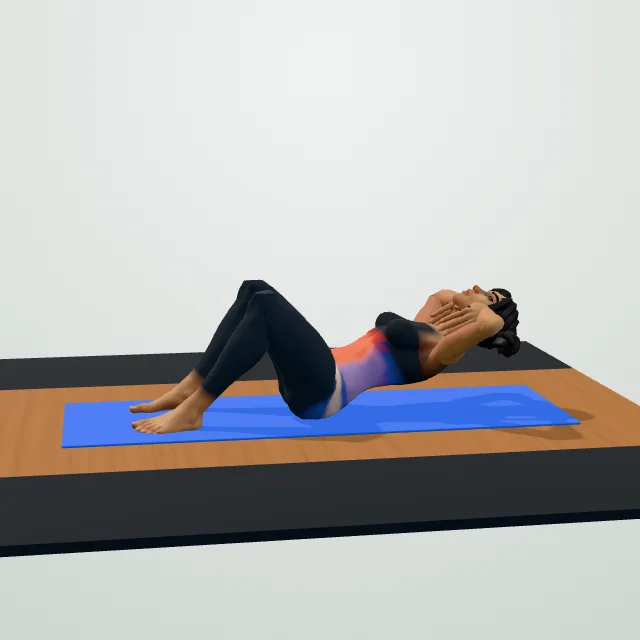
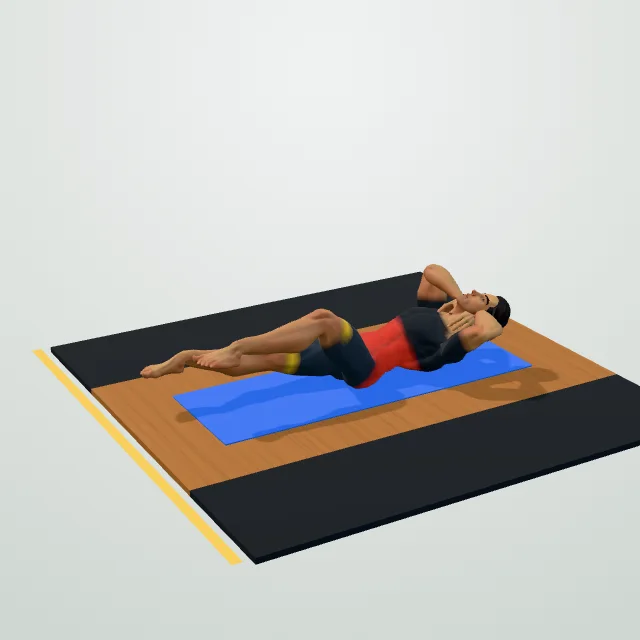
More exercises for abs and core
Questions people ask
What muscles does the reverse crunch work?
Is the reverse crunch good for lower abs?
How many reverse crunches should I do?
Is a reverse crunch better than a regular crunch?
Why does my lower back hurt during reverse crunches?
Can reverse crunches reduce belly fat?
What is a good reverse crunch progression?
General fitness information, not medical advice. Check with a doctor or physiotherapist before starting if you have a health condition, an injury or are pregnant. Stop if you feel chest pain, dizziness or sharp pain.