Abs and core · Home, no equipment
Bicycle crunch: twist and pedal for your whole core
The bicycle crunch combines a rotating curl with an alternating leg pedal, so your abs and obliques work on nearly every rep instead of taking turns.
- Secondary
- Hip flexors
- Level
- Beginner
- Type
- Isolation · Alternate sides
- Sets × reps
- 3 × 20 reps per side
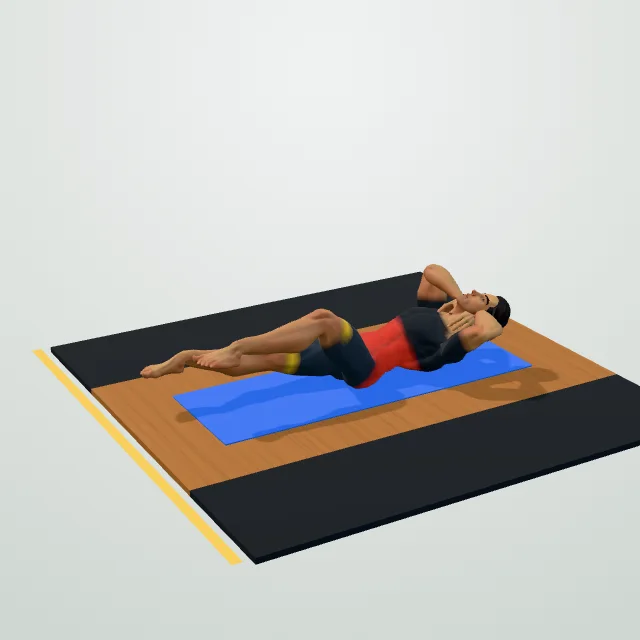
How to do it
- Lie on your back, hands lightly behind your ears.
- Lift your knees with shins parallel to the floor.
- Extend one leg out while rotating the opposite elbow toward the other knee.
- Switch sides in a smooth, continuous pedal.
- Keep your lower back pressed into the floor.
- Repeat at a controlled, steady pace.
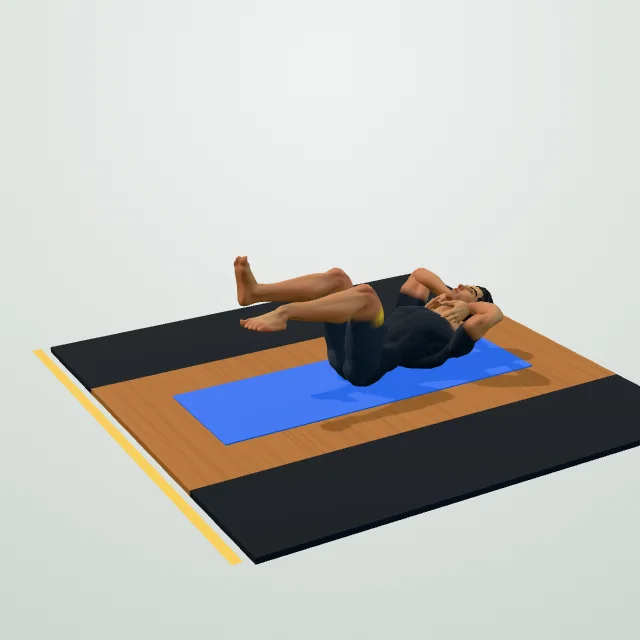
Coach cues
- Hands light behind your ears.
- Twist your ribs toward your hip.
- Extend the other leg, keep it steady.
- Switch sides, smooth and controlled.
Breathing: Exhale as you twist toward each knee; keep breathing steadily through the continuous motion.
Common mistakes
Make it easier / Make it harder
Sets and reps by goal
| Goal | sets | reps | Rest |
|---|---|---|---|
| Strength | 4–5 | 6–8 | 90–120 s |
| Muscle growth | 3–4 | 10–15 | 60–90 s |
| Endurance | 2–3 | 15–25+ | 30–60 s |
The bicycle crunch pairs a twisting curl of your torso with an alternating pedaling motion of your legs, touching one elbow toward the opposite knee while the other leg extends, then switching sides in a smooth, continuous rhythm. That combination of rotation and hip flexion is why research on ab exercises has repeatedly found the bicycle crunch produces some of the highest muscle activation of common core moves, and why it shows up in almost every abs routine.
What muscles does the bicycle crunch work?
The rotating curl targets your rectus abdominis and obliques together, the obliques handle the twist that brings your elbow toward the opposite knee, while the rectus abdominis curls your ribs toward your pelvis on each rep. The extending leg also pulls in your hip flexors, since it works against gravity as it straightens out. Because both the twisting upper body and the pedaling legs are moving on every rep, the bicycle crunch trains rotation, flexion and hip control in a single continuous exercise rather than one movement at a time.
Benefits
- High muscle activation for the effort. The combined twist and pedal recruits more of the abdominal wall per rep than a straight crunch, which is why it is a popular choice when time for ab work is limited.
- Trains rotation, not just flexion. Many core exercises only bend you forward; the bicycle crunch also trains the rotational strength you use in throwing, swinging and turning movements.
- No equipment needed. Like most floor ab exercises, it needs nothing but space to lie down.
- Scalable pace. A slow, deliberate pace emphasizes control and the mind-muscle connection; a faster pace adds a light cardio component.
Technique: pace, twist and leg extension
Lie on your back, hands lightly behind your ears, knees bent and lifted with shins parallel to the floor. Extend one leg out at roughly a 45° angle while you rotate your torso to bring the opposite elbow toward the bent knee, this rotation should come from your ribcage twisting toward your hip, not from your elbow reaching across on its own or your hand pulling your head. Switch sides in a smooth, continuous pedaling motion. Keep your lower back pressed gently into the floor throughout, if it arches as your leg extends, raise the extended leg a little higher until your lower back stays flat. A slow, controlled pace with a real elbow-to-knee touch is more effective than rushing through a high rep count with a shallow twist.
How to program the bicycle crunch
2-3 sets of 20-30 total reps (10-15 per side) is a reasonable target for most people, with 30-60 seconds of rest, done 2-4 times a week alongside other core work. Because the exercise is continuous, count full cycles (both sides) as one rep so your left and right sides get equal work. It pairs well in a circuit with a static hold such as the plank and a rotation-focused move like the Russian twist, together they cover flexion, anti-extension and rotation, which is closer to a complete abs workout than any single exercise alone.
Bicycle crunch vs Russian twist
Both train rotation, but the bicycle crunch adds hip flexor work through the pedaling legs, while the Russian twist keeps the legs mostly still (or lifted and held) and focuses the rotation through the torso alone, often with added weight. Many routines use both: bicycle crunches for a bodyweight rotation-and-flexion combination, Russian twists when you want to add resistance to the twist itself.
Variations
- Slow bicycle crunch: a 2-3 second count per side emphasizes control and full range over speed.
- Standing bicycle crunch: performed upright, bringing elbow to opposite knee, useful as a lower-impact option or a warm-up drill.
- Weighted bicycle crunch: holding a light plate against your chest adds resistance once bodyweight reps feel easy.
- Reverse crunch superset: pairing bicycle crunches with the reverse crunch covers both rotation and pure hip-flexion in one short circuit.
Safety: neck and lower back
Stop for sharp neck or lower back pain. A burning feeling across your abs and obliques is normal.
Keep your hands light behind your ears rather than pulling your head through the rotation, neck strain almost always comes from using your arms instead of your abs to create the twist. If your lower back arches or aches, raise your extended leg higher or slow the pace until you can keep your back flat against the floor. People with a current back injury, or who are pregnant, should choose a gentler core exercise and get individual guidance first. The bicycle crunch will not by itself burn fat from your belly, no exercise spot-reduces fat from one area, visible ab definition depends on your overall body fat rather than which ab exercise you choose.
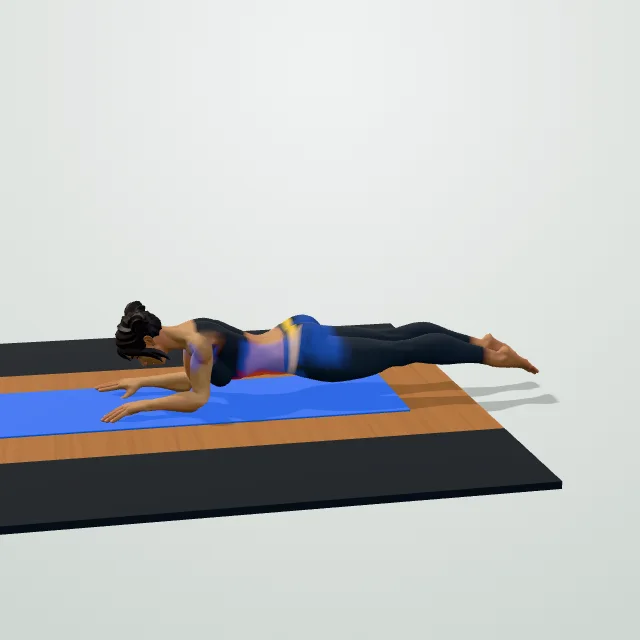
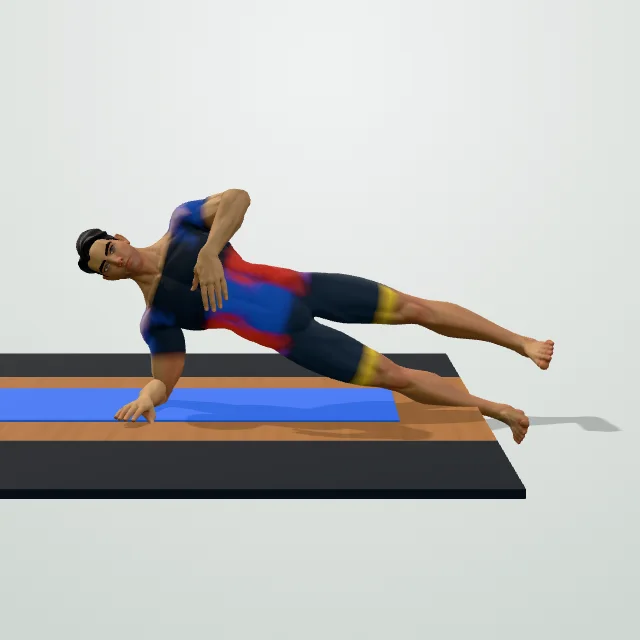
More exercises for abs and core
Questions people ask
What muscles does the bicycle crunch work?
How many bicycle crunches should I do?
Is the bicycle crunch better than a regular crunch?
Why does my lower back hurt during bicycle crunches?
Can bicycle crunches give you a flat stomach?
What is the difference between bicycle crunches and Russian twists?
Are bicycle crunches safe for beginners?
General fitness information, not medical advice. Check with a doctor or physiotherapist before starting if you have a health condition, an injury or are pregnant. Stop if you feel chest pain, dizziness or sharp pain.