Back · Gym
Barbell row: build back thickness with the bent-over row
A bent-over pulling exercise that rows a loaded barbell into your torso, one of the most effective builders of back thickness. Here is the hip-hinge setup and pulling technique that keep it safe and productive.
- Primary
- LatsUpper back
- Secondary
- BicepsRear deltsLower back
- Level
- Intermediate
- Type
- Compound · Both sides together
- Sets × reps
- 4 × 6-10 reps
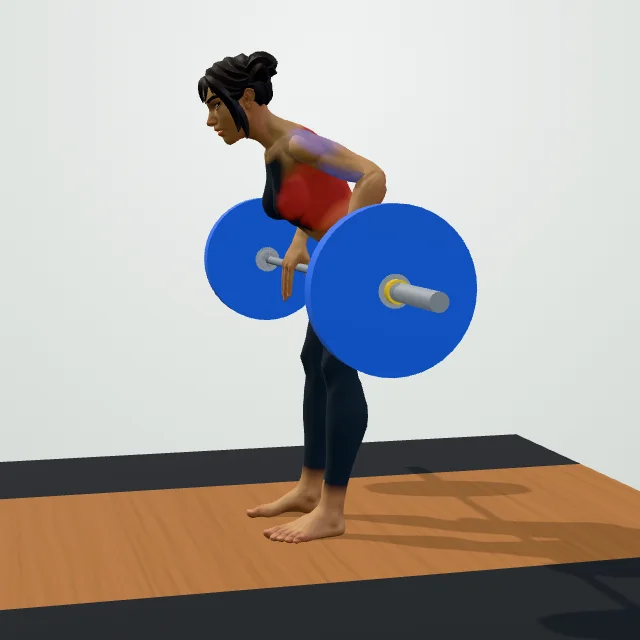
How to do it
- Stand with feet hip-width apart, grip the bar just outside your legs.
- Hinge forward from the hips to about 45°, back flat and neutral.
- Let the bar hang with straight arms at the bottom.
- Pull your elbows back and up, driving them past your torso.
- Squeeze your shoulder blades together at the top.
- Lower the bar under control back to a full hang.
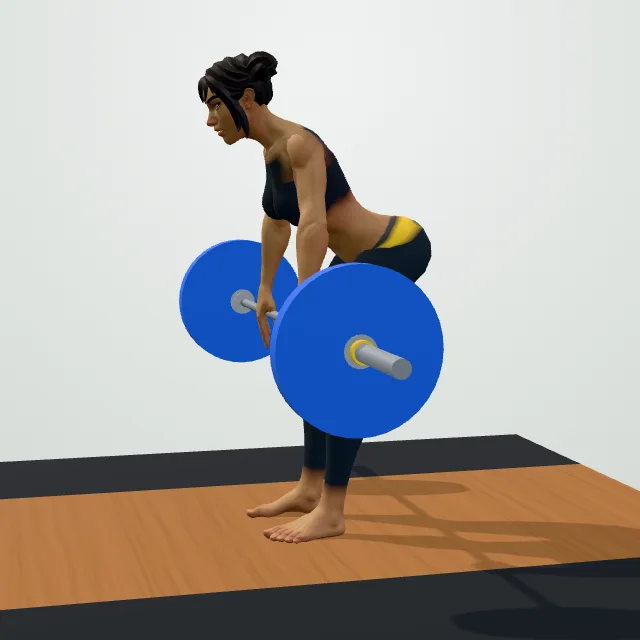
Coach cues
- Hinge to 45°, back flat and braced.
- Bar hangs with straight arms to start.
- Pull elbows back, squeeze shoulder blades.
- Lower under control, no swinging.
Breathing: Breathe out as you pull the bar to your torso, breathe in as you lower it.
Common mistakes
Make it easier / Make it harder
Sets and reps by goal
| Goal | sets | reps | Rest |
|---|---|---|---|
| Strength | 3–5 | 3–6 | 2–4 min |
| Muscle growth | 3–4 | 6–12 | 90–150 s |
| Endurance | 2–3 | 15–20 | 30–60 s |
The barbell row, more precisely the bent-over barbell row, is a hip-hinge pulling exercise where you row a loaded barbell into your torso while your body stays bent forward. It is one of the most direct ways to build back thickness with free weights, training the muscles between your shoulder blades and the lats together in one heavy compound movement.
What muscles does the barbell row work
The lats and upper back (rhomboids and mid-traps) are the prime movers, pulling your elbows back and your shoulder blades together, with the biceps and rear delts assisting the pull. Because your torso is bent forward and unsupported, the lower back and core also work hard isometrically to hold that position under load, which is exactly why "do bent over rows work lower back" comes up so often — yes, as a stabilizer, not as the main target.
Benefits of the barbell row
- Builds back thickness more directly than most machine rows, since the free-weight hinge position recruits more total musculature.
- Balances heavy pressing work like the bench press, which is why it is a standard pairing in push-pull training splits.
- Trains grip and core bracing alongside the back, since holding the hinge position under load challenges both.
- Highly loadable, allowing the same kind of long-term progressive overload as squats and deadlifts.
Barbell row vs dumbbell, cable and T-bar row
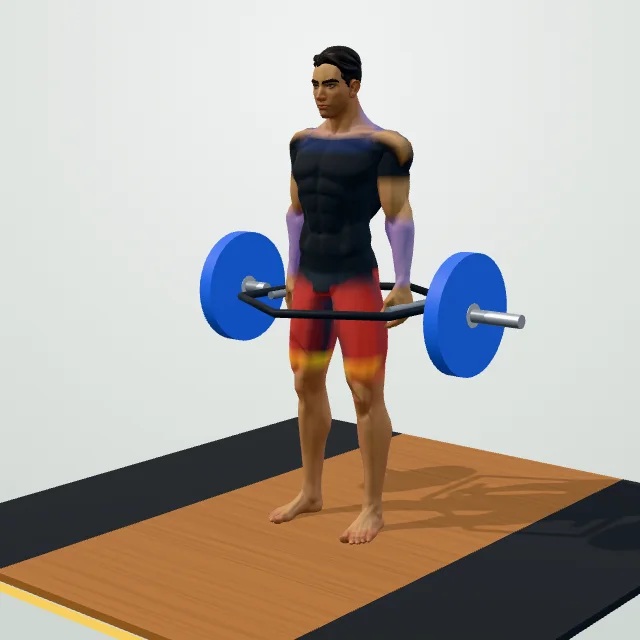
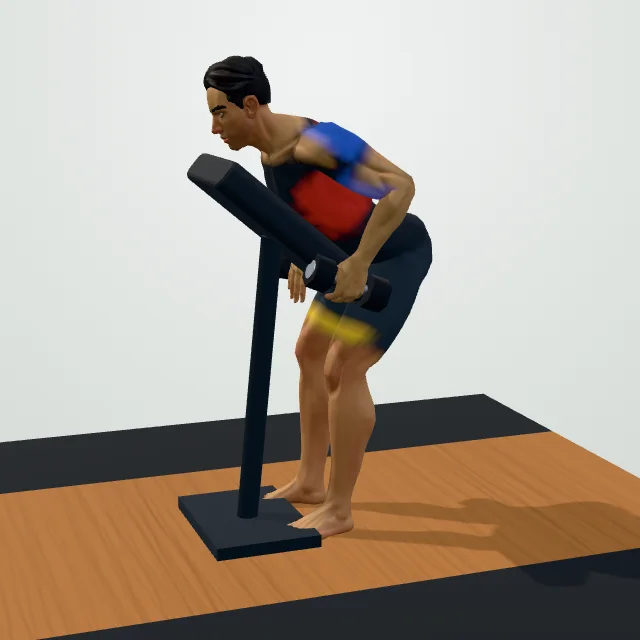
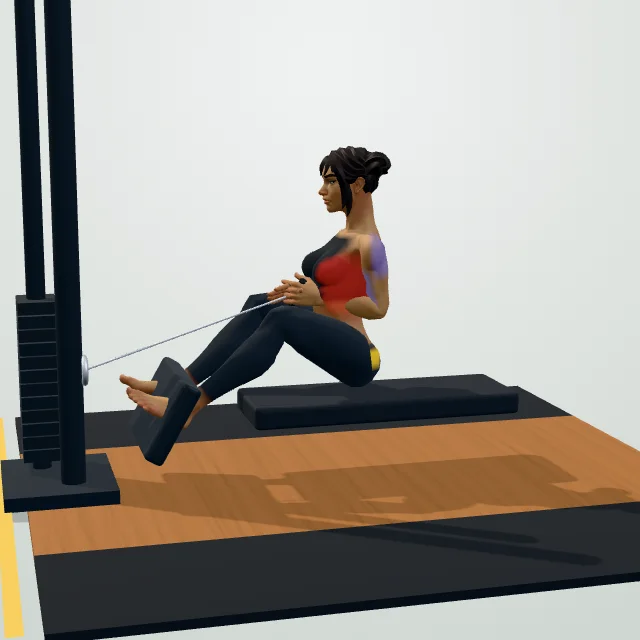
The barbell row lets you load the most total weight of any rowing variation, but it demands the most technical control, since your torso is unsupported the entire set. The one-arm dumbbell row supports your torso on a bench, reducing lower-back demand and letting you focus purely on the pull. The seated cable row removes the hip-hinge entirely, and the T-bar row sits between the two, with a fixed bar path that some lifters find easier to control than a free barbell. None of these replaces the barbell row outright — they train the same muscles with different amounts of stabilizer demand, so many programs use two or three rowing variations across a week.
How to do the barbell row correctly
Setup
Stand with feet hip-width apart, grip the bar just outside your legs, and hinge forward from the hips until your torso is at roughly 45 degrees, keeping a flat, neutral back rather than rounding it. Let the bar hang with straight arms at the bottom of each rep.
The pull
Pull your elbows back and up, driving them past your torso, and squeeze your shoulder blades together at the top rather than just bending your elbows. Keep the bar close to your body, brushing your shins and thighs as it travels, and avoid using momentum from your hips to heave the weight up.
What you should feel
You should feel the contraction squarely between your shoulder blades and down through the lats, with the biceps assisting. If your lower back rounds or you feel the movement mainly in your arms, the weight is likely too heavy for your current hip-hinge control.
Sets, reps and how often to train it
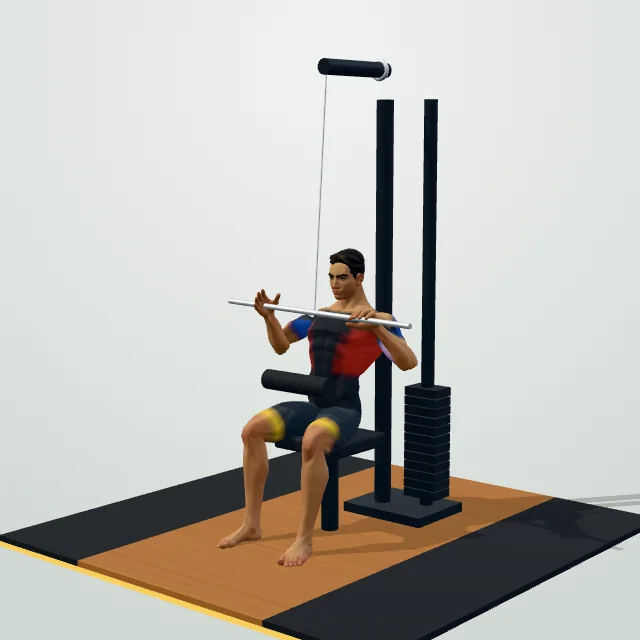
For back thickness and strength, 3–4 sets of 6–10 reps with 90 seconds to 2 minutes of rest works well, using a weight that leaves 1–3 reps in reserve rather than turning every set into a grinding effort with a rounded back. Train rowing movements 2 times a week as part of a balanced pulling routine, alongside vertical pulls such as the lat pulldown for a complete back workout. See how many sets and reps for more on structuring a session, or the back and biceps workout, which is built around this exercise.
Variations and alternatives
An underhand (supinated) grip shifts a bit more work onto the biceps and lats, while an overhand grip emphasizes the upper back and rear delts slightly more. The Pendlay row, where the bar rests fully on the floor between reps and the torso stays parallel to the ground, is a stricter, more explosive variation for lifters who want less momentum in the pull. If a barbell row is not accessible, the inverted row is a bodyweight alternative that trains a similar horizontal-pulling pattern with no equipment beyond a bar or rings.
Safety and who should modify it
A rounded lower back under load is the main risk with this exercise, so stop the set or reduce the weight the moment you cannot hold a flat back through the hinge. Anyone with an existing lower-back injury, disc issue or acute back pain should start with a supported row, such as the chest-supported row, before progressing to the free-standing barbell version. Stop for sharp back pain, and if you are pregnant, recovering from back surgery, or new to hinge-pattern exercises, learn the position with light weight or bodyweight first, and see exercise for lower back pain for more guidance.
Workout plans with this exercise
Build muscle · Intermediate
Push Pull Legs Split (6 Days)
Strength · Intermediate
Upper/Lower Split (4 Days)
Build muscle · Intermediate
4-Day Muscle-Building Workout Plan
Build muscle · Intermediate
5-Day Body-Part Split (Bro Split)
Strength · Intermediate
5×5 Strength Program
Build muscle · Intermediate
Back and Biceps Workout
Questions people ask
What muscles does the barbell row work?
Is the bent-over barbell row dangerous?
Barbell row vs dumbbell row: which is better?
What is the difference between a barbell row and a Pendlay row?
Do barbell rows work the lower back?
How many barbell rows should I do?
What can I do instead of a barbell row?
General fitness information, not medical advice. Check with a doctor or physiotherapist before starting if you have a health condition, an injury or are pregnant. Stop if you feel chest pain, dizziness or sharp pain.