Back · Home or gym
One-arm dumbbell row: single-side back strength
A supported rowing exercise done one side at a time, with one hand and knee braced on a bench. Here is the setup, technique and how to do it if you do not have a bench.
- Primary
- LatsUpper back
- Secondary
- BicepsRear delts
- Level
- Beginner
- Type
- Compound · One side, then the other
- Sets × reps
- 3 × 8-12 reps per side
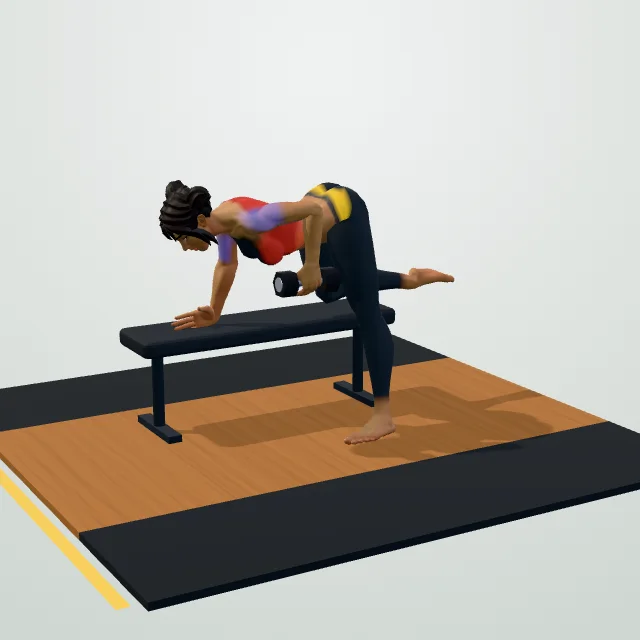
How to do it
- Place one knee and the same-side hand on a bench.
- Plant your other foot on the floor, back flat and parallel to the ground.
- Hold the dumbbell in your free hand, arm hanging straight down.
- Pull your elbow back and up along your side.
- Squeeze your shoulder blade toward your spine at the top.
- Lower the dumbbell under control to a full stretch.
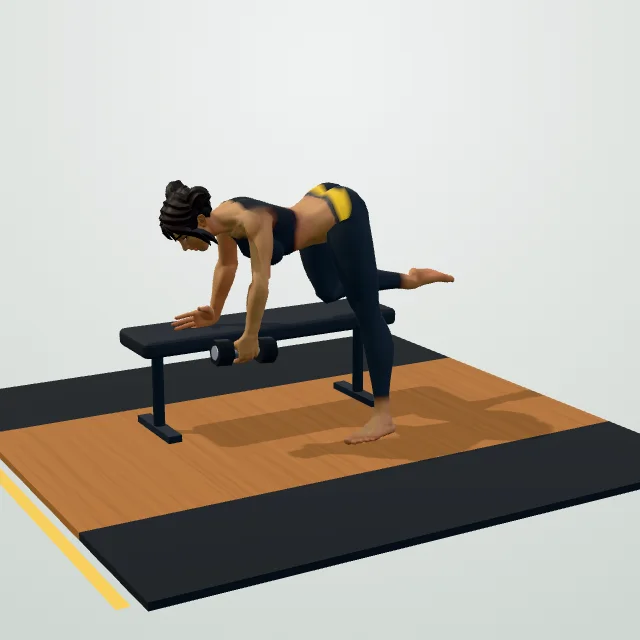
Coach cues
- Knee and hand braced on the bench.
- Back flat, parallel to the ground.
- Pull your elbow back, squeeze your shoulder blade.
- Lower under control to a full stretch.
Breathing: Breathe out as you pull the dumbbell up, breathe in as you lower it.
Common mistakes
Make it easier / Make it harder
Sets and reps by goal
| Goal | sets | reps | Rest |
|---|---|---|---|
| Strength | 3–5 | 3–6 | 2–4 min |
| Muscle growth | 3–4 | 6–12 | 90–150 s |
| Endurance | 2–3 | 15–20 | 30–60 s |
The one-arm dumbbell row is a single-side rowing exercise performed with one hand and one knee braced on a bench, rowing a dumbbell into your hip with the other arm. Because the bench supports your torso, it removes most of the balance and lower-back demand of a bent-over barbell row, letting you focus purely on pulling your back muscles hard on each side.
What muscles does the one-arm dumbbell row work
The lats and upper back are the prime movers, pulling your elbow back and up, with the biceps and rear delts assisting. Training one side at a time lets you focus fully on squeezing the working lat without your stronger side compensating, which is one reason this exercise shows up so often in questions about fixing left-right back imbalances.
Benefits of the one-arm dumbbell row
- Supported torso removes most of the lower-back demand of a bent-over barbell row, making it a good option for people who want to isolate the back without a hip-hinge component.
- Trains each side independently, helping to correct strength imbalances between your left and right lat.
- Full range of motion, since the free-hanging dumbbell can stretch further at the bottom and pull further at the top than a barbell allows.
- Scales well with dumbbell weight, from light home-gym dumbbells up to heavy loads in a commercial gym.
How to do the one-arm dumbbell row correctly
Setup
Place one knee and the same-side hand on a flat bench, with your other foot planted on the floor for stability. Keep your back flat and roughly parallel to the ground, holding the dumbbell in your free hand with your arm hanging straight down.
The pull
Pull your elbow back and up along your side, driving it past your torso, and squeeze your shoulder blade toward your spine at the top. Keep your torso still — rotating your shoulders or twisting your spine to help lift the weight takes work away from the lat and adds unnecessary spinal load.
What you should feel
You should feel a strong stretch at the bottom of the rep and a firm squeeze between your shoulder blade and spine at the top. If you feel it mainly in your lower back or shoulder, check that your torso is staying still and that the weight is not too heavy for controlled form.
How to do it without a bench
Without a bench, brace your free hand on a sturdy chair, low table, or your own bent knee, keeping the same flat-back, hip-hinged position. The key requirement is a stable base for your non-working arm so your torso does not rotate or round as you pull — a wall or countertop at roughly hip height can substitute for a bench in most home setups.
Sets, reps and how often to train it
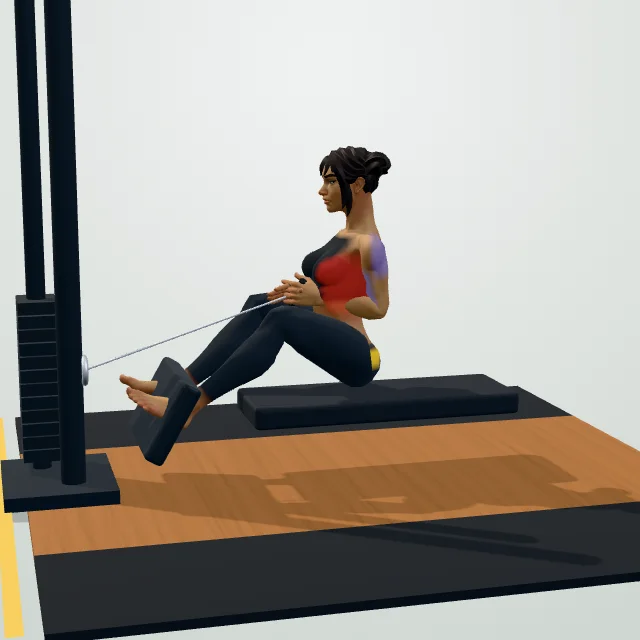
For back development, 3 sets of 8–12 reps per side with 60–90 seconds of rest works well, using a weight where the last 2–3 reps are genuinely challenging with strict form. Train rowing movements 2 times a week, pairing this with a vertical pull such as the lat pulldown or a bilateral row such as the barbell row for a complete back session. See how many sets and reps for more on programming, or the full-body dumbbell workout, which includes this exercise.
Variations and alternatives
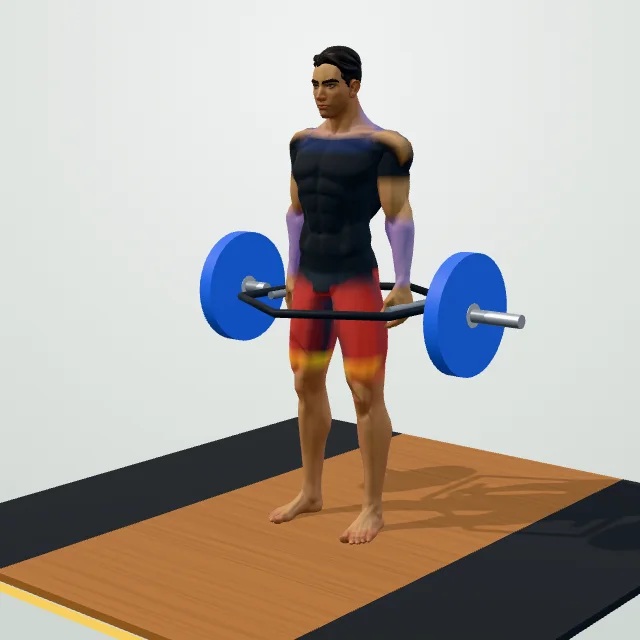
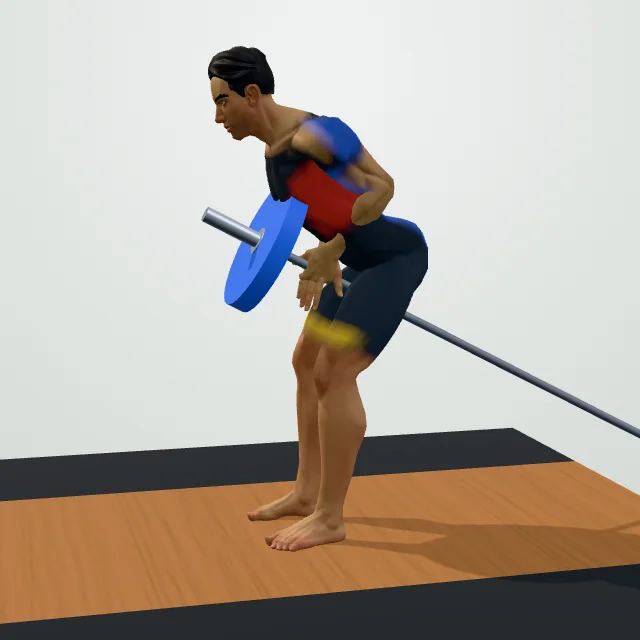
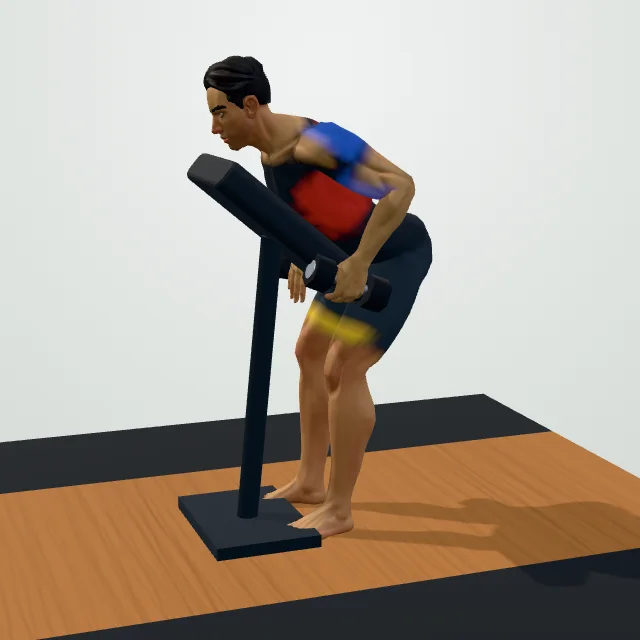
The chest-supported row supports both sides of your torso at once and can be done two-arm or one-arm, which some lifters find more comfortable on the shoulder. If you train at home without dumbbells, the resistance band row trains a similar single-arm pulling pattern. Increasing the dumbbell weight, adding a pause at the top of the pull, or slowing the lowering phase are all straightforward ways to progress this exercise over time.
Safety and who should modify it
Keep your spine neutral rather than twisting to help move the weight, which is the main technical fault to avoid with any one-arm row. Anyone with an existing lower-back or shoulder injury should start with a light dumbbell and a fully supported base until the pattern feels controlled. Stop for sharp back or shoulder pain, and if you are pregnant, recovering from surgery, or new to rowing exercises, build up the weight gradually and check with a doctor or physiotherapist if you have a diagnosed back condition.
Questions people ask
What is a one-arm dumbbell row?
What muscles does the one-arm dumbbell row work?
How do I do a one-arm dumbbell row without a bench?
One-arm dumbbell row vs barbell row: which is better?
Why does one side feel weaker during one-arm rows?
How many one-arm dumbbell rows should I do?
Is the one-arm dumbbell row good for beginners?
General fitness information, not medical advice. Check with a doctor or physiotherapist before starting if you have a health condition, an injury or are pregnant. Stop if you feel chest pain, dizziness or sharp pain.