Biceps · Gym
Barbell curl: build raw biceps strength and size
A straight bar lets you load both arms together and go heavier than dumbbells, making the barbell curl the classic, time-tested way to build biceps mass and thickness.
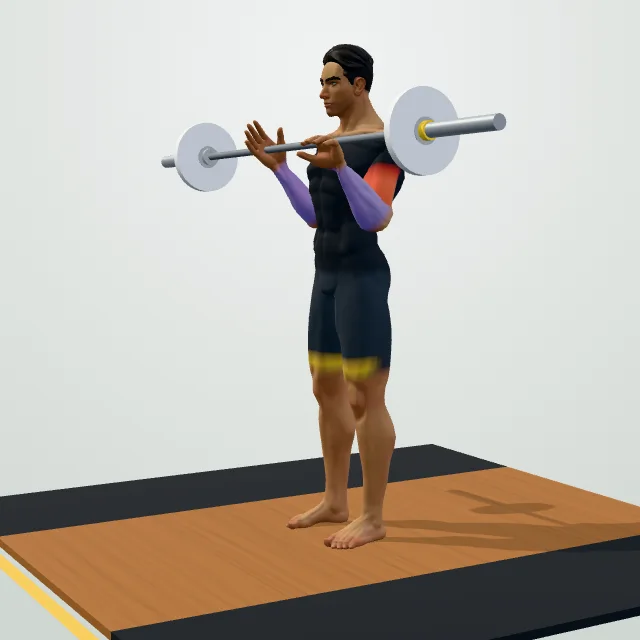
How to do it
- Stand tall holding the bar with an underhand, shoulder-width grip.
- Let the bar hang at your thighs, elbows close to your sides.
- Curl the bar up by bending your elbows only.
- Keep elbows pinned to your sides throughout the curl.
- Squeeze briefly near shoulder height.
- Lower with control back to the start position.
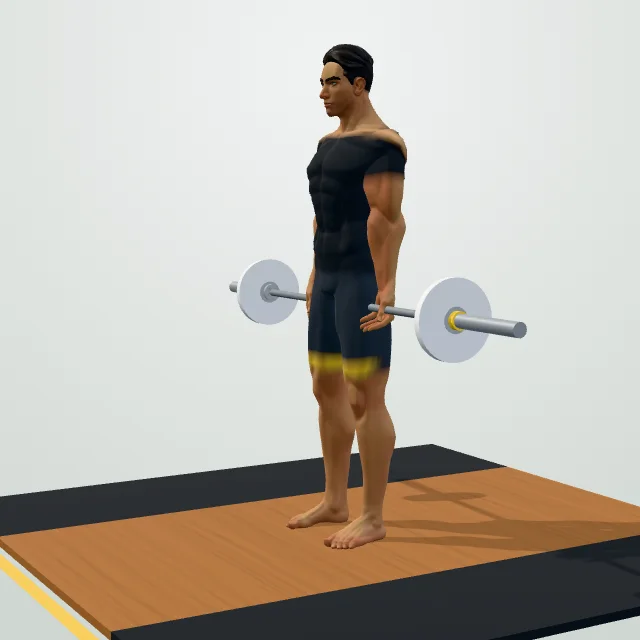
Coach cues
- Underhand grip, shoulder-width apart.
- Elbows pinned to your sides.
- Curl up, squeeze at the top.
- Lower with control, no swinging.
Breathing: Breathe out as you curl the bar up, and breathe in as you lower it back down.
Common mistakes
Make it easier / Make it harder
Sets and reps by goal
| Goal | sets | reps | Rest |
|---|---|---|---|
| Strength | 3–5 | 6–8 | 90–120 s |
| Muscle growth | 3–4 | 10–15 | 60–90 s |
| Endurance | 2–3 | 15–20 | 30–60 s |
The barbell curl loads a straight bar in both hands and curls it from your thighs up to shoulder height, working both biceps together under one shared weight. It is the classic biceps mass-builder because a bar lets you go heavier than a pair of dumbbells while keeping the technique simple to repeat.
Muscles worked by the barbell curl
The biceps are the prime mover, bending your elbow to bring the bar up, and your forearms grip and stabilize the bar throughout the lift from the first rep to the last. Because a straight bar fixes your wrists in a supinated (palms-up) position, the biceps take on most of the work directly, with less of the forearm rotation you get from a dumbbell or hammer curl.
Benefits
- Loads both arms together. A bar usually lets you handle more total weight than matching dumbbells.
- Simple to progress. Small plates make it easy to add weight in steady, predictable steps.
- Fixed bar path. One consistent grip and path makes it easy to compare strength over time.
- Builds grip and forearm strength. Holding a loaded bar for reps trains your grip alongside your biceps.
- Easy to load precisely. Standard weight plates let you add small, repeatable increments week to week.
Technique and grip width
Stand tall holding the bar with an underhand grip roughly shoulder-width apart — a grip that is too narrow or too wide can put uneven stress on your wrists. Let the bar hang at your thighs with your elbows close to your sides.
Curl the bar up by bending your elbows, keeping them pinned close to your body rather than letting them drift forward, until the bar reaches close to shoulder height. Squeeze briefly at the top, then lower with control back to the start, resisting the bar rather than dropping it. Keep your torso still throughout — rocking your hips or leaning back to sling the bar up is the most common way this exercise gets watered down. A brief pause at the bottom, arms fully straight, before starting the next rep also helps confirm you are using a controlled, full range rather than short, bouncy pulses.
Sets, reps and how heavy to go
| Goal | Sets × reps | Rest | Load |
|---|---|---|---|
| Strength | 3–4 × 6–8 | 90 sec | RPE 7–8 |
| Muscle growth | 3 × 8–12 | 60–90 sec | RPE 8–9 |
| Endurance | 2–3 × 15+ | 45 sec | Light to moderate |
Fit the barbell curl into an arm workout or at the end of a back and biceps workout, since your biceps are already partly fatigued from rowing and pulling movements by then. Add weight once you can complete every set with strict form and no swinging.
Barbell curl vs dumbbell curl vs EZ-bar curl
Against the dumbbell curl, the barbell version usually lets you lift more total weight since both arms share one bar, but the dumbbell version allows each arm to move independently and rotate the wrist naturally. An EZ-bar curl uses an angled bar that many lifters find more comfortable on the wrists while keeping most of the loading benefits of a straight bar.
Warming up your elbows and wrists
A light empty-bar set or two before your working weight warms up your elbows and wrists and lets you check your grip width feels comfortable that day. Progressing the weight steadily, in line with our progressive overload guide, works well for an exercise like this where small, consistent jumps beat occasional big ones.
Safety notes
If a straight bar bothers your wrists, try a slightly wider grip or switch to an EZ-bar, which angles the grip into a more natural position. Keep your elbows still and your torso upright — using momentum to sling the bar up shifts stress onto your lower back and shoulders instead of your biceps.
With a comfortable grip width and strict form, the barbell curl is a safe, reliable way to add biceps size and strength over time.
More exercises for biceps
Questions people ask
What muscles does the barbell curl work?
Barbell curl vs dumbbell curl — which is better for biceps?
Why do my wrists hurt during barbell curls?
How heavy should I barbell curl?
Is it okay to swing a little on barbell curls?
Barbell curl vs EZ-bar curl — what is the difference?
How often should I train barbell curls?
General fitness information, not medical advice. Check with a doctor or physiotherapist before starting if you have a health condition, an injury or are pregnant. Stop if you feel chest pain, dizziness or sharp pain.