Biceps · Home or gym
Incline dumbbell curl: extra stretch for the biceps long head
Sitting back on an incline bench pulls your arms behind your torso, stretching the biceps more than a standing curl. Here is the right angle, technique and programming.
- Primary
- Biceps
- Level
- Intermediate
- Type
- Isolation · Both sides together
- Sets × reps
- 3 × 10-12 reps
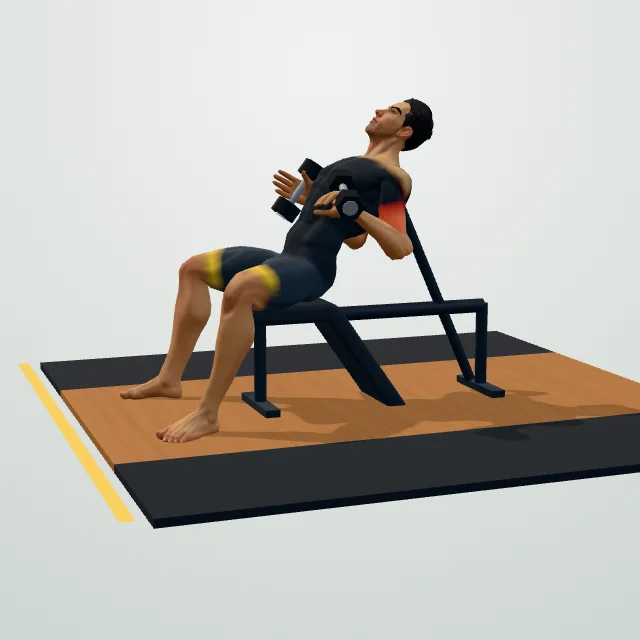
How to do it
- Set an adjustable bench to a 45–60 degree incline.
- Sit back fully with dumbbells hanging straight down.
- Keep elbows at your sides and curl both dumbbells up.
- Avoid arching off the bench to help the weight move.
- Squeeze briefly at the top of the rep.
- Lower slowly back to a full stretch at the bottom.
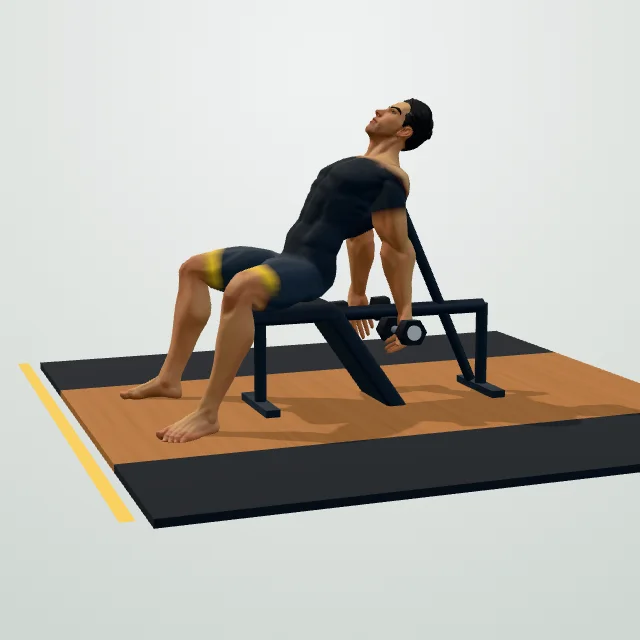
Coach cues
- Sit back, let your arms hang fully.
- Elbows stay at your sides.
- Curl up without arching your back.
- Lower slowly to a full stretch.
Breathing: Breathe in as you lower into the stretch, and breathe out as you curl the dumbbells up.
Common mistakes
Make it easier / Make it harder
Sets and reps by goal
| Goal | sets | reps | Rest |
|---|---|---|---|
| Strength | 3–5 | 6–8 | 90–120 s |
| Muscle growth | 3–4 | 10–15 | 60–90 s |
| Endurance | 2–3 | 15–20 | 30–60 s |
The incline dumbbell curl is a bicep curl done while sitting back on an incline bench, which pulls your upper arms slightly behind your torso. That changed shoulder position puts the biceps in a longer, more stretched starting point than a standing curl, and many lifters use it specifically to target the long head of the biceps — the part that contributes most to a peaked look — through that extra range.
It is one of the more demanding curl variations because of the stretch, so it usually needs lighter dumbbells than other biceps exercises, even for experienced lifters.
Muscles the incline dumbbell curl works
The incline curl targets the biceps brachii, with the arms-behind-torso position emphasizing the long head, which crosses the shoulder joint and is stretched further when the arm is pulled backward. The brachialis assists with elbow flexion, and the forearm flexors hold the dumbbells throughout. Because the shoulder is in an extended position, there is very little ability to swing the weight using momentum, which reinforces strict form.
Benefits of the incline dumbbell curl
- Deeper stretch: the arms-behind-body position lengthens the biceps more than a standing curl, which some research links to a stronger growth stimulus.
- Reduces cheating: the reclined position makes it almost impossible to use hip or shoulder momentum to swing the weight up.
- Targets the long head: useful if you want to emphasize the outer part of the biceps that contributes to arm "peak."
- Simple equipment: just dumbbells and an adjustable bench.
Technique: bench angle, path and tempo
Set the bench to a 45–60 degree incline — steeper than this and the exercise starts to feel like a standing curl; flatter and you lose some of the stretch benefit. Sit back fully so your shoulders and upper back are supported, and let both arms hang straight down, palms facing forward. Curl the dumbbells up without letting your elbows drift forward off your sides, and avoid arching off the bench to help the weight up. Lower slowly over 2–3 seconds until your arms are fully extended again — the stretched bottom position is the main reason to choose this exercise, so do not cut the range short.
Because the stretch is more intense here than in most curls, expect noticeably more muscle soreness the first few times you add this exercise; that is normal and settles as your body adapts — see the muscle soreness guide.
How to program the incline dumbbell curl
| Goal | Sets | Reps | Rest |
|---|---|---|---|
| Strength | 3 | 6–8 | 90 seconds |
| Muscle (hypertrophy) | 3 | 10–12 | 60–90 seconds |
| Endurance | 2–3 | 15+ | 45 seconds |
Start with a lighter weight than you use on a standing dumbbell curl — the extra stretch makes this exercise feel harder at the same load. Add weight gradually using the progressive overload guide, and give the biceps at least 48 hours before working them hard again if you are sore. It works well early in a biceps-focused session, since it demands strict form that is easier to keep before fatigue sets in.
Variations and progressions
- Incline hammer curl: use a neutral grip on the incline bench to add brachialis and forearm emphasis.
- Alternating incline curl: curl one arm at a time to allow a small rotation of the palm outward for a peak squeeze.
- Single-arm incline curl: lets you brace with the free hand and focus fully on one side.
If you do not have an adjustable bench, the standard dumbbell curl or preacher curl both train the biceps with a similar stretch-focused emphasis.
Incline curl vs standing curl vs preacher curl
A standing dumbbell curl allows the shoulder to move slightly and lets you handle more weight, but gives less of a stretch at the bottom. The preacher curl also emphasizes a stretched position, but through a fixed pad angle rather than shoulder extension, and tends to bias the short head more. The incline curl sits between the two: strict like the preacher curl, but with a stretch that specifically targets the long head through shoulder extension.
Safety and who should modify it
Because this exercise stretches the biceps and the front of the shoulder more than other curls, start conservatively with lighter weight the first few sessions and avoid forcing the arm further back than feels comfortable. If you have a shoulder injury or biceps tendon irritation, this is one of the more demanding curl variations on that joint — check with a physiotherapist before adding it, and choose a flatter incline or a different curl variation in the meantime.
More exercises for biceps
Questions people ask
What angle should the bench be for incline curls?
What muscles does the incline dumbbell curl work?
Why does the incline curl feel harder than a standing curl?
How much weight should I use for incline curls?
Can beginners do incline dumbbell curls?
Is the incline curl better than a preacher curl for biceps growth?
General fitness information, not medical advice. Check with a doctor or physiotherapist before starting if you have a health condition, an injury or are pregnant. Stop if you feel chest pain, dizziness or sharp pain.