Biceps · Home or gym
Hammer curl: how to build your arms and grip with a neutral-grip curl
The hammer curl is a neutral-grip dumbbell curl that builds the biceps, brachialis and forearms together. Here is the technique, the muscles it hits, and how to fit it into an arm workout.
- Level
- Beginner
- Type
- Isolation · Both sides together
- Sets × reps
- 3 × 10-12 reps
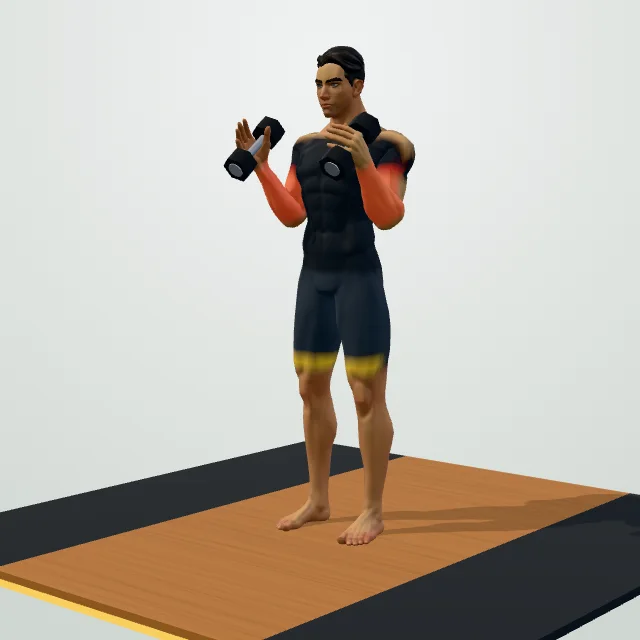
How to do it
- Stand tall holding a dumbbell in each hand, palms facing your torso.
- Pin your upper arms to your sides and brace your core.
- Curl both dumbbells up by bending only at the elbows.
- Stop when your forearms are roughly vertical, keeping wrists neutral.
- Squeeze briefly at the top without shrugging the shoulders.
- Lower the dumbbells slowly back to the start.
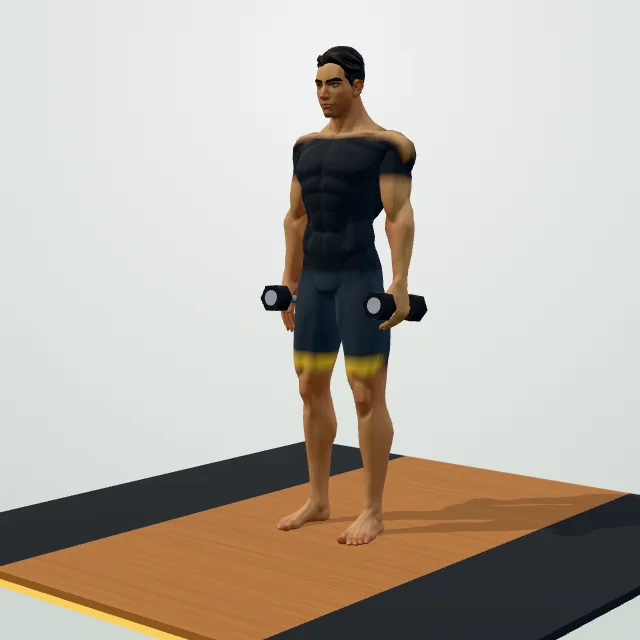
Coach cues
- Palms face each other the whole rep.
- Elbows stay pinned to your sides.
- Curl up, squeeze, then lower slowly.
- No swinging from the shoulders.
Breathing: Breathe out as you curl the dumbbells up, and breathe in as you lower them back down.
Common mistakes
Make it easier / Make it harder
Sets and reps by goal
| Goal | sets | reps | Rest |
|---|---|---|---|
| Strength | 3–5 | 6–8 | 90–120 s |
| Muscle growth | 3–4 | 10–15 | 60–90 s |
| Endurance | 2–3 | 15–20 | 30–60 s |
The hammer curl is a dumbbell curl done with a neutral grip — palms facing each other, like holding a hammer — instead of the palms-up grip of a standard bicep curl. That single change shifts more work onto the brachialis and brachioradialis, the muscles that sit underneath and alongside the biceps, which is why the hammer curl is one of the most recommended exercises for building thicker-looking arms and a stronger grip.
Because the neutral grip is more wrist-friendly than a supinated one, the hammer curl is also a common substitute for people who feel elbow or wrist discomfort on regular curls. It is simple to learn, works with almost any dumbbell, and pairs well with other biceps exercises in an arm-focused session.
Muscles the hammer curl works
The neutral grip changes which elbow flexor does the most work. The biceps brachii still contributes, but the brachialis — a muscle that lies underneath the biceps and pushes it upward, adding width to the upper arm when viewed from the side — takes on a larger share. The brachioradialis, the muscle that forms the visible ridge on the top of the forearm, is also more active than in a standard curl because the neutral grip lines it up to pull more directly. Grip and forearm muscles work isometrically throughout the set to hold the dumbbell steady. See the full biceps hub and forearms and grip hub for how this fits with other exercises.
Benefits of the hammer curl
- Arm thickness: a well-developed brachialis pushes the biceps up, which can make the upper arm look bigger from the front and the side.
- Grip and forearm strength: useful for rows, pull-ups, deadlifts and carrying groceries or luggage.
- Joint-friendly: the neutral grip is usually more comfortable for people with wrist or elbow sensitivity than a supinated curl.
- Easy to load: works with dumbbells, a cable rope attachment, or a resistance band, so it fits almost any setup.
Technique: grip, path and tempo
Stand tall holding a dumbbell in each hand at your sides with palms facing your body — this neutral grip stays fixed for the whole set; do not rotate the wrist like you would in a standard curl. Keep your upper arms pinned to your ribs so the shoulder does not help swing the weight up. Curl by bending only at the elbow, and stop when your forearm is roughly vertical; going further usually just tips the torso back. Lower with control over two to three seconds — the eccentric phase is where a lot of the muscle-building stimulus comes from — and avoid letting the dumbbells drop.
Two set-ups change the emphasis: alternating one arm at a time lets you focus on each side and keep strict form, while curling both arms together is faster and lets you keep the same tempo on both sides. A cross-body hammer curl, where the dumbbell travels toward the opposite shoulder, shifts a little more work onto the brachialis and is worth rotating in as a variation.
How to program the hammer curl
| Goal | Sets | Reps | Rest |
|---|---|---|---|
| Strength | 3 | 6–8 | 90 seconds |
| Muscle (hypertrophy) | 3 | 10–12 | 60–90 seconds |
| Endurance | 2–3 | 15–20 | 45 seconds |
Pick a weight that leaves 2–3 reps in reserve (RIR) on your last set — see the RPE and RIR guide if that is new to you. Hammer curls respond well to 2 sessions a week for the arms as long as you are also progressing your pulling exercises, and they slot in well near the end of an arm or pull day once bigger lifts are done. Add small load or an extra rep every week or two rather than jumping weight — the progressive overload guide and sets and reps guide cover this in detail.
Variations and progressions
- Cross-body hammer curl: curl toward the opposite shoulder to bias the brachialis further.
- Cable or rope hammer curl: constant tension through the whole range; good if dumbbells are not available — see cable machine exercises.
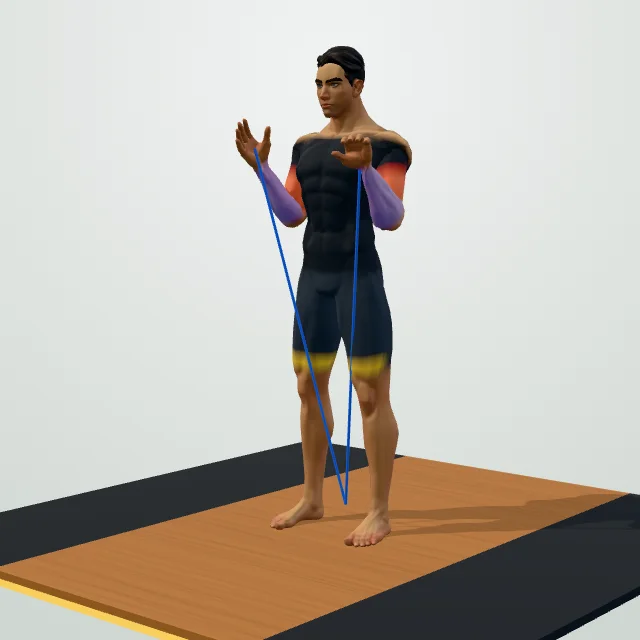
- Resistance band hammer curl: a light, joint-friendly option for home training; try the resistance band bicep curl for the standard-grip version.
- Incline hammer curl: sitting back on an incline bench limits shoulder swing and increases stretch at the bottom.
If your gym has no dumbbells, the cable curl or band bicep curl cover the same movement pattern.
Hammer curl vs bicep curl
A standard dumbbell bicep curl uses a supinated (palms-up) grip and puts more emphasis on the biceps brachii itself, particularly the short head. The hammer curl's neutral grip shares the load with the brachialis and brachioradialis. Neither is "better" — most arm programs use both across a week, since they train overlapping but distinct muscle groups. If you can only do one, the hammer curl is the friendlier choice for anyone with wrist or elbow discomfort.
Safety and who should modify it
The hammer curl is low-risk for most people. Keep the weight controlled rather than swinging it, since momentum from the hips or shoulders reduces the work on the arms and can strain the lower back. If you have existing elbow tendon pain (such as golfer's or tennis elbow), start light, keep the range of motion pain-free, and stop if you feel sharp pain rather than normal muscle fatigue. Anyone recovering from a wrist or elbow injury should check with a doctor or physiotherapist before loading curls.
Workout plans with this exercise
Build muscle · Intermediate
Push Pull Legs Split (6 Days)
Build muscle · Intermediate
4-Day Muscle-Building Workout Plan
Build muscle · Intermediate
5-Day Body-Part Split (Bro Split)
Build muscle · Beginner
Full-Body Dumbbell Workout Plan
Build muscle · Intermediate
Back and Biceps Workout
Build muscle · Beginner
Dumbbell Arm Workout (Biceps and Triceps)
More exercises for biceps
Questions people ask
What muscles does the hammer curl work?
Is the hammer curl better than a regular bicep curl?
How heavy should I go on hammer curls?
Can hammer curls help with grip strength?
Should I alternate arms or curl both at once?
Are hammer curls safe for tennis elbow?
General fitness information, not medical advice. Check with a doctor or physiotherapist before starting if you have a health condition, an injury or are pregnant. Stop if you feel chest pain, dizziness or sharp pain.