Chest · Gym
Chest press machine: a guided path to a stronger chest
The chest press machine builds the same pressing muscles as a bench press without needing a spotter, which makes it a solid choice for training alone or close to failure.
- Primary
- Chest
- Secondary
- TricepsFront delts
- Level
- Beginner
- Type
- Compound · Both sides together
- Sets × reps
- 3 × 10-12 reps
How to do it
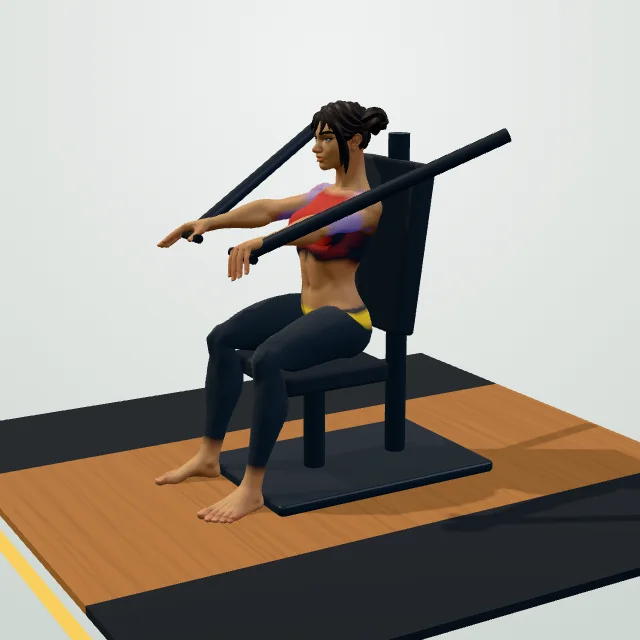
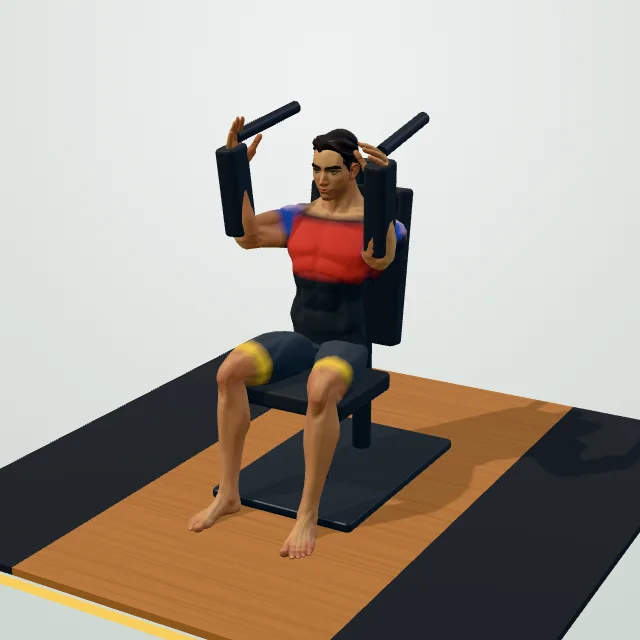
- Adjust the seat so the handles sit level with your mid-chest.
- Sit back fully against the pad, feet flat on the floor.
- Grip the handles with hands roughly shoulder-width apart.
- Press the handles forward until your arms are extended.
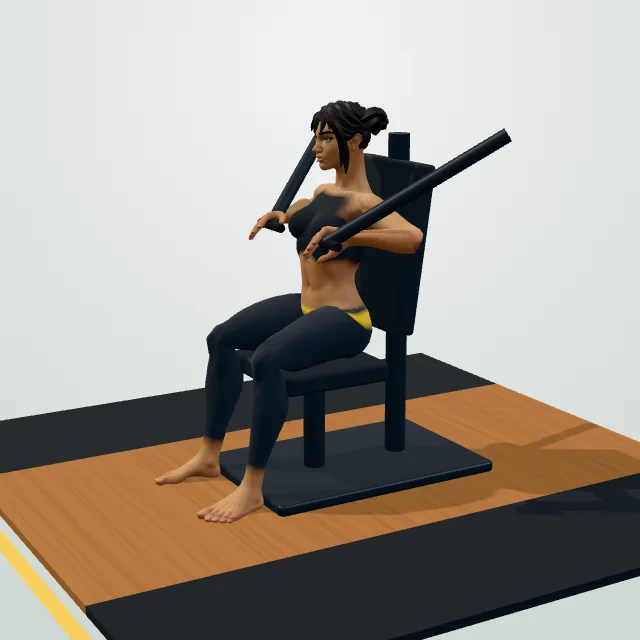
- Bring them back under control until your upper arms are level with your torso.
- Repeat for all reps, keeping your back against the pad.
Coach cues
- Seat set level with your mid-chest.
- Shoulder blades against the pad.
- Press forward, do not lock the elbows hard.
- Bring the handles back under control.
Breathing: Breathe out as you press the handles forward, then breathe in as you bring them back.
Common mistakes
Make it easier / Make it harder
Sets and reps by goal
| Goal | sets | reps | Rest |
|---|---|---|---|
| Strength | 3–5 | 3–6 | 2–4 min |
| Muscle growth | 3–4 | 6–12 | 90–150 s |
| Endurance | 2–3 | 15–20 | 30–60 s |
The chest press machine is a seated pressing machine that guides your hands along a fixed path, using a weight stack or plates instead of a free barbell or dumbbells. It trains the same pushing motion as a bench press but with a supported back and no need to balance the weight, which makes it a common choice for beginners, for training alone, and for pressing close to failure safely.
Muscles worked and why
The chest is the prime mover, with the front shoulders and triceps assisting through the press, in the same pattern as a bench press. Because the seat back supports your torso and the handles travel a fixed path, less of your effort goes into stabilizing the weight, so more of it can go directly into pressing.
Benefits
The guided path removes the balance demands of a free-weight press, which makes this a good option for beginners still learning to press, or for anyone training without a spotter who wants to push a set closer to failure safely — if your arms give out, the machine simply stops rather than the weight falling on you. It is also quick to adjust, so it suits supersets or circuits where you need to change weight fast.
Seat height, grip and setup
Adjust the seat so the handles sit level with your mid-chest — too high and the movement turns into more of a shoulder press, too low and you lose range and put extra strain on the shoulders reaching up to the handles. Sit back fully against the pad with your feet flat on the floor.
Grip the handles and press them forward until your arms are extended, without locking your elbows out hard at the top. Bring the handles back under control until your upper arms are roughly level with your torso, keeping your shoulder blades against the pad rather than rounding forward to meet the handles. Some machines offer a neutral (palms facing each other) grip option, which some lifters find more comfortable on the shoulders than a straight, palms-forward grip.
How to program it
Use the chest press machine as your main pressing exercise on days you train alone, or as a second pressing movement after a free-weight bench press. For strength, 3–4 sets of 6–10 reps with 90 seconds to 2 minutes of rest works well; for muscle size, 3–4 sets of 8–15 reps with 60–90 seconds is a common range. Leave 1–2 reps in reserve on most sets (see the RPE and RIR guide), and increase the weight in small steps as your reps feel controlled, following progressive overload.
Variations and progressions
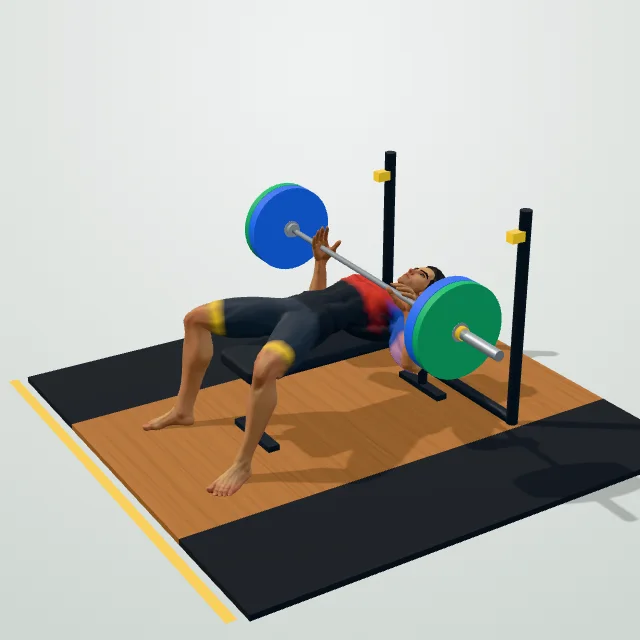
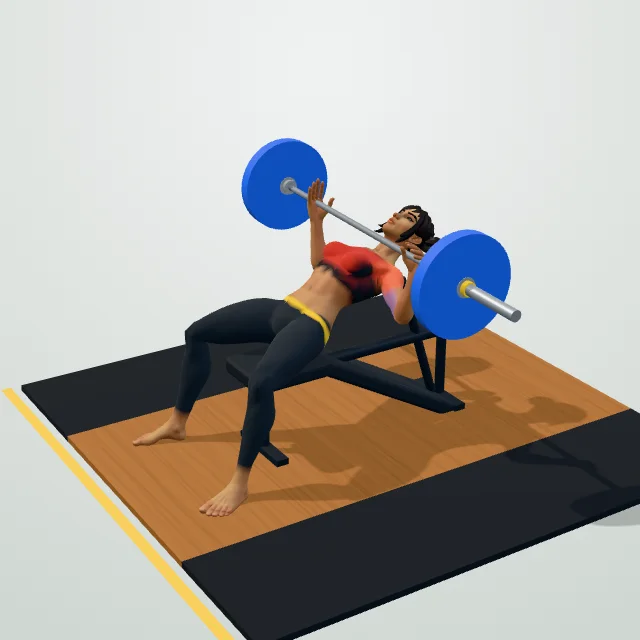
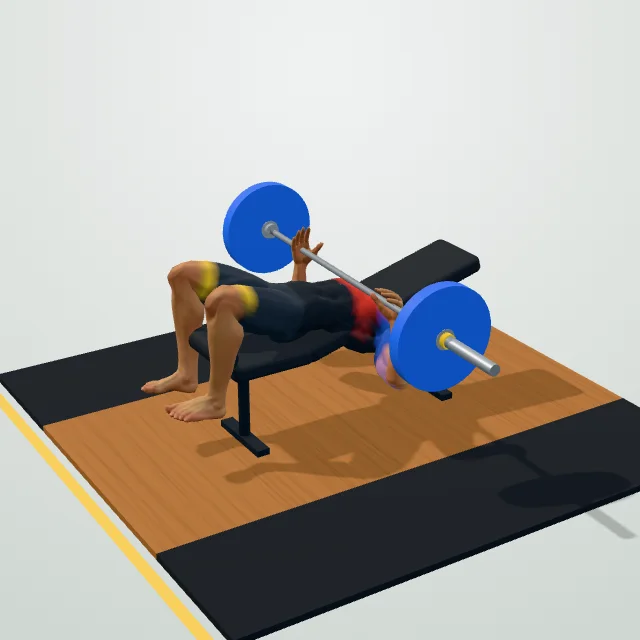
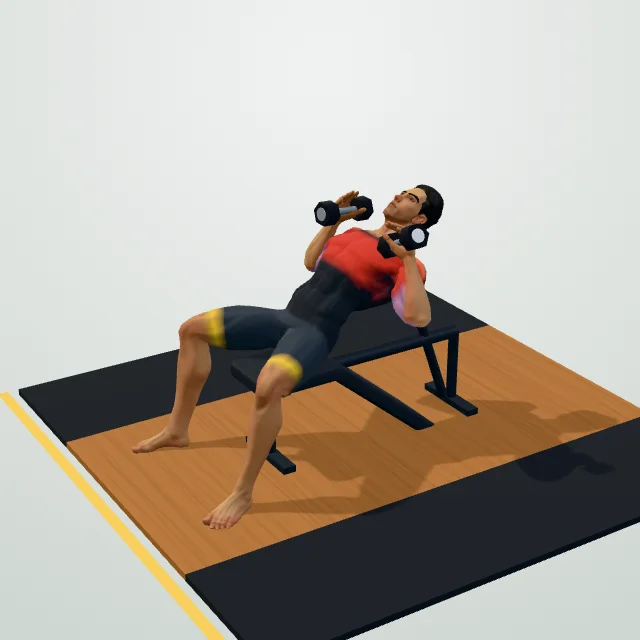
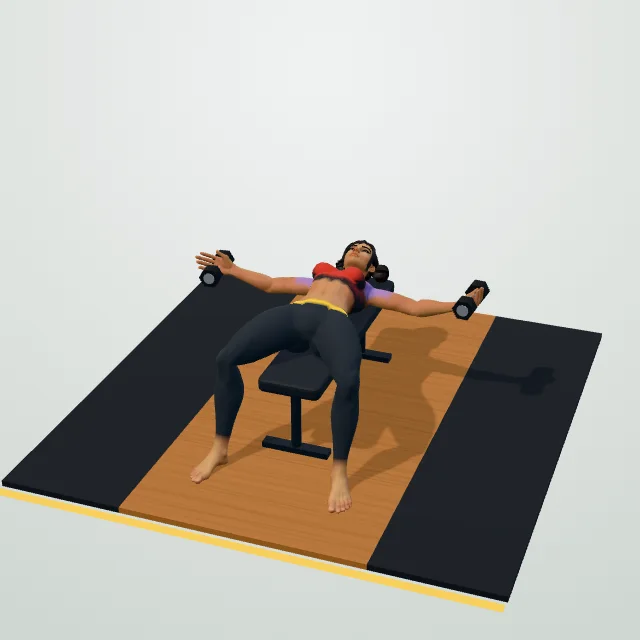
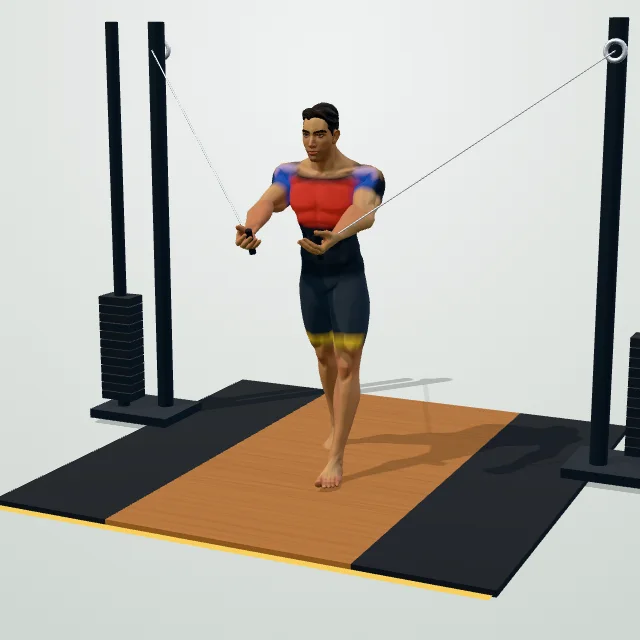
The dumbbell bench press trains the same muscles with a freer range of motion and independent arm control once you are ready for a free-weight version, and the push-up is a bodyweight option with no equipment at all. Many gyms also offer an incline setting on the chest press machine, which shifts some emphasis toward the upper chest in the same way an incline bench press does.
Chest press machine vs barbell bench press
A barbell bench press trains stabilizing muscles that the machine's fixed path takes care of for you, and it is the more direct way to build strength that carries over to unsupported pressing. The chest press machine is easier to learn, safer to train alone, and a practical option if a barbell or dumbbells are not available. Many programs use both: free-weight pressing for overall strength, and the machine as an accessory or a lower-fatigue alternative on busy days.
Safety: who should modify it
Set the seat height correctly before you start — this single adjustment fixes most of the discomfort people report with this machine. Avoid locking your elbows out hard at the top of every rep, and keep your shoulder blades against the pad rather than rounding forward. If you feel pinching at the front of the shoulder, try the neutral grip if the machine offers one, or reduce the range slightly, and see a physiotherapist if it continues.
Questions people ask
What muscles does the chest press machine work?
How do I set the seat height on a chest press machine?
Is the chest press machine as good as a bench press?
Is the chest press machine good for beginners?
Can I train the chest press machine to failure without a spotter?
How many reps should I do on the chest press machine?
Does the chest press machine build muscle as well as free weights?
General fitness information, not medical advice. Check with a doctor or physiotherapist before starting if you have a health condition, an injury or are pregnant. Stop if you feel chest pain, dizziness or sharp pain.