Cardio · Gym
Treadmill running: controlled pace, real running fitness
Treadmill running lets you fix the pace and incline exactly, on a softer surface than pavement, whatever the weather outside. Here is the form and programming that make sessions count.
- Secondary
- GlutesHamstringsHip flexors
- Level
- Beginner
- Type
- Compound · Alternate sides
- Sets × reps
- 1 × 20 min
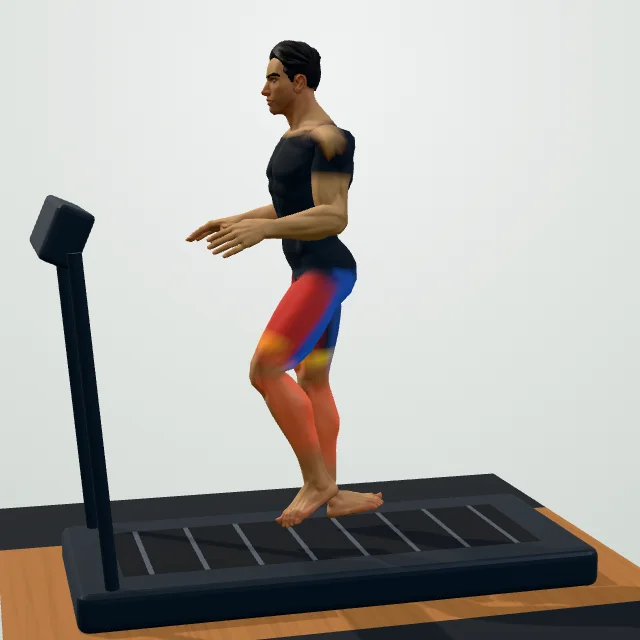
How to do it
- Start the belt slow and step on with a hand free for balance.
- Run tall with a slight forward lean from the ankles.
- Let your arms swing naturally, front to back.
- Land with a light, quick step under your hips.
- Look ahead rather than down at your feet.
- Slow the belt gradually before stepping off.
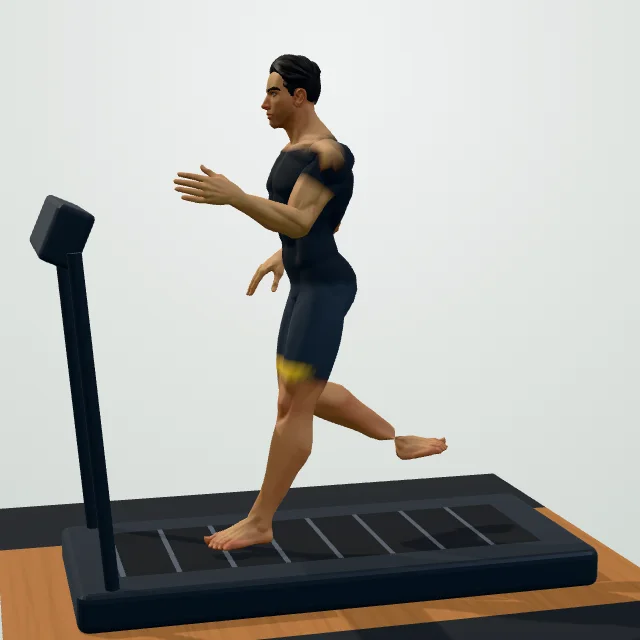
Coach cues
- Tall posture, slight forward lean.
- Arms swing naturally, front to back.
- Quick, light steps under your hips.
- Look ahead, not down at your feet.
Breathing: Breathe rhythmically with your stride; settle into a pattern you can sustain at your chosen pace.
Common mistakes
Make it easier / Make it harder
Treadmill running puts the belt in motion instead of you, letting you fix your pace, incline and distance precisely rather than reacting to hills, traffic or weather. It is a genuine substitute for outdoor running for most training purposes, with a slightly softer surface and none of the route-planning.
What muscles does treadmill running work?
Running is driven mainly by the quads and calves, which extend the knee and push off through the ankle on every stride, while the hamstrings and glutes drive the hip back to propel you forward. The hip flexors pull each leg forward into the next stride, and the abs and lower back brace to keep your torso upright and stable rather than rotating excessively with each footstrike. An incline shifts more of the work onto the glutes and calves, similar to running uphill outdoors.
Benefits
- Precise pace control. Setting an exact speed removes the guesswork of pacing yourself by feel, which is useful for structured interval or tempo training.
- Slightly softer surface. A treadmill belt has more give than asphalt or concrete, which can be gentler on the joints over repeated sessions.
- Weather-independent. Rain, heat, cold or darkness do not stop a treadmill session.
- Built-in incline training. Simulating hills on demand is a straightforward way to add intensity or work different muscles without finding an actual hill.
Technique: posture, cadence and footstrike
Run tall with a slight forward lean from the ankles rather than the waist, and let your arms swing naturally front to back rather than crossing your body. Aim for a cadence — steps per minute — in the range that keeps your stride quick and light rather than long and pounding; over-striding, where the foot lands well ahead of your hips, is one of the more common causes of treadmill running discomfort. Look ahead rather than down at your feet or the console, since a dropped head pulls your posture forward. The most common technical error on a treadmill specifically is holding the handrails, which distorts your natural arm swing and posture and reduces the training effect; if you need the rails for balance at a given speed, that speed is too fast for now.
How to program treadmill running
| Use | Work | Rest |
|---|---|---|
| Easy aerobic run | 20-45 min, conversational pace | continuous |
| Interval / speed session | 30 sec-3 min, hard pace | equal or longer easy jog, repeat 6-10 rounds |
| Incline walk-run | 20-30 min, 5-15% incline, moderate pace | continuous |
The treadmill fits naturally into the gym cardio workout alongside the bike and rower, and an interval timer keeps a structured speed session accurate without watching the console constantly. Your heart-rate zone is a more reliable intensity guide than pace alone, since treadmill pace and outdoor pace do not always feel equivalent; aim for zone 2-3 on an easy run and zone 4-5 on hard intervals. The calories burned calculator gives an honest estimate, though most treadmill consoles also display a reasonable figure based on your speed, incline and weight.
Variations and progressions
New runners should start with a run-walk approach — alternating one to two minutes of easy running with an equal or longer walking recovery — building the running portions gradually over several weeks rather than trying to run continuously from day one. Adding a 1-2% incline on easy runs approximates outdoor wind resistance and slightly reduces impact compared to a flat belt at the same pace. Popular structured formats like the 12-3-30 protocol — 12% incline, 3 mph, 30 minutes of walking — are a low-impact way to build cardio and leg endurance without running at all, useful on recovery days or for beginners easing into treadmill training.
Treadmill running vs. outdoor running
The treadmill belt moves under you rather than you moving over ground, which removes a small amount of the propulsive work your legs would otherwise do — this is part of why many runners find treadmill running feels slightly easier at the same pace as outdoors, and a small incline of 1-2% is a common way to compensate. Outdoor running trains balance, terrain adaptation and pacing judgement that a flat, controlled belt does not, while the treadmill offers more precise pace control and a softer surface. Neither replaces the other completely, and most regular runners benefit from using both.
Safety and who should modify it
Increase speed and distance gradually, and check with a doctor or physiotherapist first if you have joint pain, a heart or blood-pressure condition, or are returning from injury.
Treadmill running still carries repetitive impact through the legs, even if slightly less than pavement, so build weekly running volume up gradually — roughly 5-10% increases — rather than jumping distance or speed suddenly. Never step off a moving belt without stopping it first, keep the safety clip attached if the machine has one, and stop for sharp joint pain, chest pain, dizziness or unusual breathlessness.
More exercises for cardio
Questions people ask
Is treadmill running as good as running outside?
What muscles does treadmill running work?
Is treadmill running easier than running outside?
Is treadmill running bad for your knees?
How do I start running on a treadmill as a beginner?
Why does holding the handrails matter on a treadmill?
Can treadmill running help with weight loss?
General fitness information, not medical advice. Check with a doctor or physiotherapist before starting if you have a health condition, an injury or are pregnant. Stop if you feel chest pain, dizziness or sharp pain.