Cardio · Gym
Stationary bike: low-impact cardio for any fitness level
A stationary bike lets you control resistance and pace precisely, with almost none of the joint impact of running. Here is how to set it up and ride it so the session actually does what you want.
- Primary
- Quads
- Secondary
- GlutesHamstringsCalves
- Level
- Beginner
- Type
- Compound · Alternate sides
- Sets × reps
- 1 × 15 min
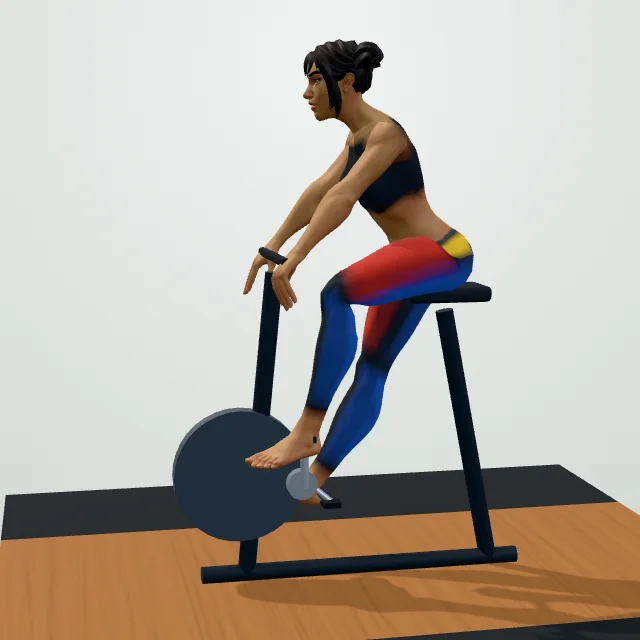
How to do it
- Set the seat height so your knee has a slight bend at the bottom.
- Sit tall with a light grip on the handlebars.
- Start pedalling at a comfortable, steady cadence.
- Keep the pedal stroke smooth through the full circle.
- Adjust resistance to match the intensity you want.
- Cool down with a few minutes of easy pedalling at the end.
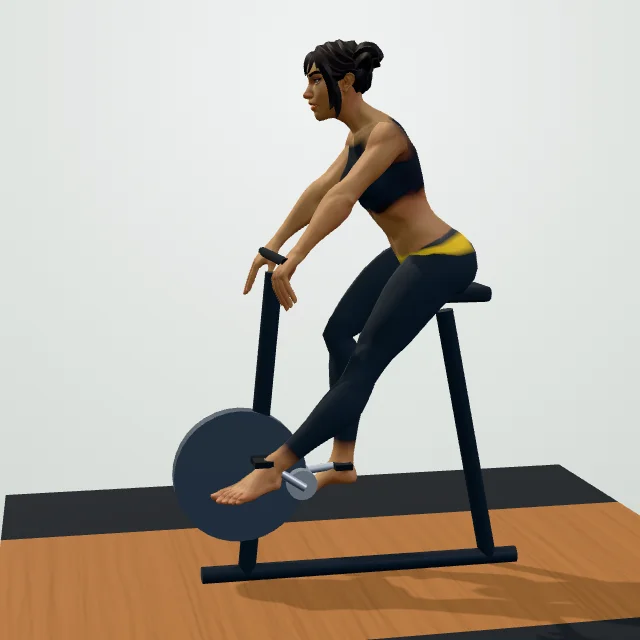
Coach cues
- Seat height set, slight knee bend.
- Sit tall, light grip on the bars.
- Keep the stroke smooth, not stomping.
- Relax your shoulders as you ride.
Breathing: Breathe steadily and rhythmically; let your breathing rate rise naturally as resistance or pace increases.
Common mistakes
Make it easier / Make it harder
The stationary bike keeps your feet fixed to the pedals while you control resistance and pace independently, making it one of the most joint-friendly ways to raise your heart rate and train your legs. It suits complete beginners and hard interval sessions equally well — the machine adapts to you rather than the other way around.
What muscles does the stationary bike work?
The quads do most of the pushing on the downstroke of each pedal turn, with the glutes adding power especially at higher resistance or standing efforts. The hamstrings help pull the pedal back through the bottom of the stroke, and the calves work throughout to stabilise the ankle as it flexes and extends. Because the seat and handlebars support your upper body, the arms and core do far less work than on a rowing machine — the stationary bike is a leg-dominant cardio tool.
Benefits
- Very low impact. With no landing force at all, it is one of the gentlest ways to raise your heart rate, which is why it is a common recommendation for joint issues.
- Precisely controllable intensity. Resistance and cadence can be dialled in exactly, making it easy to hit a specific heart-rate zone or interval target.
- Accessible for all fitness levels. The seated, supported position makes it approachable for beginners, older adults and anyone returning from injury.
- Scales to hard training too. The same machine supports an easy recovery spin or a maximal sprint interval, just by changing resistance and effort.
Technique: bike setup and pedalling form
Set the seat height so your knee has a slight bend, roughly 25-35 degrees, at the bottom of the pedal stroke — too low a seat overworks the knees, too high forces your hips to rock side to side. Keep your pedal stroke smooth through the full circle rather than only pushing down hard at the top; a relaxed, rounded stroke is easier on the knees than a stomping one. Keep a light grip on the handlebars and avoid hunching your shoulders up toward your ears, especially on longer rides. The most common technical error is a seat set too low, which forces the knees into a deeper bend than needed on every single pedal stroke and can cause knee discomfort over a longer session. If your hips rock noticeably from side to side while pedalling, the seat is usually too high.
How to program stationary bike training
| Use | Work | Rest |
|---|---|---|
| Steady-state cardio | 15-40 min, moderate resistance | continuous |
| Interval cardio | 30-60 sec, hard resistance/pace | 60-90 sec, easy pace, repeat 8-12 rounds |
| Recovery / active rest | 10-20 min, very light resistance | continuous |
The bike is a natural fit for the gym cardio workout alongside the treadmill and rower, and its adjustable resistance makes it especially good for interval sessions timed with an interval timer. Checking your heart-rate zone is the most reliable way to judge intensity on a bike, since perceived effort at a given resistance can vary a lot between people; aim for zone 2-3 on a steady ride and zone 4-5 on hard intervals. The calories burned calculator gives a reasonable estimate, though many stationary bikes display their own power-based figure, which tends to be more accurate for this exercise specifically.
Variations and progressions
Beginners should start with 15-20 minutes at a light-to-moderate resistance and a comfortable cadence, building duration before adding intensity. Once that feels easy, interval sessions — alternating hard 30-60 second pushes with easy recovery pedalling — build fitness faster than steady riding alone and keep sessions from feeling monotonous. Recumbent bikes, with a reclined seat and back support, reduce lower-back and hip strain further and suit people managing back pain, arthritic knees or balance concerns, while upright and spin-style bikes let you stand and add more glute and core involvement for higher-intensity efforts.
Stationary bike vs. treadmill and rowing machine
Compared with the treadmill, the bike removes almost all impact through the knees, hips and lower back, making it a better starting point for beginners, older adults or anyone with joint pain, though it does not build the same running-specific fitness. Against the rowing machine, the bike is easier to learn since there is no stroke sequence to master, but it works less total muscle mass since the arms and back stay largely uninvolved. All three machines are reasonable low-impact cardio options, and rotating between them keeps a cardio routine varied.
Safety and who should modify it
Start with a lighter resistance and shorter sessions if you are new to cardio machines, have knee or hip pain, or are returning from injury — check with a doctor or physiotherapist first if pain is present.
The stationary bike is one of the gentler cardio options on the joints, but an incorrect seat height can still cause knee discomfort over repeated sessions, so get the setup right before adding volume. Stop for sharp knee or hip pain, chest pain, dizziness or unusual breathlessness, and increase resistance or duration gradually.
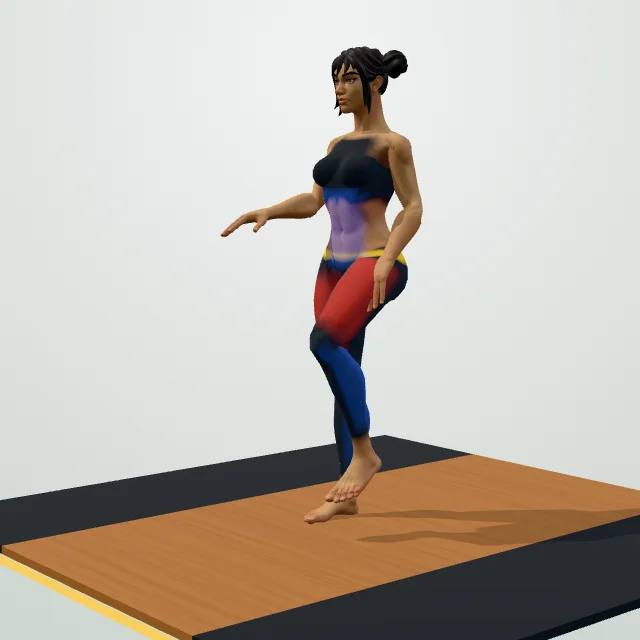
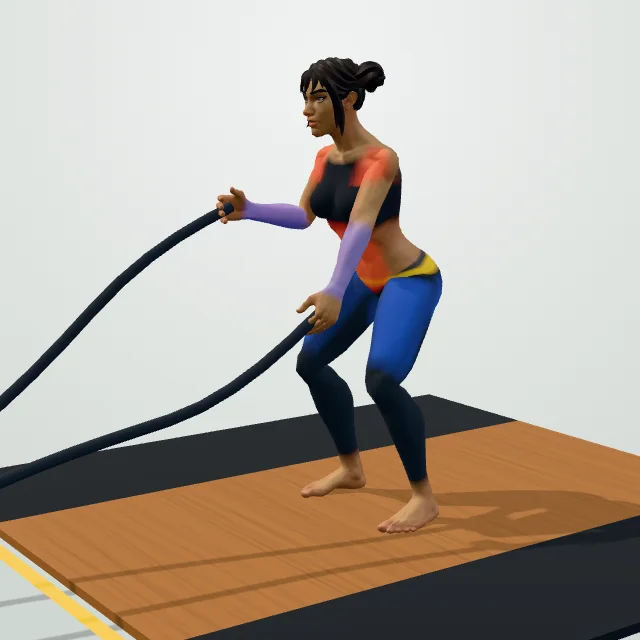
More exercises for cardio
Questions people ask
What muscles does the stationary bike work?
Is the stationary bike good exercise?
How do I set up a stationary bike properly?
Is the stationary bike good for arthritic or sore knees?
Stationary bike vs. treadmill — which is better?
How long should a beginner ride a stationary bike?
Can the stationary bike help with weight loss?
General fitness information, not medical advice. Check with a doctor or physiotherapist before starting if you have a health condition, an injury or are pregnant. Stop if you feel chest pain, dizziness or sharp pain.