Chest · Home, no equipment
Archer push-up: a step toward the one-arm push-up
An advanced push-up where you shift your weight to one side while the other arm stays almost straight, building single-arm pressing strength. Here is how to build up to it and do it safely.
- Primary
- Chest
- Secondary
- TricepsFront deltsAbs
- Level
- Advanced
- Type
- Compound · Alternate sides
- Sets × reps
- 3 × 5-8 reps per side
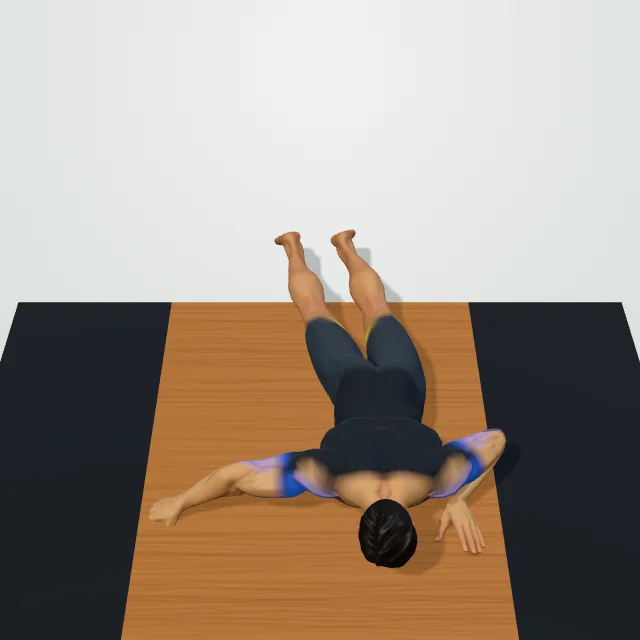
How to do it
- Start in a push-up position with hands set wider than shoulder-width.
- Brace your core hard before you move.
- Shift your weight toward one hand as you lower, bending that elbow back.
- Let the other arm stay almost straight and slide out to the side.
- Lower until your working-side chest nears the floor, keeping hips level.
- Press back up through the working arm to return to the start.
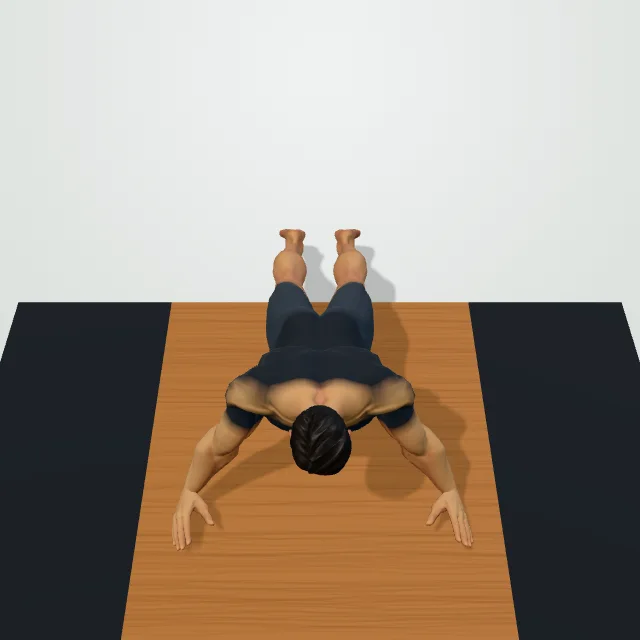
Coach cues
- Hands wide, core braced before you move.
- Shift your weight to one side as you lower.
- Other arm stays long and straight, palm flat.
- Press up through the working arm, hips level.
Breathing: Breathe in as you lower to one side, breathe out as you press back to center.
Common mistakes
Make it easier / Make it harder
Sets and reps by goal
| Goal | sets | reps | Rest |
|---|---|---|---|
| Strength | 4–5 | 3–6 | 2–4 min |
| Muscle growth | 3–4 | 6–12 | 90–150 s |
| Endurance | 2–3 | 15–25+ | 30–60 s |
The archer push-up takes a wide-hand push-up and turns it into a single-arm loading exercise: as you lower, you bend one elbow and let the other arm slide out straight, shifting almost all of your body weight onto the bending side. It is the exercise most trainers recommend when someone asks how to work toward a true one-arm push-up, because it builds unilateral pressing strength without needing the full one-arm range straight away.
What muscles does the archer push-up work
The working-side chest is the prime mover, doing close to the full job of pressing your body weight, with the triceps and front delts assisting through elbow extension. Because your weight is unevenly loaded, the abs and obliques have to work much harder than in a standard push-up to stop your hips and shoulders from rotating, which is why people often feel it in the core the next day as much as the chest and arms.
Benefits of archer push-ups
- Builds single-arm pressing strength, closing the gap between a two-arm push-up and a true one-arm push-up.
- Trains anti-rotation core strength, since your torso has to resist twisting as the load shifts side to side.
- No equipment required, so it is a useful strength-progression tool when you only have floor space.
- Highlights left-right strength differences early, letting you correct imbalances before they show up in heavier lifts.
Archer push-up vs regular and wide push-ups
A standard push-up splits the load evenly across both arms. A wide push-up widens the hands but still shares the work between both sides. The archer push-up starts from that wide stance but shifts almost all the load to one arm at a time, so it is considerably harder — most people who can do 15–20 strict push-ups still need practice before archer push-ups feel controlled. It is best treated as a progression exercise rather than a direct swap for your working sets of regular push-ups.
How to do an archer push-up correctly
Setup
Start in a push-up position with hands set wider than shoulder-width, fingers pointing forward or turned slightly out. Brace your core hard before you move — this exercise punishes a loose midsection more than most push-up variations.
The rep
Shift your weight toward one hand as you lower, bending that elbow back along your ribs while the opposite arm stays close to straight and slides out to the side, palm staying flat on the floor. Lower until your working-side chest is close to the floor, then press back up through that same arm to return to the starting position. Complete all reps on one side, or alternate sides each rep, depending on your program.
What you should feel
Expect a strong, one-sided burn through the chest and triceps of the working arm, plus noticeable core tension resisting rotation. If your hips twist or your shoulders are not level, slow down and reduce the range until control catches up.
Sets, reps and how often to train it
Because it is demanding, most people do best with 3 sets of 5–8 reps per side rather than chasing high volume. Rest 60–90 seconds between sets and train it 2–3 times a week as part of a push-focused session, not on consecutive days, since the joints need recovery time at this load. It works well after a general push-up or wide push-up warm-up set, once the chest and shoulders are primed. See progressive overload and how many sets and reps for how to build it into a broader plan, or use the plan builder to schedule your push sessions.
Progressions toward archer and one-arm push-ups
If a full archer push-up is too hard, start with hands on a bench or step to reduce the load, or reduce your range of motion and build it up over several weeks. Once you can do 3 sets of 8 clean reps per side on the floor, you can begin practicing partial one-arm push-ups from an elevated surface, gradually lowering the surface as your single-arm strength improves. Building general pushing strength first with the standard push-up or wide push-up makes this progression far smoother.
Safety and who should modify it
This is an advanced, high-load exercise for the shoulder and wrist, so it is not a good starting point for beginners or anyone with existing shoulder instability, rotator cuff issues or wrist pain. Stop if you feel sharp pain in the shoulder, elbow or wrist, or if you cannot keep your hips level — pushing through those signs raises injury risk rather than building strength. If you are returning from a shoulder or wrist injury, or are pregnant, check with a doctor or physiotherapist before adding a single-arm-loading exercise like this one.
Questions people ask
What is an archer push-up?
What muscles do archer push-ups work?
Are archer push-ups harder than regular push-ups?
Can beginners do archer push-ups?
How do archer push-ups help with the one-arm push-up?
How many archer push-ups should I do?
Why do my hips twist during archer push-ups?
General fitness information, not medical advice. Check with a doctor or physiotherapist before starting if you have a health condition, an injury or are pregnant. Stop if you feel chest pain, dizziness or sharp pain.