Chest · Home, no equipment
Wide push-up: build your chest with wider hand placement
A push-up variation with hands set beyond shoulder-width to put more emphasis on the chest. Here is the exact hand position, technique and programming.
- Primary
- Chest
- Secondary
- Front deltsTriceps
- Level
- Beginner
- Type
- Compound · Both sides together
- Sets × reps
- 3 × 8-15 reps
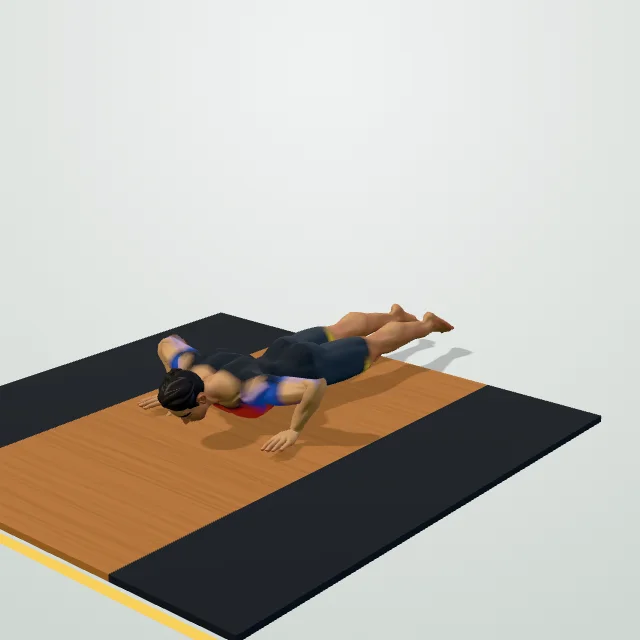
How to do it
- Start in a high plank with hands set 1.5–2x shoulder-width, fingers turned slightly out.
- Brace your core and squeeze your glutes so your body forms one straight line.
- Bend your elbows to about 45–60° from your torso and lower your chest toward the floor.
- Pause briefly when your chest is an inch or two above the ground.
- Push the floor away and drive back up to a straight-arm plank.
- Reset your brace between reps and repeat for the full set.
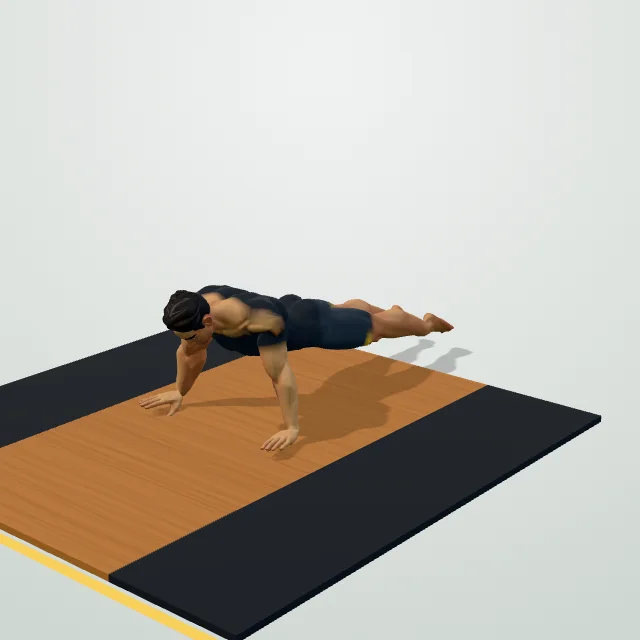
Coach cues
- Hands wider than your shoulders, fingers turned out.
- Brace your core, keep your body in one line.
- Lower with control, chest toward the floor.
- Push the floor away, lock out at the top.
Breathing: Breathe in as you lower toward the floor, breathe out as you push back up.
Common mistakes
Make it easier / Make it harder
Sets and reps by goal
| Goal | sets | reps | Rest |
|---|---|---|---|
| Strength | 4–5 | 3–6 | 2–4 min |
| Muscle growth | 3–4 | 6–12 | 90–150 s |
| Endurance | 2–3 | 15–25+ | 30–60 s |
Building a bigger chest with just body weight usually starts with the wide push-up, a standard push-up done with the hands set noticeably beyond shoulder-width. Widening your hand placement shortens the range the chest has to cover and shifts more of the load onto the pecs instead of the triceps, which is why it is a common answer to "wide push ups muscles worked" searches and a staple in home chest workouts.
What muscles does the wide push-up work
The wide push-up is a horizontal pressing movement, so the prime mover is the chest (pectoralis major), which contracts to bring the arms across the body. The front delts and triceps assist, but because the wider hand position limits how far the elbow can extend, the triceps do proportionally less work than in a standard or diamond push-up. Your abs, glutes and quads stay switched on the whole time to keep your body rigid, which is why a sloppy wide push-up often shows up as sagging hips before it shows up as a failed rep.
Benefits of wide push-ups
- More chest, less triceps: the wider grip biases the movement toward the pecs, which is the main reason people search for wide push ups for chest development.
- No equipment needed: like the standard push-up, it only needs floor space, making it useful for home workouts and travel.
- Trains pressing strength through a different joint angle, which is a legitimate reason to rotate it into a routine alongside narrower variations such as the diamond push-up.
- Scales easily from wall or knee versions up to feet-elevated versions, so both beginners and advanced trainees can use it.
Wide push-up vs normal and close-grip push-ups
This is one of the most searched comparisons for this exercise, so it is worth answering directly. A standard push-up with hands roughly shoulder-width gives a balanced mix of chest and triceps work. Narrowing the hands, as in a diamond or close-grip push-up, shifts more load onto the triceps and inner chest. Widening them, as here, shifts more load onto the outer chest and reduces triceps involvement, but it also shortens your range of motion and can feel harder on the shoulders. Neither is "better" — they train the same muscles with a different emphasis, so many lifters rotate all three grip widths across a week or a program.
How to do a wide push-up with good form
Hand width
Set your hands about 1.5 to 2 times shoulder-width apart, fingers turned out slightly rather than pointing straight forward. Going wider than that mostly reduces your range of motion without adding much extra chest work, and it puts more strain on the front of the shoulder — so more is not automatically better.
Body position and depth
Keep a straight line from your head to your heels: brace your abs, squeeze your glutes, and avoid letting your hips sag or pike up. Lower until your chest is an inch or two from the floor, keeping your elbows at roughly 45–60 degrees from your torso rather than flaring straight out to the sides, which stresses the shoulder joint. Control the descent for about two seconds, then press back to full lock-out.
What you should feel
You should feel the stretch and contraction mainly across the chest, with the triceps and front delts working as helpers. If you feel pinching in the front of the shoulder, narrow your hand width slightly before adding more reps.
Wide push-up karne ke liye haathon ko kandhon se thoda zyada chauda rakhein, ungliyan halki si bahar ki taraf. Seedha plank position banaye rakhein, hips na girein. Chest ko dheere se zameen ke paas le jaayein, phir seedhe haathon tak wapas dhakelein. Shuruaat mein knees par ya wall push-up se practice karein.
Sets, reps and how often to train it
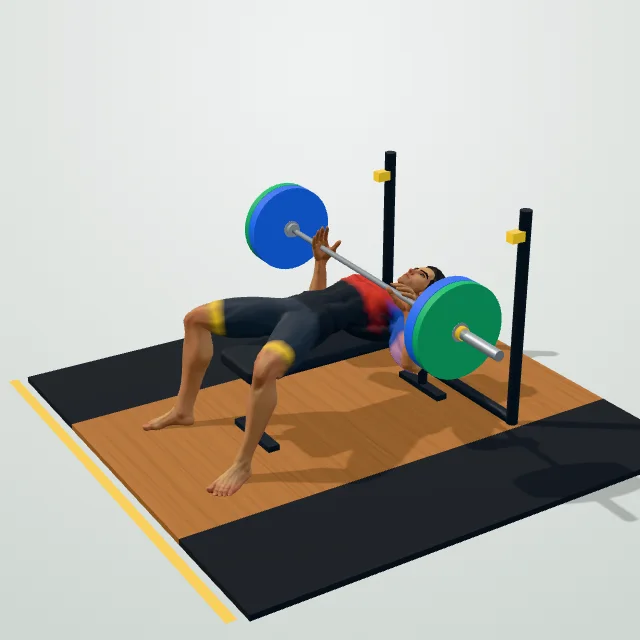
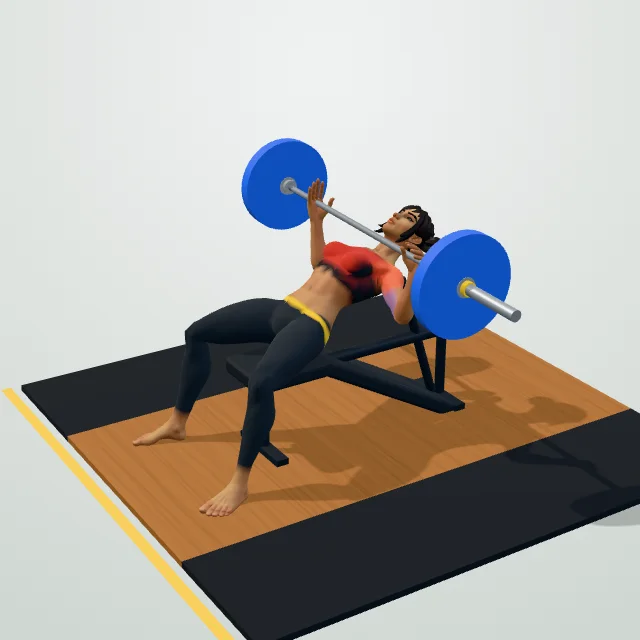
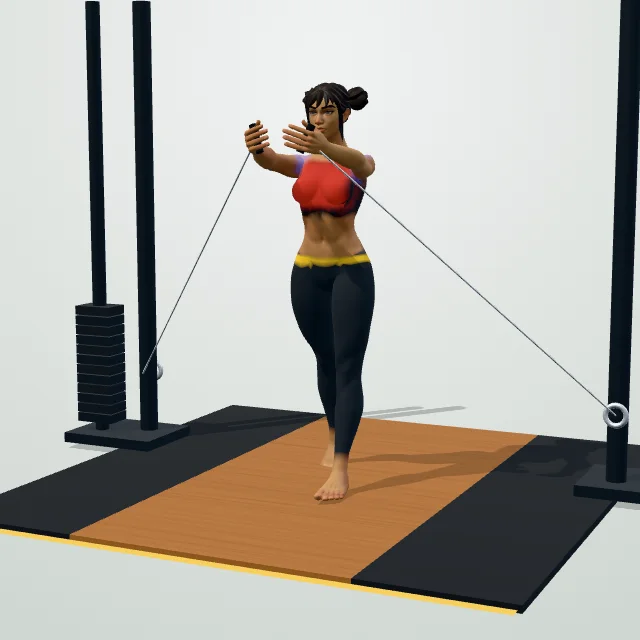
For general chest development, 3 sets of 8–15 reps works well; treat it as a muscle-building accessory rather than a maximal-strength lift. If you can comfortably do more than 15–20 clean reps, add difficulty (see progressions below) rather than chasing higher rep counts indefinitely. Rest 60–90 seconds between sets, train chest-pressing movements 2–3 times a week with at least one rest day between sessions for the same muscle group, and place it after a heavier compound press if you are training for strength, or earlier in a bodyweight-only session. It pairs well in a push-focused day alongside diamond push-ups and a pulling exercise such as the resistance band chest press for balance. See how many sets and reps and progressive overload for how to build these into a full plan, or use the plan builder to schedule it automatically.
Variations and progressions
If a full wide push-up is too hard, raise your hands on a bench or step, or drop to your knees — both reduce the percentage of body weight you lift. The wall push-up is the easiest regression and a good starting point for complete beginners. To make it harder, elevate your feet on a box, add a slow 3-second lowering phase, pause with your chest an inch off the floor, or load a backpack or plate on your upper back. Once wide push-ups feel easy for 3 sets of 15–20, progressing to single-arm work such as the archer push-up is a natural next step.
Safety and who should modify it
Wide push-ups put more stretch on the front of the shoulder than a standard push-up, so anyone with existing shoulder pain, a history of shoulder dislocation, or wrist pain should narrow the grip or use an easier variation instead. Stop if you feel sharp or pinching pain in the shoulder joint — general muscle fatigue is normal, joint pain is not. If you are pregnant, recovering from surgery, or have a diagnosed shoulder condition, check with a doctor or physiotherapist before adding pressing work like this to your routine.
Questions people ask
How wide should your hands be for a wide push-up?
Do wide push-ups work the chest more than regular push-ups?
Are wide push-ups harder than regular push-ups?
What muscles do wide push-ups work?
Can beginners do wide push-ups?
Wide push-ups vs diamond push-ups: what is the difference?
How many wide push-ups should I do?
General fitness information, not medical advice. Check with a doctor or physiotherapist before starting if you have a health condition, an injury or are pregnant. Stop if you feel chest pain, dizziness or sharp pain.