Triceps · Home, no equipment
Diamond push-up: triceps-focused push-up technique
A close-hand push-up variation, also called the triangle push-up, that shifts more work onto the triceps and inner chest. Here is how to set your hands and build up to it safely.
- Secondary
- Front delts
- Level
- Intermediate
- Type
- Compound · Both sides together
- Sets × reps
- 3 × 6-12 reps
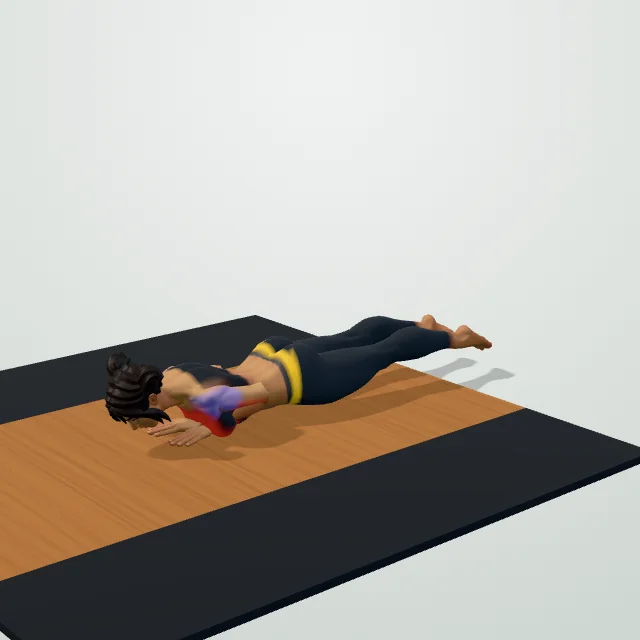
How to do it
- Start in a high plank with hands together under your chest, thumbs and index fingers touching.
- Brace your core and keep your body in a straight line from head to heels.
- Bend your elbows back along your ribs and lower your chest toward your hands.
- Keep elbows close to your torso, not flared out to the sides.
- Press through your palms and lock out your elbows at the top.
- Reset your brace between reps and repeat for the full set.
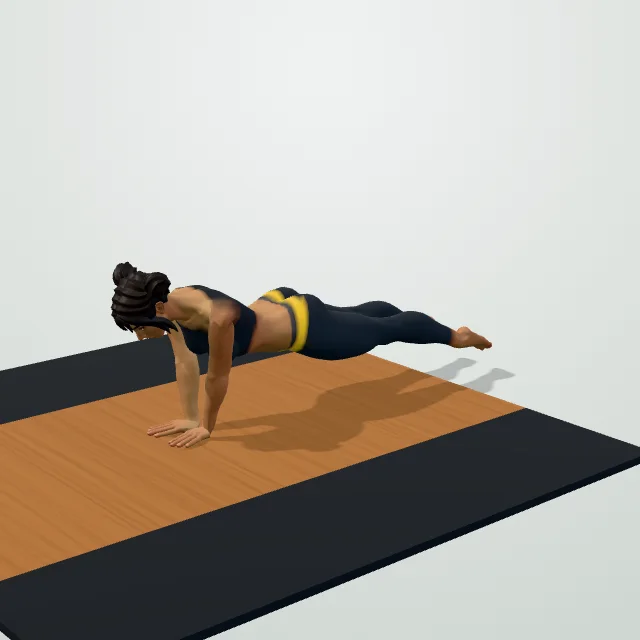
Coach cues
- Hands together under your chest, forming a diamond.
- Elbows track back along your ribs, not out to the sides.
- Lower with control, chest toward your hands.
- Press up and lock out your elbows fully.
Breathing: Breathe in as you lower your chest toward your hands, breathe out as you press up.
Common mistakes
Make it easier / Make it harder
Sets and reps by goal
| Goal | sets | reps | Rest |
|---|---|---|---|
| Strength | 4–5 | 3–6 | 2–4 min |
| Muscle growth | 3–4 | 6–12 | 90–150 s |
| Endurance | 2–3 | 15–25+ | 30–60 s |
The diamond push-up, also called the triangle push-up or close-grip push-up, is a push-up done with the hands together under the chest, thumbs and index fingers touching to form a diamond shape. Bringing the hands in close increases how far the elbow has to bend and extend, which is exactly why it is the go-to bodyweight move when someone wants to know what a diamond push-up works: mainly the triceps, with the inner chest playing a bigger supporting role than it does in a standard push-up.
What muscles does the diamond push-up work
The triceps are the prime mover here, driving elbow extension through a longer range than a shoulder-width push-up allows. The chest, especially the inner and lower fibres near the sternum, and the front delts assist the press. As with any push-up, your abs, obliques and glutes work isometrically to stop your hips from sagging or your lower back from arching, so a strict diamond push-up is also a light core exercise.
Benefits of diamond push-ups
- Builds triceps strength and size without any equipment, which is useful when you cannot access a cable stack or dumbbells for exercises like close-grip bench press.
- Carries over to lockout strength on pressing lifts, since the triceps finish the last few degrees of any push or press.
- Adds variety to a bodyweight chest and arm routine alongside wider-hand variations such as the wide push-up.
- Scales well, from an incline version for beginners up to feet-elevated or weighted versions for advanced trainees.
Diamond push-up vs regular and wide push-ups
A regular push-up with shoulder-width hands splits the work fairly evenly between chest and triceps. The diamond push-up narrows that base and biases the movement toward the triceps and inner chest, at the cost of putting more pressure through the wrists. A wide push-up does the opposite: less triceps, more outer chest. None of the three is strictly harder for everyone — the diamond version usually feels hardest for people with weak triceps or tight wrists, so if it feels disproportionately difficult, that is useful information about where you need to build strength.
How to do a diamond push-up correctly
Hand placement
Place your hands directly under your sternum, thumbs and index fingers touching to form a diamond or triangle. Your hands should sit close enough that your wrists do not have to twist awkwardly — if that hurts, move your hands an inch or two apart while keeping them close together rather than forcing a perfect diamond.
Elbow path and depth
Keep your elbows tracking back along your ribs, close to your torso, not flared out to the sides. Lower under control until your chest is close to your hands, then press back up by driving through your palms and locking out the elbows fully at the top, since full lockout is where the triceps do most of their work.
What you should feel
Expect a strong burn along the back of the upper arm and across the inner chest. If you feel it mainly in your shoulders or front delts, your elbows are probably flaring; bring them back in toward your ribs.
Sets, reps and how often to train it
Because the leverage is harder than a standard push-up, most people do well with 3 sets of 6–12 reps rather than high-rep sets. Treat it as an accessory for arm and chest strength rather than a maximal test, rest 60–90 seconds between sets, and train it 2–3 times a week with a rest day between sessions that hit the same muscles. It fits well near the end of a push-focused session, after heavier pressing work, or in a bodyweight-only arm and chest circuit. See how many sets and reps and progressive overload for how to build it into a weekly plan, or let the plan builder schedule it for you.
Variations and progressions
If a full diamond push-up on the floor is too hard on the wrists or triceps, start with hands on a bench or step so more of your weight stays on your legs, or drop to your knees. To progress, elevate your feet on a box, slow the lowering phase to 3 seconds, or pause with your chest an inch above your hands before pressing up. Once this feels easy for 3 sets of 12, alternatives such as bench dips or barbell close-grip bench press let you keep adding load beyond body weight.
Safety and who should modify it
The close hand position loads the wrists more than a standard push-up, so anyone with wrist pain, carpal tunnel symptoms or an existing elbow injury should widen the hands slightly or use push-up bars to keep the wrist neutral. Stop if you feel sharp pain in the wrist, elbow or shoulder — general muscle burn in the triceps is expected, joint pain is not. If you are pregnant, recently had upper-body surgery, or have a diagnosed shoulder or elbow condition, check with a doctor or physiotherapist before adding this movement.
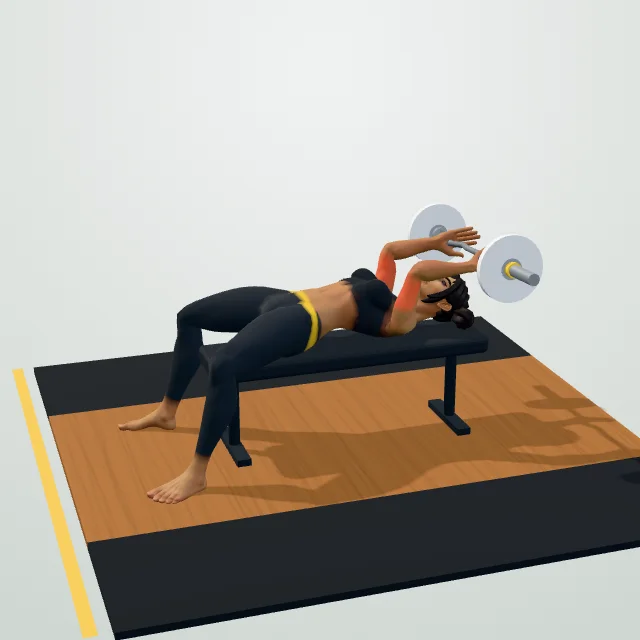
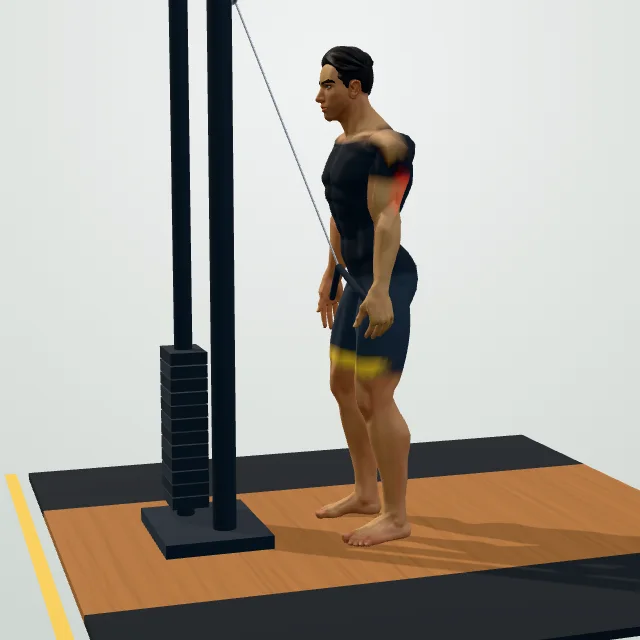
More exercises for triceps
Questions people ask
What is a diamond push-up?
What muscles do diamond push-ups work?
Are diamond push-ups harder than regular push-ups?
Can beginners do diamond push-ups?
Diamond push-up vs close-grip bench press: which is better for triceps?
How many diamond push-ups should I do?
Why do my wrists hurt during diamond push-ups?
General fitness information, not medical advice. Check with a doctor or physiotherapist before starting if you have a health condition, an injury or are pregnant. Stop if you feel chest pain, dizziness or sharp pain.