Triceps · Gym
Skull crusher: lying triceps extension for arm size and lockout strength
Despite the name, a controlled skull crusher is one of the best isolation exercises for the triceps. Here is the bar path, elbow position and how to keep it safe.
- Primary
- Triceps
- Level
- Intermediate
- Type
- Isolation · Both sides together
- Sets × reps
- 3 × 8-12 reps
How to do it
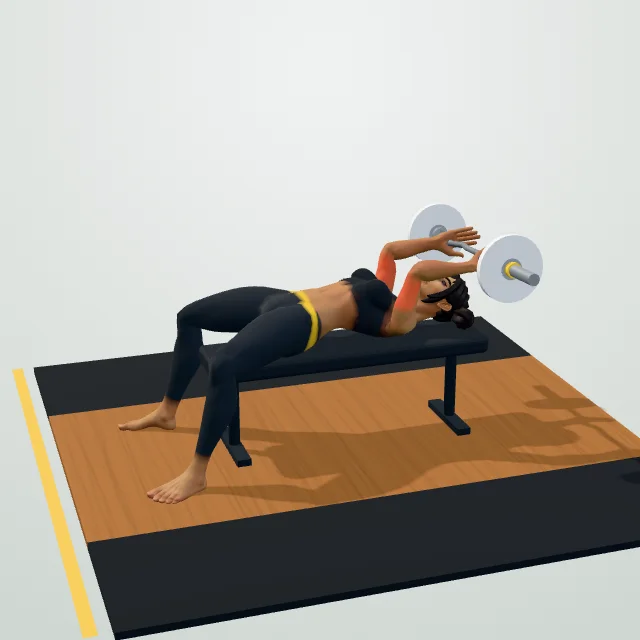
- Lie on a flat bench holding an EZ-bar at shoulder width.
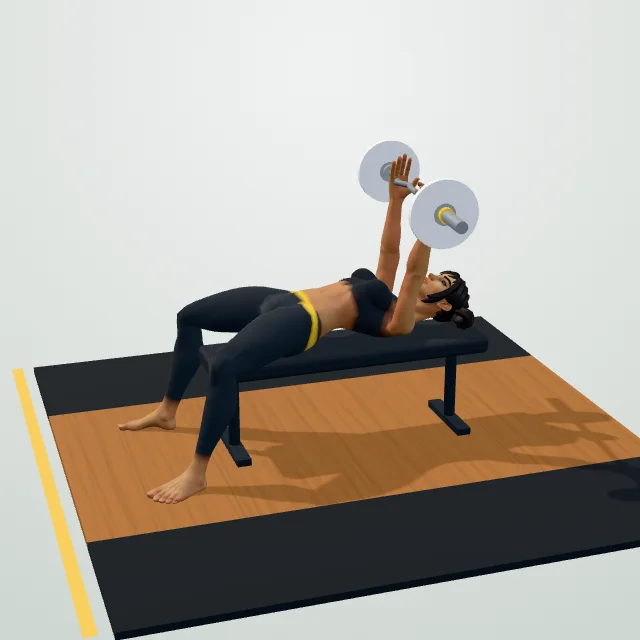
- Extend your arms straight up over your shoulders.
- Keep your upper arms still and bend only at the elbows.
- Lower the bar in a slight arc toward your forehead.
- Stop at a comfortable stretch, then extend your elbows.
- Press the bar back to the starting position.
Coach cues
- Upper arms stay still and vertical.
- Lower the bar toward your forehead.
- Stop at a comfortable stretch.
- Press back up, elbows forward.
Breathing: Breathe in as you lower the bar toward your forehead, and breathe out as you extend back up.
Common mistakes
Make it easier / Make it harder
Sets and reps by goal
| Goal | sets | reps | Rest |
|---|---|---|---|
| Strength | 3–5 | 6–8 | 90–120 s |
| Muscle growth | 3–4 | 10–15 | 60–90 s |
| Endurance | 2–3 | 15–20 | 30–60 s |
The skull crusher, also called a lying triceps extension, is done lying on a bench, lowering a bar or dumbbells toward your forehead by bending only at the elbows, then extending back up. The name describes what happens if you lose control of the bar, not the intended movement — done properly, with a controlled path just past the top of your head, it is one of the more effective isolation exercises for the triceps.
It is usually loaded with an EZ-bar, which is gentler on the wrists in this position than a straight bar, though dumbbells and a cable version both work well too. See the triceps hub for how it fits alongside pressing and pushdown exercises.
Muscles the skull crusher works
The skull crusher isolates the triceps brachii through elbow extension, working all three heads — the lateral, medial and, because the arms are extended overhead relative to the shoulder in the lying position, a good amount of the long head as well. Since the shoulder stays roughly fixed and only the elbow moves, there is very little assistance from the chest or shoulders, unlike a close-grip bench press, which is what makes this such a direct triceps builder.
Benefits of the skull crusher
- Strict isolation: only the elbow moves, so almost all the work falls on the triceps.
- Trains all three triceps heads: the overhead-relative arm position brings in the long head more than a standing pushdown.
- Builds lockout strength: useful for the top portion of any pressing exercise, including the bench press.
- Works with several tools: EZ-bar, straight bar, dumbbells, or a cable with a rope attachment.
Technique: bar path, elbow position and tempo
Lie on a flat bench holding an EZ-bar with a shoulder-width grip, arms extended straight up over your shoulders — not over your face. Keeping your upper arms still and roughly vertical, bend at the elbows to lower the bar in a slight arc toward your forehead or just behind it, letting your forearms do the moving while your upper arms stay fixed. Stop when you feel a good stretch in the triceps, then extend your elbows to press the bar back to the starting position, without letting your upper arms drift backward toward your face.
Keeping the elbows pointed forward, not flared out to the sides, is what keeps the tension on the triceps and protects the joint. A slow, controlled lowering phase of 2–3 seconds is especially important here, since this is one of the more elbow-sensitive exercises in a typical program.
How to program the skull crusher
| Goal | Sets | Reps | Rest |
|---|---|---|---|
| Strength | 3 | 6–8 | 90 seconds |
| Muscle (hypertrophy) | 3 | 8–12 | 60–90 seconds |
| Endurance | 2–3 | 12–15 | 45 seconds |
Because the elbow is under load in a vulnerable position at the bottom, err toward a lighter weight with strict control rather than chasing a heavier number. It fits well as a second triceps exercise after a compound press like the close-grip bench press — see the chest and triceps workout for a sample layout — and progress gradually using the progressive overload guide.
Variations and progressions
- Dumbbell skull crusher: allows a slightly more natural wrist path and works each arm somewhat independently.
- Incline or decline skull crusher: changes the angle of the stretch on the triceps slightly.
- Cable skull crusher: keeps constant tension through the whole range — see cable machine exercises.
- Single-arm dumbbell extension: useful for checking and correcting a weaker side.
Skull crusher vs triceps pushdown vs close-grip bench
The triceps pushdown is done standing on a cable and is generally gentler on the elbows since the arm never moves into a deep overhead-relative stretch. The close-grip bench press is a compound press that lets you handle much heavier weight but shares the load with the chest and shoulders. The skull crusher sits between them: more isolated than a pushdown, more elbow-stretching than a close-grip press, and typically loaded lighter than either.
Safety and who should modify it
This is one of the higher-risk triceps exercises for the elbows if done carelessly, since the bar travels close to your head under load. Always start light when learning the movement, keep the bar path under full control, and consider having a spotter for heavier sets. If you have any elbow tendon pain, try the pushdown or a cable version instead, which load the elbow less aggressively, and never force a deeper stretch than feels comfortable.
Workout plans with this exercise
Strength · Intermediate
Upper/Lower Split (4 Days)
Build muscle · Intermediate
4-Day Muscle-Building Workout Plan
Build muscle · Intermediate
5-Day Body-Part Split (Bro Split)
Build muscle · Intermediate
Chest and Triceps Workout
More exercises for triceps
Questions people ask
What muscles does the skull crusher work?
Is the skull crusher safe for the elbows?
Skull crusher vs triceps pushdown — which is better?
Where should the bar go on a skull crusher?
Can I do skull crushers with dumbbells?
How much weight should I use for skull crushers?
General fitness information, not medical advice. Check with a doctor or physiotherapist before starting if you have a health condition, an injury or are pregnant. Stop if you feel chest pain, dizziness or sharp pain.