Triceps · Home or gym
Overhead triceps extension: deep stretch for the long head
Raising your arms overhead stretches the triceps long head more than a pushdown, making this one of the best exercises for building the back of the upper arm.
- Primary
- Triceps
- Level
- Beginner
- Type
- Isolation · Both sides together
- Sets × reps
- 3 × 10-12 reps
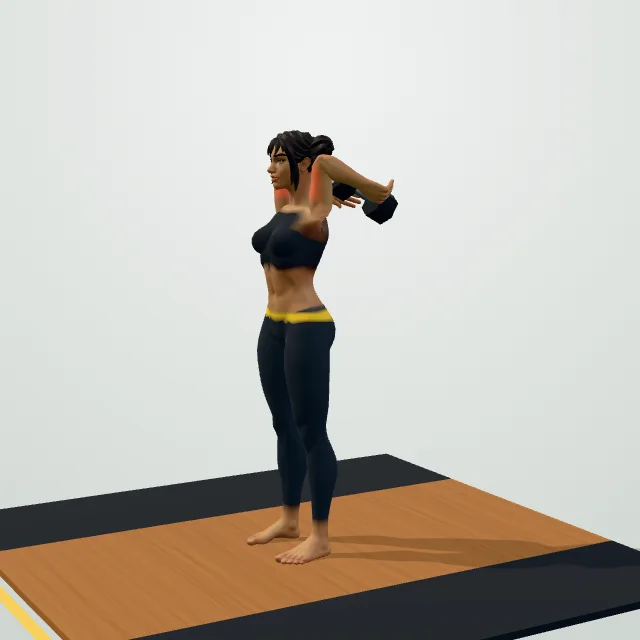
How to do it
- Hold a dumbbell with both hands, arms extended overhead.
- Keep your upper arms close to your ears.
- Lower the weight behind your head by bending the elbows.
- Stop at a comfortable stretch in the triceps.
- Extend your elbows to press the weight back up.
- Keep your torso still throughout the set.
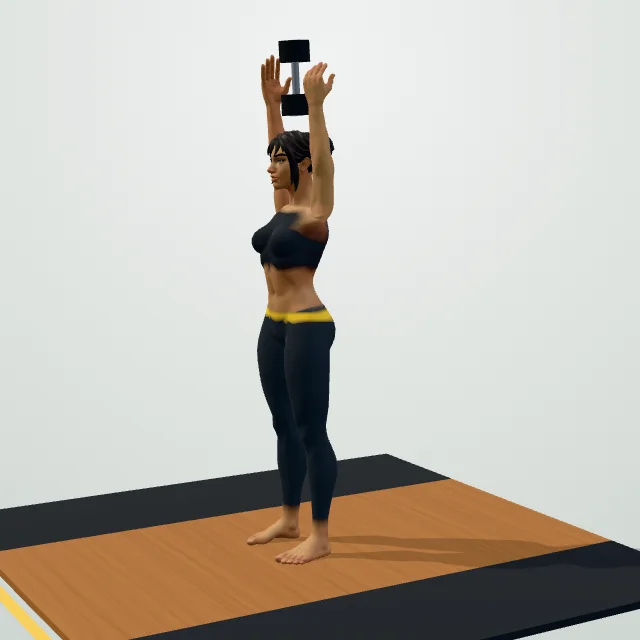
Coach cues
- Upper arms stay close to your ears.
- Lower behind your head with control.
- Stop at a comfortable stretch.
- Press back up without arching your back.
Breathing: Breathe in as you lower the weight behind your head, and breathe out as you press it back up.
Common mistakes
Make it easier / Make it harder
Sets and reps by goal
| Goal | sets | reps | Rest |
|---|---|---|---|
| Strength | 3–5 | 6–8 | 90–120 s |
| Muscle growth | 3–4 | 10–15 | 60–90 s |
| Endurance | 2–3 | 15–20 | 30–60 s |
The overhead triceps extension is done by holding a weight behind your head with your arms raised overhead, then extending your elbows to press it upward. Lifting the arms overhead lengthens the triceps — specifically the long head, which crosses the shoulder joint — more than exercises like pushdowns where the arms stay at your sides, making this one of the better choices for targeting that part of the muscle directly.
It can be done with a single dumbbell held with both hands, one dumbbell per arm, a cable, or an EZ-bar, and works standing or seated. See the triceps hub for how it fits alongside other extension and pressing exercises.
Muscles the overhead triceps extension works
This exercise isolates the triceps brachii through elbow extension, with a particular emphasis on the long head, since the overhead arm position stretches that head across both the shoulder and elbow joints. The lateral and medial heads also contribute throughout the range. Your shoulders and upper back work isometrically to keep your upper arms steady and close to your ears, and your core braces to keep your torso from arching as you lift.
Benefits of the overhead triceps extension
- Targets the long head: the overhead position stretches this head more than pushdowns or kickbacks, which may help develop a fuller-looking triceps.
- Good range of motion: the deep stretch at the bottom is a useful complement to exercises that keep the arms at your sides.
- Flexible equipment: works with a dumbbell, cable, band, or EZ-bar.
- Scales to any level: seated, standing, one-arm or two-hand versions all suit different strength levels.
Technique: setup, elbow position and range
Hold a dumbbell with both hands, cupping the top plate, and raise it straight overhead with arms extended. Keep your upper arms close to your ears and pointing mostly straight up for the whole set — this is the anchor point that isolates the triceps. Lower the weight behind your head by bending only at the elbows until you feel a full stretch in the triceps, then extend your elbows to press it back to the top, without letting your upper arms swing forward or your lower back arch to help.
Sitting on a bench with back support makes it easier to keep the torso still and avoid using momentum, which is especially useful when learning the movement or going heavier. A slow, controlled 2–3 second lowering phase helps you use the stretch productively without overshooting into an uncomfortable range.
How to program the overhead triceps extension
| Goal | Sets | Reps | Rest |
|---|---|---|---|
| Strength | 3 | 8–10 | 90 seconds |
| Muscle (hypertrophy) | 3 | 10–12 | 60–90 seconds |
| Endurance | 2–3 | 12–15 | 45 seconds |
Because the stretched position is more demanding than exercises with arms at your sides, use lighter weight than you might expect and prioritize a controlled range over lifting heavy. Pair it with the triceps pushdown in the same session to train the triceps through two different stretch positions — see the chest and triceps workout — and add load gradually with the progressive overload guide.
Variations and progressions
- Cable overhead extension: facing away from a low pulley keeps constant tension through the stretch — see cable machine exercises.
- Single-arm dumbbell extension: works one arm at a time and is useful for correcting side-to-side differences.
- Seated overhead extension: the bench back reduces momentum and protects the lower back on heavier sets.
- Band overhead extension: a joint-friendly, portable option for home training.
Overhead extension vs skull crusher vs pushdown
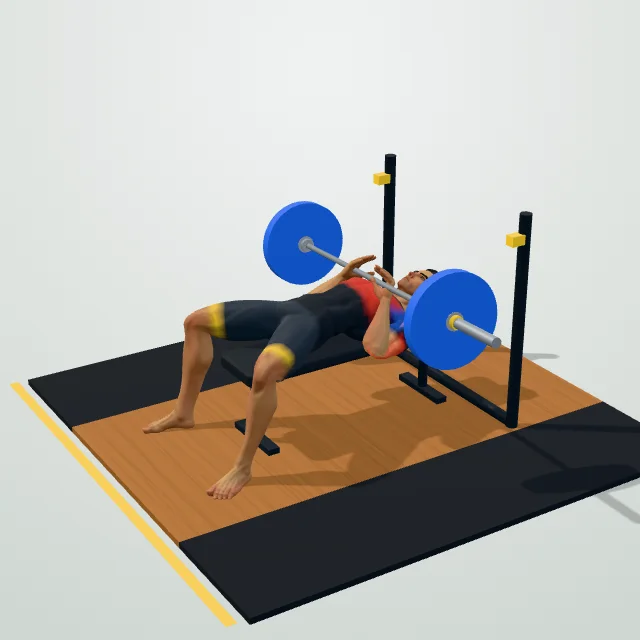
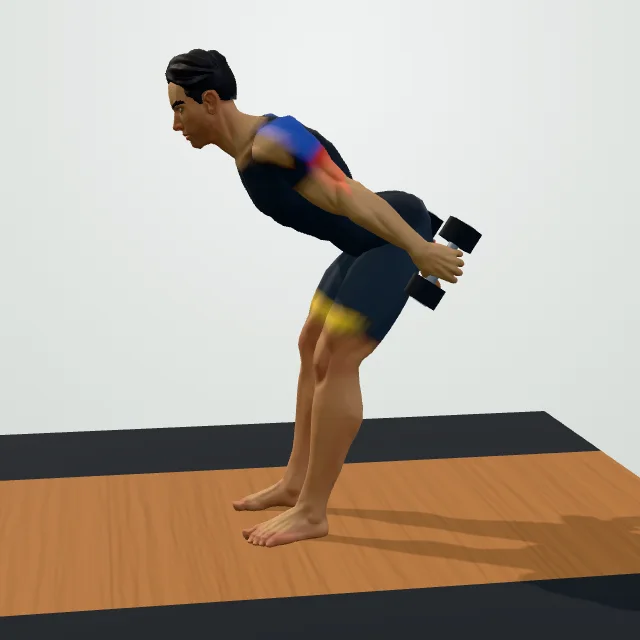
The skull crusher is done lying down with the arms starting overhead relative to the bench, giving a similar long-head stretch through a slightly different path. The triceps pushdown keeps the arms at your sides, which is gentler on the shoulder but stretches the long head far less. A complete triceps routine often includes one exercise in each category — an overhead stretch movement and a pushdown-style movement — for a fuller stimulus across all three heads.
Safety and who should modify it
Keep the weight modest while your shoulders and elbows get used to the overhead position — this exercise asks more of shoulder mobility than most other triceps exercises. If you have shoulder impingement, limited overhead mobility, or elbow tendon pain, try the pushdown or kickback instead, which do not require the arms overhead, and consult a physiotherapist if pain persists. Keep your core braced to protect your lower back from arching under load.
More exercises for triceps
Questions people ask
What muscles does the overhead triceps extension work?
Why does this exercise feel harder than a pushdown?
Should I do overhead extensions standing or seated?
Is the overhead triceps extension bad for the shoulders?
One dumbbell with both hands or one dumbbell per arm?
Overhead extension vs skull crusher — which is better for triceps?
General fitness information, not medical advice. Check with a doctor or physiotherapist before starting if you have a health condition, an injury or are pregnant. Stop if you feel chest pain, dizziness or sharp pain.