Abs and core · Home, no equipment
Russian twist: rotational training for a stronger core
The Russian twist has you rotate your torso side to side from a seated, leaned-back position, training your obliques to control rotation rather than just bend forward and back.
- Primary
- Obliques
- Secondary
- AbsHip flexors
- Level
- Beginner
- Type
- Isolation · Alternate sides
- Sets × reps
- 3 × 20 reps per side
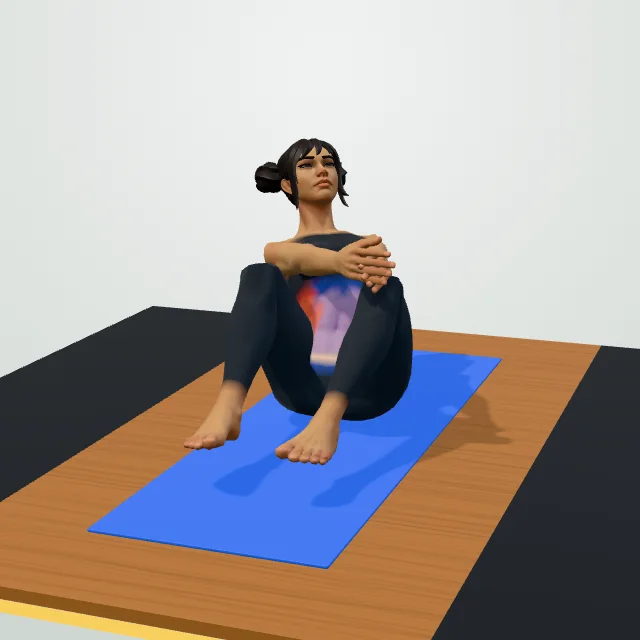
How to do it
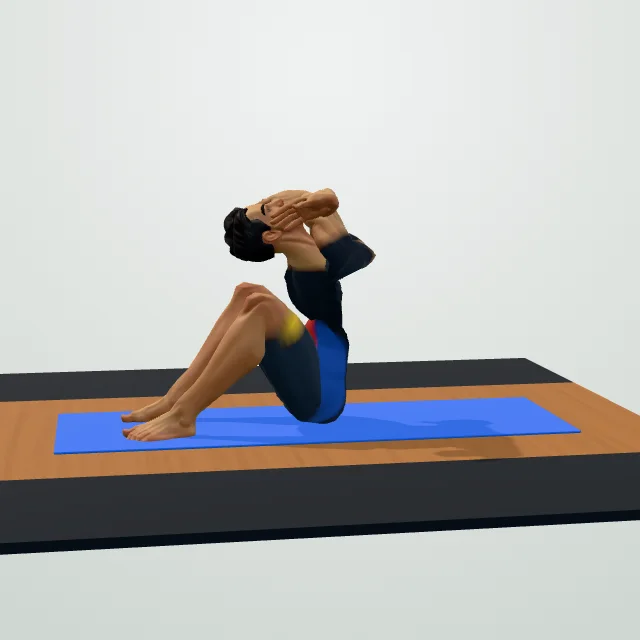
- Sit with knees bent, feet on or off the floor.
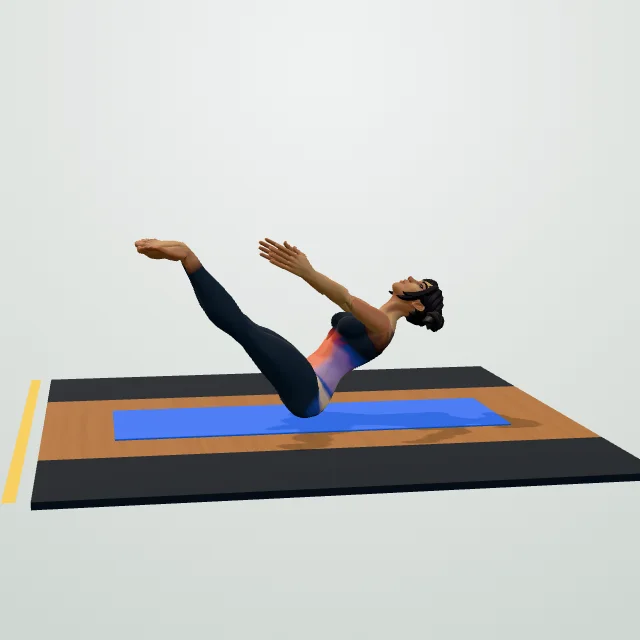
- Lean back to about 45 degrees, chest lifted.
- Hold your hands or a weight in front of your chest.
- Rotate to tap the floor beside one hip.
- Rotate to tap the floor on the other side.
- Keep repeating side to side under control.
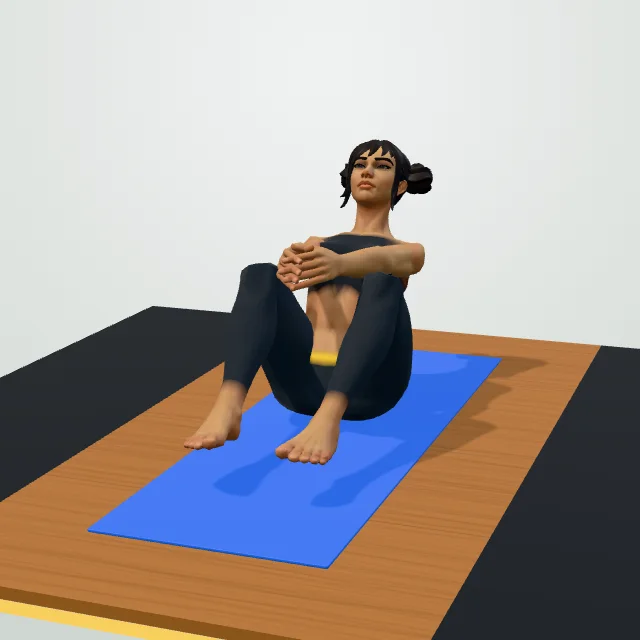
Coach cues
- Lean back, chest up.
- Rotate from your torso, not just your arms.
- Tap the floor on each side.
- Move slow and controlled.
Breathing: Breathe out as you rotate to each side, in as you return to center.
Common mistakes
Make it easier / Make it harder
Sets and reps by goal
| Goal | sets | reps | Rest |
|---|---|---|---|
| Strength | 4–5 | 6–8 | 90–120 s |
| Muscle growth | 3–4 | 10–15 | 60–90 s |
| Endurance | 2–3 | 15–25+ | 30–60 s |
The Russian twist is a seated core exercise where you lean back, lift your feet (or keep them down), and rotate your torso from side to side, touching or tapping a weight to the floor on each side. It trains your obliques to control and resist rotation, a movement pattern that most straight-ahead crunches and sit-ups never touch.
Muscles worked and why rotation matters
Your obliques, part of the abs and core, drive the side-to-side rotation of your torso, while your deeper abs and hip flexors work to keep you balanced in the leaned-back position. Most ab exercises move the spine forward and back; the Russian twist adds a rotational and anti-rotational component, which is closer to how your core actually works when you throw, swing a bat, or turn to reach for something.
Benefits
Training rotation strengthens your obliques and can improve performance in any sport involving throwing, hitting, or twisting, and it builds a core that resists unwanted rotation during heavier compound lifts. It needs little or no equipment, so it fits easily into a home workout or the end of a gym session. As with any ab exercise, the Russian twist strengthens the obliques but will not spot-reduce fat from your waist or "love handles" — that depends on your overall body fat, which comes down to diet and total activity.
Technique in detail
Sit on the floor with your knees bent, lean your torso back to about 45 degrees, and keep your chest lifted rather than rounding your back. Hold your hands together, or hold a light weight, in front of your chest, then rotate your torso to tap the floor beside one hip, then rotate to the other side, keeping the movement coming from your torso rather than just swinging your arms. Keep your feet either lightly grounded or lifted off the floor depending on your level — lifted feet demand more hip-flexor and balance control.
How to program it
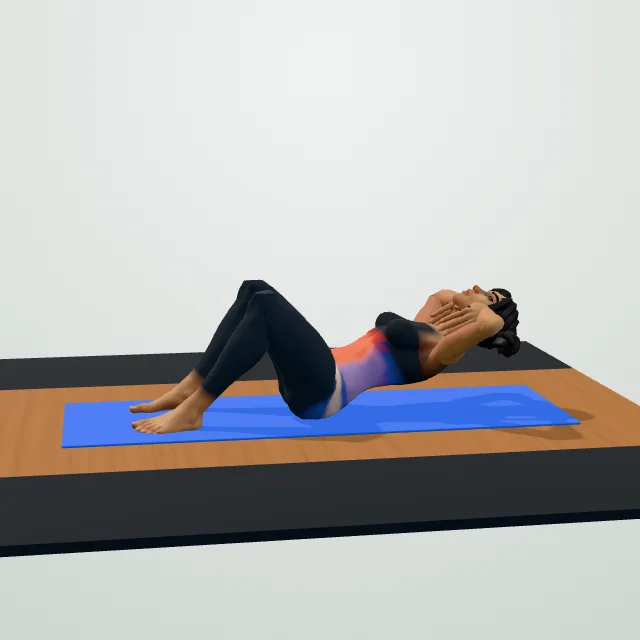
3 sets of 16–20 total taps (8–10 per side) is a good starting target, moving in a controlled tempo rather than rushing side to side. Add a light weight, such as a small plate, dumbbell, or medicine ball, once bodyweight reps feel easy, and increase the load gradually in small steps rather than jumping straight to something heavy. Train it 2–3 times a week as part of a core routine, alongside a straight-plane move like the crunch or dead bug for balanced core training.
Variations and progressions
Keep your feet on the floor for an easier, more stable version while you learn the rotation pattern, or lift your feet off the floor for a harder version that adds hip-flexor and balance demand. A cable woodchop is a standing alternative that trains similar rotation with a cable machine instead of bodyweight, useful once you want more resistance than a handheld weight allows.
Russian twist vs bicycle crunch
The bicycle crunch combines a crunch with rotation while lying on your back, working the abs and obliques together through a pedaling motion. The Russian twist isolates the rotational component more directly from a seated position, without the crunching motion, making it a slightly more focused oblique exercise.
Safety notes
Keep the movement controlled rather than twisting quickly with momentum, which can strain the lower back, especially once you add weight. Anyone with existing lower back pain, a disc issue, or recent abdominal surgery should check with a physiotherapist before adding rotational core work. Do not hold your breath through the twists, and stop for any sharp back or hip pain — a core burn is expected, joint pain is not.
Where it fits in a workout
Russian twists work well toward the end of a session, in an abs workout or as a finisher after your main lifts, since a fatigued core is fine for a rotational movement but not ideal before heavy compound lifts such as squats or deadlifts. Building general strength across your training alongside targeted core work like this gives the best long-term results for a stable, capable core that holds up under rotation in sport and daily life.
Workout plans with this exercise
More exercises for abs and core
Questions people ask
How do you do a Russian twist correctly?
What muscles does the Russian twist work?
Should you use weight for Russian twists?
Are Russian twists bad for your back?
Do Russian twists reduce love handles?
Should your feet be on the floor for Russian twists?
What is a good alternative to the Russian twist?
General fitness information, not medical advice. Check with a doctor or physiotherapist before starting if you have a health condition, an injury or are pregnant. Stop if you feel chest pain, dizziness or sharp pain.