Legs · Home, no equipment
How to do the bodyweight squat (air squat)
The bodyweight squat, also called an air squat, is the no-load version of the squat pattern everyone should own before adding weight. Here is proper depth, common mistakes and how to progress it.
- Secondary
- HamstringsInner thighsAbs
- Level
- Beginner
- Type
- Compound · Both sides together
- Sets × reps
- 3 × 15-20 reps
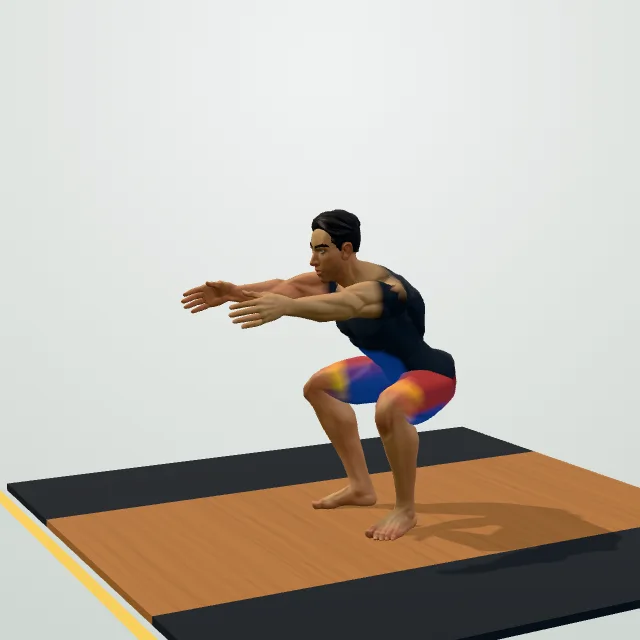
How to do it
- Stand with feet shoulder-width apart, toes turned out slightly.
- Brace your core and push your hips back to begin the descent.
- Bend your knees, lowering until at least your thighs are parallel to the floor.
- Keep your chest up and your weight spread across your whole foot.
- Drive through your whole foot to stand back up.
- Finish with your hips fully extended at the top.
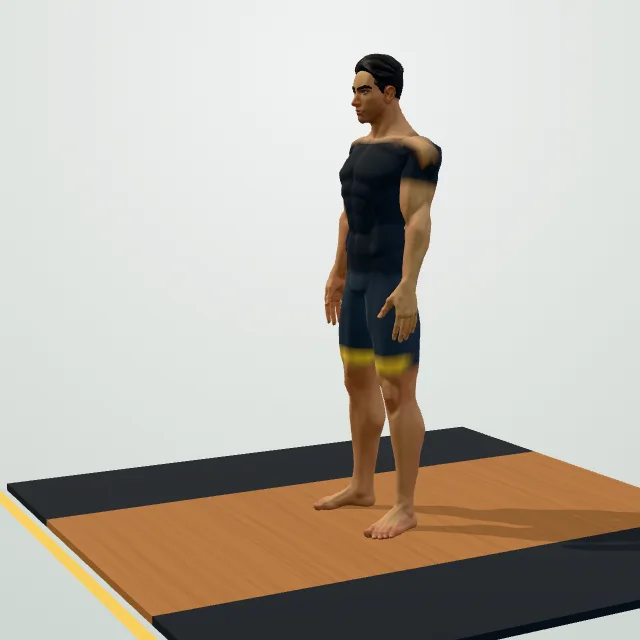
Coach cues
- Feet shoulder-width, toes slightly out.
- Sit back and down, chest up.
- Knees follow your toes.
- Drive up through your whole foot.
Breathing: Breathe in as you lower into the squat, and breathe out as you drive back up to standing.
Common mistakes
Make it easier / Make it harder
Sets and reps by goal
| Goal | sets | reps | Rest |
|---|---|---|---|
| Strength | 4–5 | 3–6 | 2–4 min |
| Muscle growth | 3–4 | 6–12 | 90–150 s |
| Endurance | 2–3 | 15–25+ | 30–60 s |
The bodyweight squat, often called an air squat, is the unloaded version of the basic squat pattern: bend your hips and knees to lower your body, then stand back up. It is the foundation every other squat variation builds on, which makes it the right starting point whether you are new to training, warming up before a loaded squat, or using high reps as a conditioning tool.
What muscles does the bodyweight squat work?
The quads straighten your knees and the glutes drive your hips forward as you stand, doing most of the work on every rep. The hamstrings and adductors assist the glutes and help keep your knees tracking correctly, and your abs brace throughout to keep your torso from folding forward. Because there is no external load, the main limiting factor for most people is not muscle strength but ankle and hip mobility — see the full leg muscle group this movement trains.
Bodyweight squat benefits
- The best entry point for beginners. It teaches the hip-hinge-and-knee-bend pattern every loaded squat, lunge and step-up relies on, without any equipment.
- An effective warm-up. A short set of air squats before a workout raises your heart rate and mobilizes the hips, knees and ankles.
- High-rep conditioning. Bodyweight squats can be done for many reps or timed intervals, which studies suggest can help with general conditioning and can help support fat loss as part of an overall calorie deficit, though no single exercise burns fat from one spot.
- Works almost anywhere. No equipment is needed, so it fits home workouts, travel routines and gym warm-ups equally well.
Bodyweight squat technique and depth
Stand with feet about shoulder-width apart, toes turned out slightly. Push your hips back and bend your knees together, keeping your chest up and your weight spread across your whole foot rather than rocking onto your toes. Aim for your thighs to reach at least parallel to the floor — deeper if your mobility and comfort allow — since studies suggest deeper squats within a comfortable range distribute load well across the hips and knees without added risk for most healthy people. Drive through your whole foot to stand back up, finishing with your hips fully extended rather than stopping short.
Why your heels lift, and how to fix it
Heels rising off the floor at the bottom of a squat is usually a sign of tight ankles or hips rather than a strength problem. Limited ankle mobility stops your shin from traveling forward enough to keep your heel down at depth, and tight hips can push your pelvis to tuck under instead of continuing to hinge back. A few simple fixes help: spend time on ankle mobility drills before squatting, place a small wedge or weight plate under your heels while you build mobility, or simply squat to a shallower depth that keeps your heels flat until your range improves.
How to program bodyweight squats
| Goal | Sets | Reps | Rest |
|---|---|---|---|
| Skill / warm-up | 1-2 | 10-15 | 30 sec |
| Muscle endurance | 3 | 15-20 | 45-60 sec |
| Conditioning | 3-4 | 20-30 or timed | 30-45 sec |
Because there is no added load, bodyweight squats are usually programmed by reps or time rather than by weight. Most people can do them daily as a mobility or warm-up drill, or two to four times a week for higher-rep conditioning sets; ease off if your knees feel achy rather than just muscularly tired. Once 20-plus clean reps feel easy, it is time to add load.
Progressing from bodyweight to loaded squats
Once your depth, knee tracking and heel contact are consistent for a full set, add load gradually rather than jumping straight to a barbell. A goblet squat holding one dumbbell or kettlebell at your chest is the natural next step, since the front-held weight also reinforces an upright torso. From there, most lifters progress to a barbell back squat once form and comfort with heavier load are solid. If your goal is holding a single position instead of reps, a wall sit builds quad endurance with less technical demand, and a sumo squat is a useful variation that shifts more work to the inner thighs.
Safety and who should modify it
The bodyweight squat is generally safe for most people, including beginners and seniors, when done through a comfortable, pain-free range.
If you have knee or hip pain, balance problems, or you are recovering from surgery, check with a doctor or physiotherapist before starting a squat routine, and consider holding a wall or chair back for support at first. Stop for sharp joint pain, dizziness or chest pain — mild muscle burn by the end of a set is normal, joint pain is not. Warm up your ankles and hips first, and progress reps or depth gradually rather than all at once.
Workout plans with this exercise
General fitness · Beginner
30-Day Home Workout Plan (No Equipment)
Fat loss · Intermediate
15-Minute HIIT Workout (No Equipment)
Strength · Beginner
Calisthenics Workout for Beginners
General fitness · Beginner
Resistance Band Full-Body Workout
General fitness · Beginner
10-Minute Morning Workout
General fitness · Beginner
The 7-Minute Workout
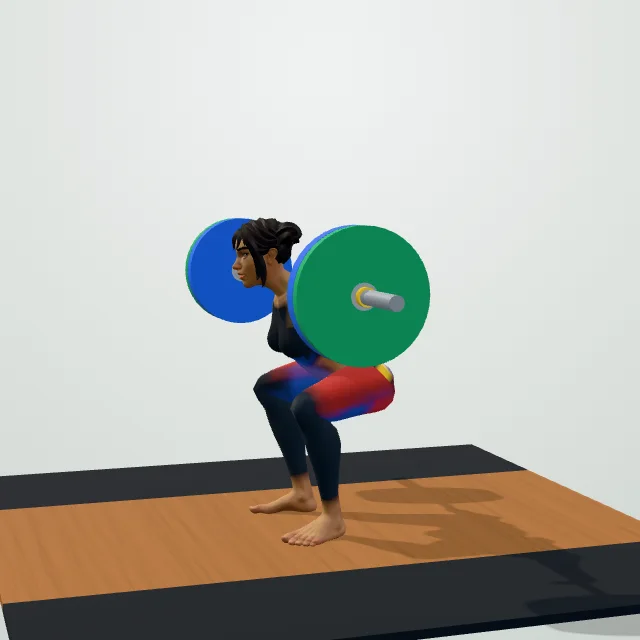
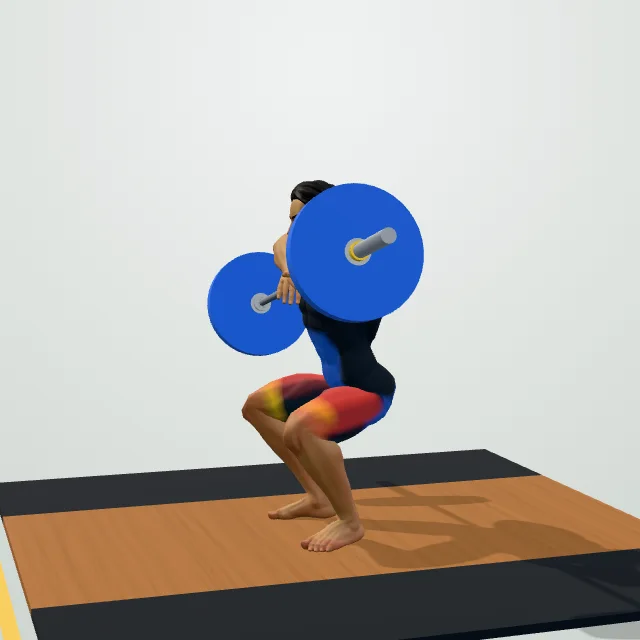
More exercises for legs
Questions people ask
How do you do a bodyweight squat correctly?
What muscles does the bodyweight squat work?
Are bodyweight squats effective?
Why do my heels lift when I squat?
How many bodyweight squats should I do a day?
How do you make bodyweight squats harder?
Can seniors and beginners do bodyweight squats?
General fitness information, not medical advice. Check with a doctor or physiotherapist before starting if you have a health condition, an injury or are pregnant. Stop if you feel chest pain, dizziness or sharp pain.