Back · Home, no equipment
Superman exercise: build a resilient lower back
Lie face-down and lift your arms, chest and legs off the floor at once — a no-equipment move that trains the muscles holding your spine stable.
- Primary
- Lower back
- Secondary
- GlutesUpper back
- Level
- Beginner
- Type
- Isolation · Both sides together
- Sets × reps
- 3 × 10-15 reps
How to do it
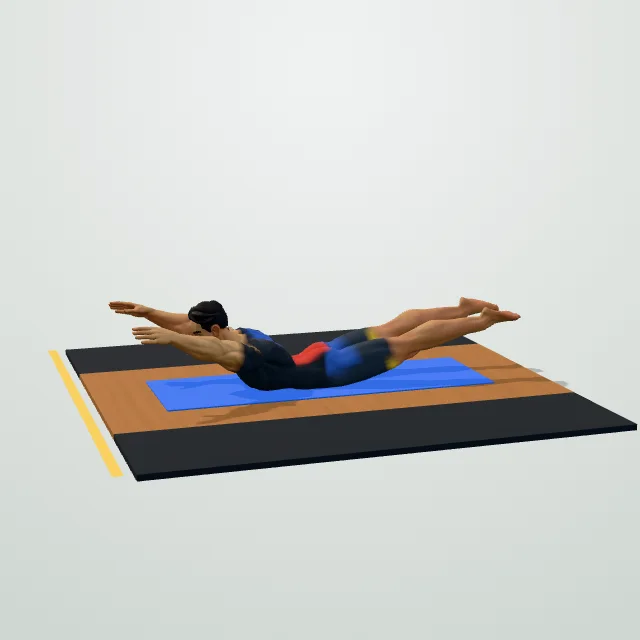
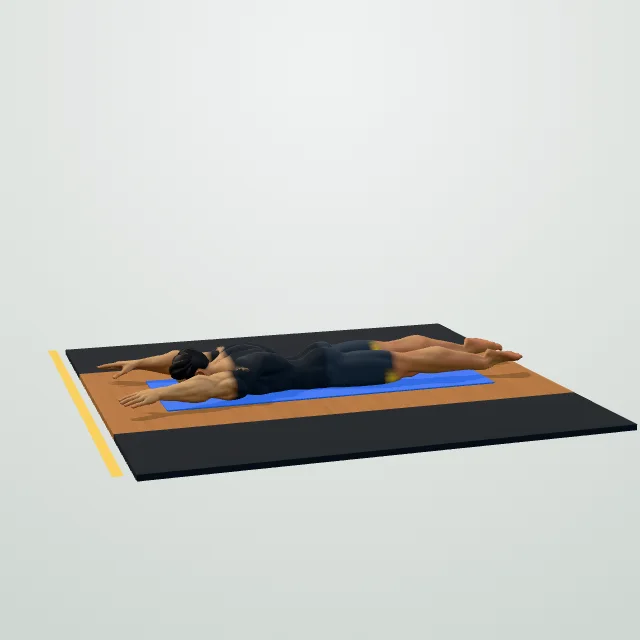
- Lie face-down with your arms stretched out in front of you.
- Draw your belly button in and squeeze your glutes.
- Raise your arms, chest and legs off the floor together.
- Hold the top position for 1–3 seconds, neck neutral.
- Lower back down under control and repeat.
Coach cues
- Brace before you lift.
- Lift arms, chest and legs together.
- Keep your neck in line, don't look up.
- Lower under control, no dropping.
Breathing: Breathe out as you lift into the hold, breathe steadily during the hold, breathe in as you lower.
Common mistakes
Make it easier / Make it harder
Sets and reps by goal
| Goal | sets | reps | Rest |
|---|---|---|---|
| Strength | 4–5 | 6–8 | 90–120 s |
| Muscle growth | 3–4 | 10–15 | 60–90 s |
| Endurance | 2–3 | 15–25+ | 30–60 s |
What muscles does the superman exercise work
The main target is your lower back (erector spinae), the muscles that run along your spine and extend your torso against gravity. Your glutes work hard to lift your legs, and your upper back and rear delts engage to hold your arms raised out in front. Because everything lifts at once, the superman also demands a good amount of whole-body coordination and control, not just raw strength in any one muscle.
Benefits
Training the lower back's extensor muscles directly builds endurance that supports posture and helps the spine hold a stable position during heavier lifts like squats and deadlifts. Because it needs no equipment and very little space, it is a practical way to add lower-back and glute work to a home workout, a warm-up, or a day when the gym is not an option. It is also low-impact and gentle on the joints, which makes it a common inclusion in general core and back-health routines, and a sensible warm-up move before heavier hip-hinge lifts like deadlifts or good mornings.
Technique: lift, hold and lower
Lie face-down with your arms stretched out in front of you and your legs straight behind you. Before you lift, gently draw your belly button in and squeeze your glutes — this protects your lower back and keeps the movement coming from your hips and spine extensors rather than a sudden jerk. Raise your arms, chest and legs off the floor together in one smooth motion, keeping your neck in a neutral line rather than craning your head up to look forward. Hold the top position for 1–3 seconds, feeling the contraction run the length of your lower back and glutes, then lower back down under control rather than dropping.
Keep the range realistic — a few centimeters of genuine lift with good control is worth more than a big, jerky heave that mostly comes from momentum. If you feel this in your neck rather than your back, you are likely lifting your head instead of keeping it aligned with your spine.
Variations
A bird dog (opposite arm and leg raised from a hands-and-knees position) trains a similar pattern with an added balance and anti-rotation challenge, and is a good regression if the full superman feels like too much load on the lower back at first. For more resistance once bodyweight feels easy, alternate raising just your arms and just your legs instead of lifting both together, or add a brief pause at the top of each rep. A back extension on a Roman chair is a natural progression once bodyweight supermans feel easy, since it allows a longer range and added load.
How to program the superman
2–3 sets of 10–15 reps, or holds of 10–20 seconds at the top position, work well two to three times a week. It fits naturally into a core or lower-back section of a workout, a warm-up before deadlifts or squats, or a home workout that needs no equipment at all. There is no need to chase heavy resistance here — control and consistency matter more than intensity for this exercise, and steady progress over several weeks is what actually builds a more resilient lower back.
Safety
Keep the lift small and controlled rather than trying to arch as high as possible — overreaching for extra height mostly adds strain rather than benefit. If you have current lower back pain or a disc condition, check with a doctor or physiotherapist before adding this or any spinal extension exercise — see our exercise safety guide for when to stop — and stop for any sharp or radiating pain rather than pushing through it. Warming up with a few gentle reps before your working sets is a simple way to prepare the lower back for the load ahead.
Workout plans with this exercise
Questions people ask
What muscles does the superman exercise work?
Is the superman exercise good for lower back pain?
How long should I hold a superman?
Superman vs bird dog: which should I do?
Can beginners do the superman exercise?
How often should I do supermans?
General fitness information, not medical advice. Check with a doctor or physiotherapist before starting if you have a health condition, an injury or are pregnant. Stop if you feel chest pain, dizziness or sharp pain.