Back · Gym
Sumo deadlift: a wide stance pull for the legs and glutes
A deadlift variation with a wide stance and feet turned out, pulling the bar between your legs instead of outside them. Here is the setup, technique and how it differs from a conventional deadlift.
- Primary
- GlutesQuadsInner thighs
- Secondary
- HamstringsLower backTraps
- Level
- Intermediate
- Type
- Compound · Both sides together
- Sets × reps
- 3 × 3-6 reps
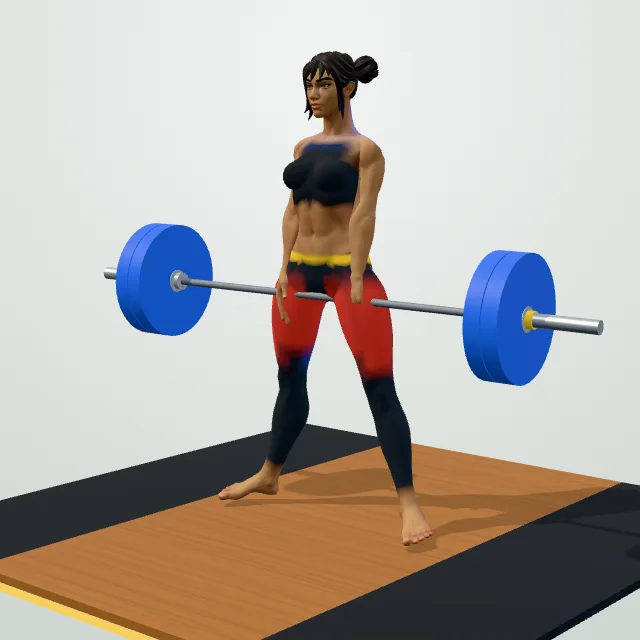
How to do it
- Set feet wider than shoulder-width, toes turned out 30-45°.
- Grip the bar inside your knees, shins close to vertical.
- Push your knees out toward your toes and brace your core.
- Set your shoulder blades down and back before pulling.
- Drive through the floor, hips and shoulders rising together.
- Stand fully tall at the top without leaning back.
- Hinge back at the hips to lower the bar along the same path.
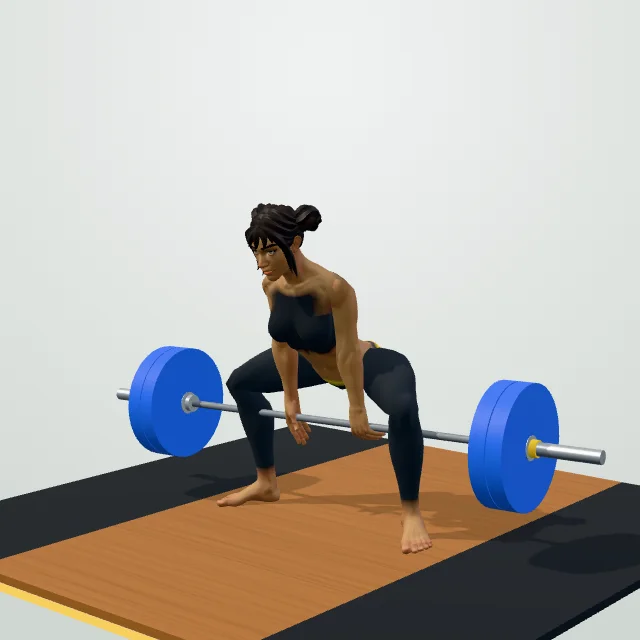
Coach cues
- Feet wide, toes turned out.
- Grip inside your knees, push them toward your toes.
- Brace your core, chest up.
- Drive through the floor, stand tall.
Breathing: Take a breath and brace before you pull; exhale once the hardest part of the rep is behind you.
Common mistakes
Make it easier / Make it harder
Sets and reps by goal
| Goal | sets | reps | Rest |
|---|---|---|---|
| Strength | 3–5 | 3–6 | 2–4 min |
| Muscle growth | 3–4 | 6–12 | 90–150 s |
| Endurance | 2–3 | 15–20 | 30–60 s |
The sumo deadlift is a deadlift variation performed with a wide stance and feet turned out, hands gripping the bar inside your knees instead of outside them. It is a fully recognized competition lift in powerlifting, not a shortcut or "cheating" version of the conventional deadlift, and it suits many lifters better because of how it changes the joint angles at the hip and knee.
What muscles does the sumo deadlift work
The wide, turned-out stance shifts more of the load onto the glutes, quads and inner thighs (adductors) compared with a conventional pull, while still using the hamstrings and lower back to keep the torso upright and braced. Because the torso stays more vertical in a sumo stance, the lower back generally does less bending work than in a conventional deadlift, which is one reason people search for it as an alternative when they want to train the same lift with less lower-back stress.
Benefits of the sumo deadlift
- Shorter range of motion for many body types, since the wide stance lets your hips start closer to the bar.
- More upright torso, which can reduce lower-back strain compared with a conventional deadlift for lifters with long torsos or lower-back sensitivity.
- Strong glute and inner-thigh development, complementing squat-pattern leg work.
- A legitimate competition lift: sumo deadlifts are allowed in every major powerlifting federation, so switching stance is a technique choice, not rule-bending.
Sumo deadlift vs conventional deadlift
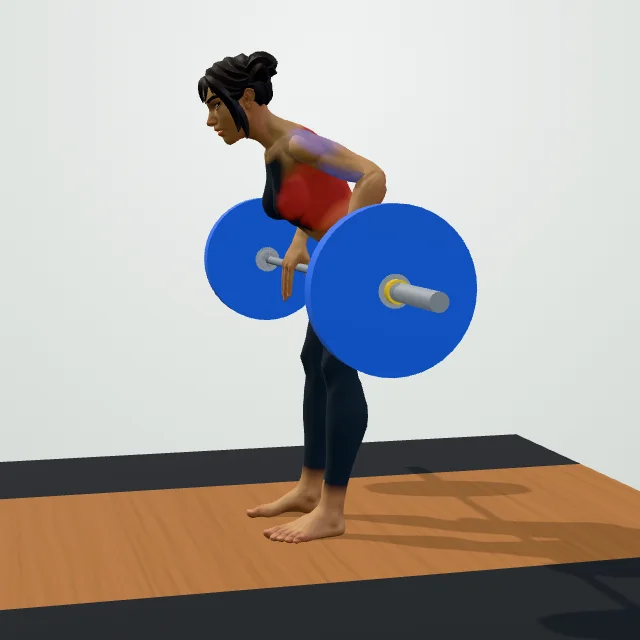
The conventional deadlift uses a hip-width stance, hands outside the knees, and a more bent-over torso position, putting relatively more demand on the hamstrings and lower back. The sumo deadlift widens the stance, turns the feet out, and brings the hands inside the knees, shifting more load onto the quads, glutes and adductors with a more upright back angle. Neither is "easier" in an absolute sense — many lifters can move more weight in one stance than the other because of their individual hip structure and limb lengths, so it is worth trying both before deciding which one to specialize in.
How to sumo deadlift with proper form
Stance
Set your feet wider than shoulder-width, toes turned out roughly 30–45 degrees, with the bar still over your mid-foot. Your shins should be close to vertical once you grip the bar, since the wide stance lets your hips sit further forward than in a conventional pull.
Grip and bracing
Reach down inside your knees to grip the bar, hands closer together than in a conventional deadlift. Push your knees out in the direction of your toes, brace your core, and pull your shoulder blades down and back before you initiate the pull.
The pull
Drive through the floor with your legs, pushing the ground away rather than yanking the bar with your back. Keep the bar close to your body and your torso angle relatively constant as your hips and shoulders rise together, finishing by standing tall without leaning back.
Sets, reps and how often to train it
As with the conventional deadlift, 3–5 sets of 3–6 reps suits strength goals, with 3 sets of 6–10 reps working well for general muscle and conditioning work. Rest 2–3 minutes between heavier sets, train it once or twice a week, and add weight in small increments of around 5–10% once your current working weight feels controlled through every rep. Warm up thoroughly with several lighter, progressively heavier sets before pulling near your working weight, and see rest between sets and progressive overload for more detail, or use the plan builder to schedule your pulling days.
Variations and alternatives
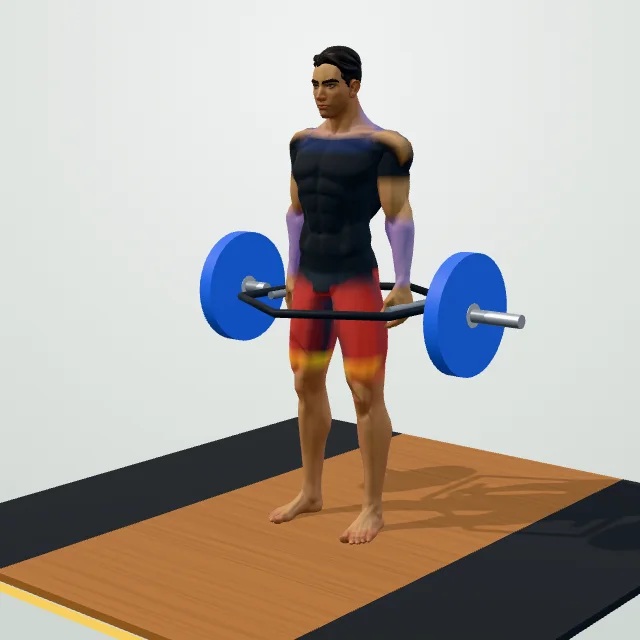
If a barbell sumo stance feels awkward, a sumo squat with a dumbbell or kettlebell teaches the same wide stance and hip mechanics with less technical demand. A "semi-sumo" stance — wider than conventional but narrower than full sumo — is a reasonable middle ground while you find what suits your hips. If your gym does not have a barbell, or you prefer a lighter-load progression, the trap bar deadlift and kettlebell deadlift both train a similar hip-hinge pattern.
Safety and who should modify it
Keep your knees tracking in line with your toes throughout the pull — letting them cave inward under load is the most common technical fault in the sumo stance and increases knee strain. As with any heavy pull, avoid holding your breath through a maximal lift if you have high blood pressure or a heart condition, and discuss heavy resistance training with a doctor first if you have either. Stop for sharp back, hip or knee pain, chest pain, dizziness or unusual breathlessness, and progress load gradually. If you have limited hip mobility, a groin or adductor injury, or are new to lifting, learn the pattern with light weight before adding significant load, and see exercise safety: when to stop for more guidance.
Questions people ask
What is a sumo deadlift?
Is the sumo deadlift easier than the conventional deadlift?
What muscles does the sumo deadlift work?
Is the sumo deadlift allowed in powerlifting competitions?
Sumo deadlift vs conventional deadlift: which should I do?
Does the sumo deadlift work the glutes?
Why do my knees cave in during a sumo deadlift?
General fitness information, not medical advice. Check with a doctor or physiotherapist before starting if you have a health condition, an injury or are pregnant. Stop if you feel chest pain, dizziness or sharp pain.