Back · Gym
T-bar row: a fixed bar path for heavy back rows
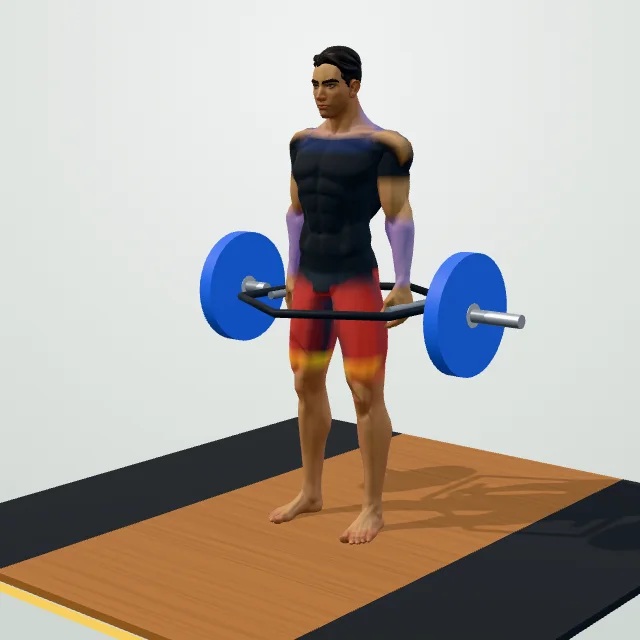
A rowing exercise using a landmine-anchored bar or dedicated T-bar machine, letting you load a lot of weight with a shorter, more controlled range of motion. Here is the setup and technique.
- Primary
- LatsUpper back
- Secondary
- BicepsRear deltsLower back
- Level
- Intermediate
- Type
- Compound · Both sides together
- Sets × reps
- 3 × 8-10 reps
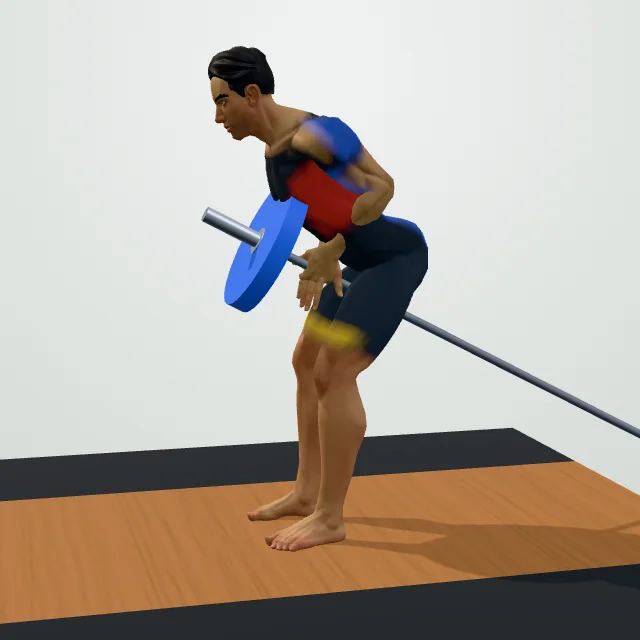
How to do it
- Straddle the bar or platform, feet shoulder-width apart.
- Hinge forward from the hips to about 45°, back flat.
- Grip the handle or bar with arms fully extended.
- Pull your elbows back and up, driving past your torso.
- Squeeze your shoulder blades together at the top.
- Lower under control back to a full extension.
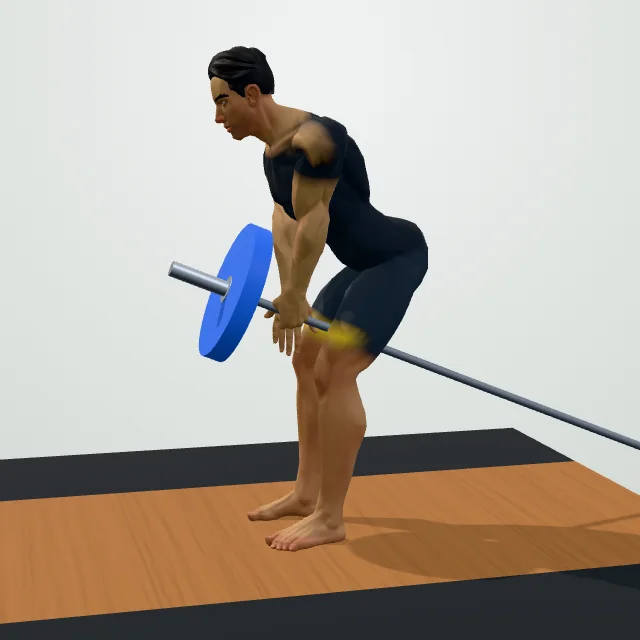
Coach cues
- Straddle the bar, hinge to 45°.
- Grip and start with arms extended.
- Pull elbows back, squeeze your shoulder blades.
- Lower under control, keep your torso steady.
Breathing: Breathe out as you pull the bar to your torso, breathe in as you lower it.
Common mistakes
Make it easier / Make it harder
Sets and reps by goal
| Goal | sets | reps | Rest |
|---|---|---|---|
| Strength | 3–5 | 3–6 | 2–4 min |
| Muscle growth | 3–4 | 6–12 | 90–150 s |
| Endurance | 2–3 | 15–20 | 30–60 s |
The T-bar row loads one end of a barbell anchored in a corner or landmine attachment, letting you straddle the bar and row a handle or the bar itself into your torso. Whether you use a dedicated T-bar row machine or a barbell wedged into a landmine, the fixed pivot point gives a more consistent bar path than a free barbell row, which is why many lifters find it easier to load heavily and row hard without worrying about balance.
What muscles does the T-bar row work
The lats and upper back are the prime movers, pulling your elbows back and your shoulder blades together, with the biceps and rear delts assisting. Because the bar pivots from a fixed point rather than moving freely, your core and lower back still work to hold the bent-over torso position, but with slightly less balancing demand than a straight barbell row, since the bar path is guided rather than fully free.
Benefits of the T-bar row
- Allows heavy loading with a more forgiving, guided bar path than a free barbell row.
- Multiple grip options — a wide handle, a close V-handle, or the bar itself — let you shift emphasis between the outer lats and the upper back and rear delts.
- Works with minimal equipment: a landmine attachment or even a barbell wedged into a corner is enough, so it is accessible in most gyms.
- Complements other rows, giving your back training variety without needing a cable stack.
T-bar row vs barbell row and chest-supported row
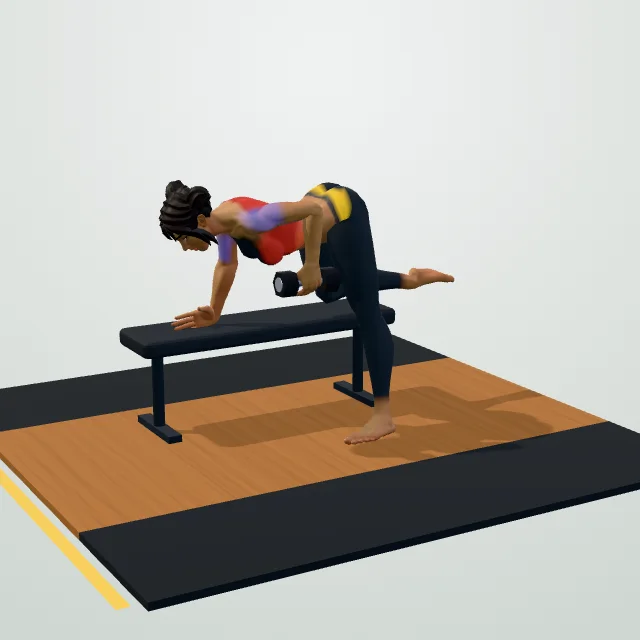
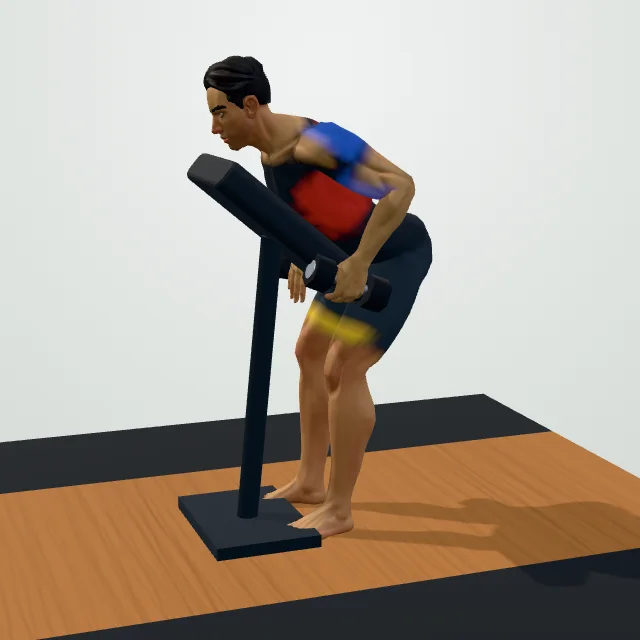
The barbell row uses a completely free bar path, demanding more balance and lower-back control, while the T-bar row's fixed pivot removes some of that instability, letting many lifters use heavier weight with less technical risk. The chest-supported row goes a step further, removing the hip-hinge entirely by resting your chest on a bench. None of these is a strict upgrade over the others — the T-bar row sits in a useful middle ground between the free-standing barbell row and a fully supported machine row.
How to do the T-bar row correctly
Setup
Straddle the bar or machine platform, feet shoulder-width apart. Hinge forward from the hips to roughly 45 degrees, keeping your back flat, and grip the handle or bar with your arms extended.
The pull
Pull your elbows back and up, driving them past your torso, and squeeze your shoulder blades together at the top of the movement. Keep your torso angle steady throughout the set rather than standing taller to help lift the weight, which shifts the work away from your back and onto momentum.
What you should feel
You should feel the pull concentrated in your lats and between your shoulder blades. A wider handle tends to emphasize the outer lats slightly more; a close, neutral-grip handle shifts more focus to the middle back and rear delts.
Sets, reps and how often to train it
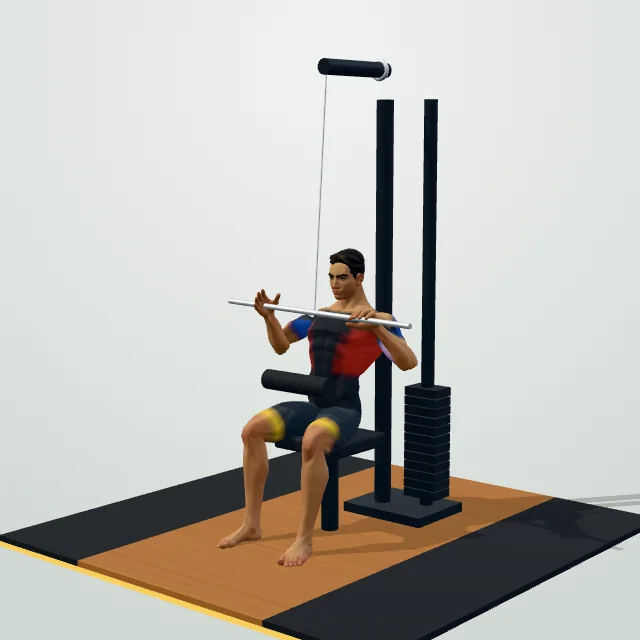
For back thickness and strength, 3 sets of 8–10 reps with 90 seconds of rest works well, using a weight that lets you maintain a steady torso angle for every rep. Train rowing movements 2 times a week, pairing this with a vertical pull such as the lat pulldown for balanced back development. See how many sets and reps and progressive overload for more on building this into a program, or the back and biceps workout.
Variations and alternatives
Switching handles changes the exercise noticeably: a wide bar biases the outer lats and upper back, while a close, neutral V-handle biases the mid-back and rear delts with less grip strain. If your gym has no landmine or T-bar machine, wedging one end of a barbell into a sturdy corner works as a substitute setup. For a version with no hip-hinge demand at all, the seated cable row or chest-supported row are close alternatives that train a similar pulling pattern.
Safety and who should modify it
Keep your back flat through the hinge rather than rounding it as fatigue sets in — this is the main technical risk with any bent-over row. Anyone with an existing lower-back injury or acute back pain should choose a chest-supported alternative until they can maintain a controlled hinge under load. Stop for sharp back pain, and if you are pregnant, recovering from back surgery, or new to bent-over pulling exercises, start with light weight and build up gradually, checking with a doctor or physiotherapist if you have a diagnosed back condition.
Questions people ask
What is a T-bar row?
What muscles does the T-bar row work?
T-bar row vs barbell row: what is the difference?
Do I need a special machine for T-bar rows?
Which grip is best for a T-bar row?
How many T-bar rows should I do?
What can I use instead of a T-bar row?
General fitness information, not medical advice. Check with a doctor or physiotherapist before starting if you have a health condition, an injury or are pregnant. Stop if you feel chest pain, dizziness or sharp pain.