Back · Gym
Trap bar deadlift: an easier-to-learn hip hinge
A deadlift performed inside a hexagonal (trap) bar, standing inside the frame instead of behind a straight barbell. Here is why it often feels more natural and how to do it well.
- Primary
- QuadsGlutesHamstrings
- Secondary
- Lower backTrapsForearms
- Level
- Beginner
- Type
- Compound · Both sides together
- Sets × reps
- 3 × 4-8 reps
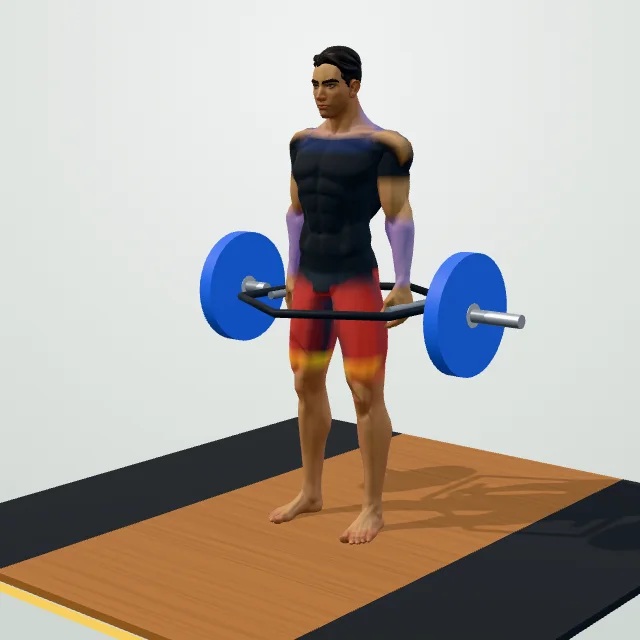
How to do it
- Step inside the trap bar, mid-foot centered between the handles.
- Bend at the hips and knees to grip the handles, shins near vertical.
- Set your chest up and pull your shoulder blades down and back.
- Brace your core hard.
- Drive through the floor, hips and shoulders rising together.
- Stand fully tall at the top without leaning back.
- Hinge your hips back to lower the bar under control.
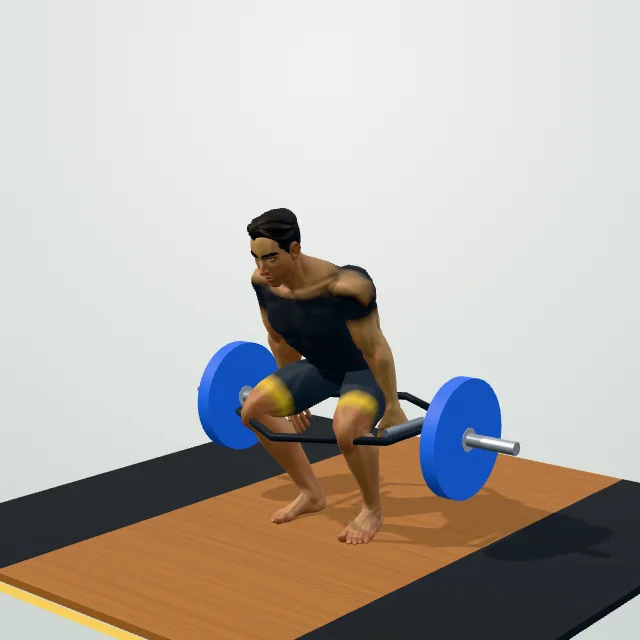
Coach cues
- Step inside, mid-foot centered.
- Chest up, shins near vertical.
- Brace your core before you pull.
- Drive through the floor, stand tall.
Breathing: Take a breath and brace before you pull; exhale once the hardest part of the rep is behind you.
Common mistakes
Make it easier / Make it harder
Sets and reps by goal
| Goal | sets | reps | Rest |
|---|---|---|---|
| Strength | 3–5 | 3–6 | 2–4 min |
| Muscle growth | 3–4 | 6–12 | 90–150 s |
| Endurance | 2–3 | 15–20 | 30–60 s |
The trap bar deadlift, also called the hex bar deadlift, is performed standing inside a hexagonal bar with weight loaded on either side, rather than behind a straight barbell. Because you stand centered inside the load instead of in front of it, many lifters and coaches consider it the easiest deadlift variation to learn, which is why it is a common starting point in beginner strength programs.
What muscles does the trap bar deadlift work
The trap bar deadlift trains the quads slightly more than a conventional deadlift, alongside the glutes and hamstrings, because the centered load and handle height typically allow a bit more knee bend and a more upright torso. The lower back, traps and forearms still work hard to keep the bar path controlled and your spine braced, so it remains a genuine full-body pull, just with a slightly different balance between hips and knees compared with a straight-bar deadlift.
Benefits of the trap bar deadlift
- Easier to learn, since standing inside the bar with a more upright torso is a more intuitive position for most beginners than hinging over a bar in front of them.
- Lower back-friendly for many lifters, because the more vertical torso angle reduces the lever arm on the lower back compared with a conventional pull.
- More quad involvement than a conventional deadlift, making it a useful bridge between squatting and hinging patterns.
- Neutral hand grip (palms facing each other) on most trap bars, which is often more comfortable on the shoulders and wrists than a barbell's overhand or mixed grip.
Trap bar deadlift vs conventional and sumo deadlift
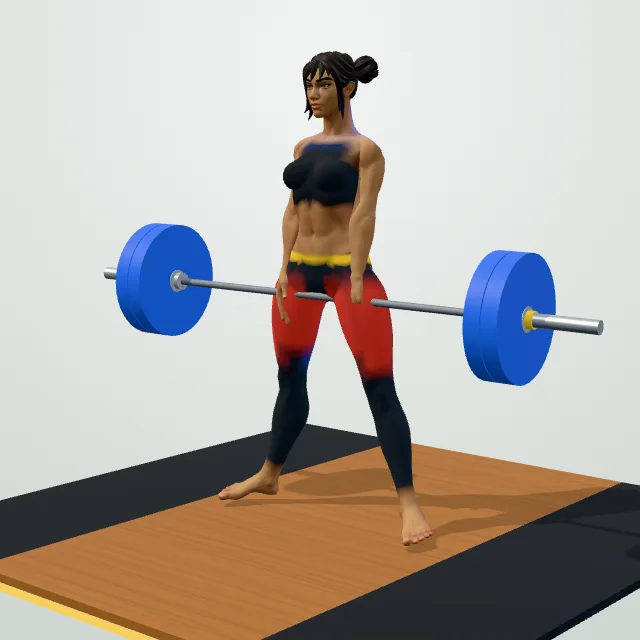
The conventional deadlift uses a straight bar in front of your shins, demanding more hip hinge and lower-back control; the trap bar deadlift centers the load around your body and typically allows a squattier position with more knee bend. Compared with the sumo deadlift, the trap bar still uses a fairly normal stance width rather than a wide, turned-out one. Is the trap bar deadlift "easier"? For most beginners, yes, because the more natural torso angle is simpler to control under load — but it is a genuinely different lift, not just a lighter version of the barbell deadlift, and many advanced lifters keep both in rotation.
How to do the trap bar deadlift correctly
Setup
Step inside the trap bar so your mid-foot is centered between the handles. Bend at the hips and knees to grip the handles, keeping your shins close to vertical and your chest up, more like the top of a squat than a bent-over hinge.
The pull
Brace your core, pull your shoulder blades down and back, and drive through the floor with your legs. Keep the bar path close and vertical, letting your hips and shoulders rise together until you are standing fully tall, without leaning back at the top.
What you should feel
Expect more quad involvement than in a conventional deadlift, alongside the usual glute and hamstring drive. If your lower back rounds or you feel it doing most of the work, you are likely hinging too far forward instead of keeping the more upright, squat-like torso angle this bar allows.
Sets, reps and how often to train it
For strength, 3–5 sets of 4–8 reps with 2–3 minutes of rest works well; for general muscle and conditioning goals, 3 sets of 8–12 reps with a lighter load is a reasonable option, since the trap bar's easier learning curve suits slightly higher reps than a maximal straight-bar pull. Train it once or twice a week, add weight in small increments of roughly 5–10%, and warm up with progressively heavier sets before your working weight. See how many sets and reps and progressive overload for more detail, or the beginner full-body gym workout, which is a good place to start using it.
Variations and alternatives
If you do not have access to a trap bar, the conventional barbell deadlift or the kettlebell deadlift both train a similar hip-hinge pattern with different equipment. Some trap bars have a high and low handle option: the high handles reduce range of motion and are gentler for beginners or anyone with mobility limits, while the low handles increase the range and the demand, closer to a conventional pull. Trap bar deadlifts are also commonly used for jump training, since the same setup and bar path apply to a loaded jump.
Safety and who should modify it
Keep your chest up and torso relatively upright rather than letting it collapse forward, which is the most common technical breakdown at higher weights. As with any heavy pull, avoid breath-holding through a maximal lift if you have high blood pressure or heart disease, and check with a doctor before heavy resistance training if either applies to you. Stop for chest pain, dizziness, unusual breathlessness or sharp back or knee pain, and progress load gradually. If you are new to lifting, this is often the most sensible deadlift variation to start with, but still begin light and build up your technique before adding significant weight.
Questions people ask
What is a hex bar deadlift?
Is the trap bar deadlift easier than a conventional deadlift?
What muscles does the trap bar deadlift work?
Can you deadlift with a trap bar instead of a barbell?
Is the trap bar deadlift a hinge or a squat?
How much weight should I trap bar deadlift?
Is the trap bar deadlift good for beginners?
General fitness information, not medical advice. Check with a doctor or physiotherapist before starting if you have a health condition, an injury or are pregnant. Stop if you feel chest pain, dizziness or sharp pain.