Back · Home or gym
Chest-supported row: pull hard with zero momentum
A rowing exercise done chest-down on an incline bench, which removes hip-hinge and momentum entirely so your back muscles do all the work. Here is the setup and technique.
- Primary
- Upper backLats
- Secondary
- Rear deltsBiceps
- Level
- Beginner
- Type
- Compound · Both sides together
- Sets × reps
- 3 × 10-12 reps
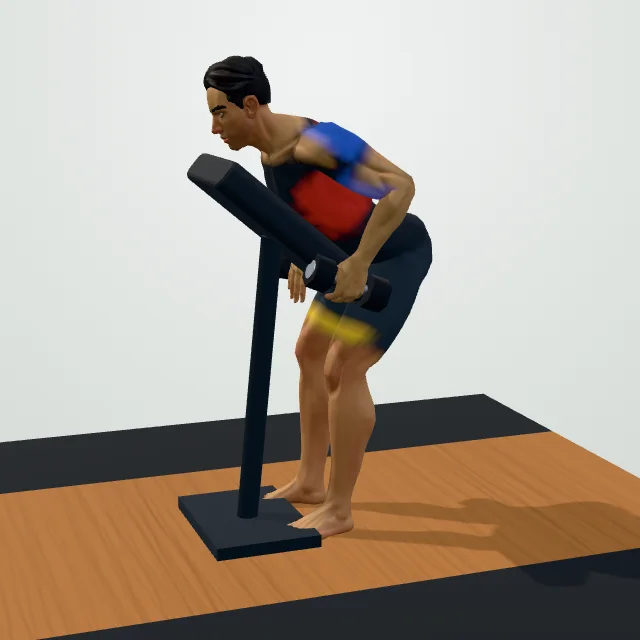
How to do it
- Set an incline bench to 30-45° and lie face-down, chest supported.
- Plant your feet on the floor or a platform behind you.
- Let your arms hang straight down holding a dumbbell in each hand.
- Pull your elbows back and up, driving them past your torso.
- Squeeze your shoulder blades together, chest pressed into the bench.
- Lower the dumbbells under control to a full stretch.
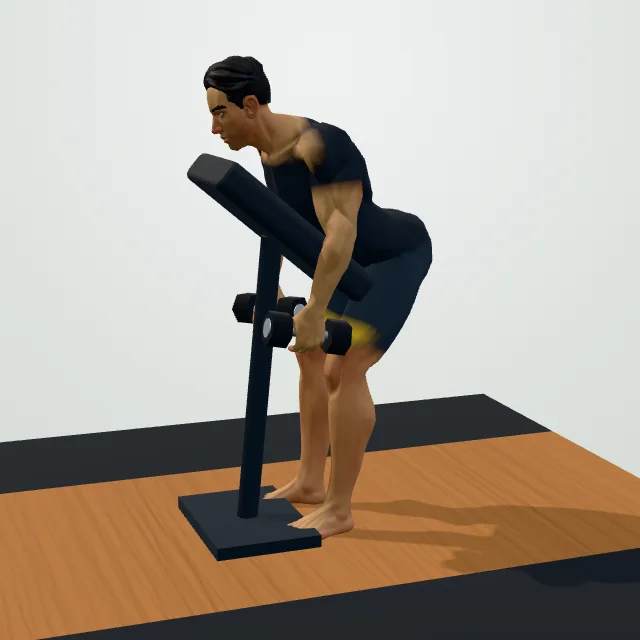
Coach cues
- Chest pressed into the bench.
- Arms hang straight down to start.
- Pull elbows back, squeeze your shoulder blades.
- Lower under control, chest stays down.
Breathing: Breathe out as you pull the dumbbells up, breathe in as you lower them.
Common mistakes
Make it easier / Make it harder
Sets and reps by goal
| Goal | sets | reps | Rest |
|---|---|---|---|
| Strength | 3–5 | 3–6 | 2–4 min |
| Muscle growth | 3–4 | 6–12 | 90–150 s |
| Endurance | 2–3 | 15–20 | 30–60 s |
The chest-supported row is performed lying face-down on an inclined bench, rowing one or two dumbbells up toward your torso. Because your chest and torso rest fully on the bench, there is no hip-hinge to hold and no way to use body momentum to move the weight, which makes it one of the strictest rowing exercises for isolating the back muscles.
What muscles does the chest-supported row work
The upper back and lats are the prime movers, pulling your elbows back and squeezing your shoulder blades together, with the rear delts and biceps assisting. Because the exercise removes almost all lower-back and core stabilizing demand, more of the effort goes directly into the upper back and rear delts compared with a bent-over row, which is why lifters often use it specifically to target posture-related upper-back weakness.
Benefits of the chest-supported row
- Removes momentum entirely, so every rep is driven purely by your back muscles rather than a hip-hinge heave.
- No lower-back loading, making it a sensible choice for people who want back-thickness work without the hip-hinge demand of a barbell row.
- Strong carryover to posture, since it directly strengthens the upper-back muscles that pull the shoulders back and down.
- Works with either one or two dumbbells, letting you train both sides together or focus on one side at a time.
Chest-supported row vs bent-over and cable row
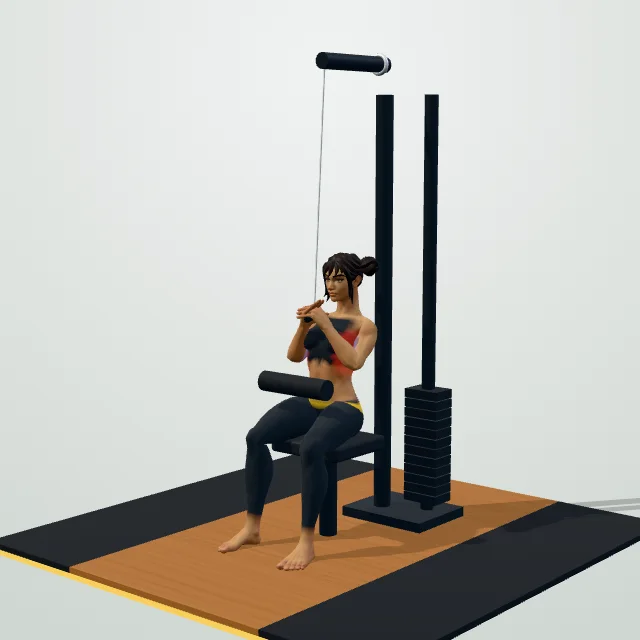
The bent-over barbell row and one-arm dumbbell row both require some hip-hinge control, which adds lower-back and core demand on top of the pull itself. The chest-supported row removes that entirely, isolating the upper back and lats more directly, though it can also mean a slightly reduced total training stimulus since fewer muscles are involved overall. The seated cable row is a similar zero-momentum option using a cable machine instead of an incline bench — both are good choices when you want a controlled, strict rowing movement.
How to do the chest-supported row correctly
Setup
Set an adjustable bench to a 30–45 degree incline and lie face-down with your chest supported and feet planted on the floor or a platform behind you. Let your arms hang straight down holding a dumbbell in each hand.
The pull
Pull your elbows back and up, driving them past your torso, and squeeze your shoulder blades together at the top of the movement. Keep your chest pressed into the bench throughout — lifting your chest off the pad to help the pull is the most common way people turn this into a less strict bent-over row.
What you should feel
You should feel a strong, isolated contraction across your upper back and rear delts, with minimal involvement from your lower back or legs. If your chest lifts off the bench during the pull, the weight is likely too heavy.
Sets, reps and how often to train it
For upper-back development, 3 sets of 10–12 reps with 60–90 seconds of rest works well, since the strict, momentum-free nature of this exercise suits moderate reps with a controlled tempo. Train rowing movements 2 times a week, pairing this with a heavier free-standing row such as the barbell row for a complete back session. See how many sets and reps for programming guidance, or the full-body dumbbell workout, which uses this exercise.
Variations and alternatives
Using a wider grip biases the outer lats and upper back slightly more; a neutral, closer grip shifts a bit more focus to the rear delts and mid-back. Performing it one arm at a time lets you correct side-to-side imbalances, similar to the one-arm dumbbell row but with full torso support. If you do not have an adjustable bench, the seated cable row offers a similar strict, momentum-free pulling pattern.
Safety and who benefits most
Because the bench supports your torso fully, this is one of the lower-risk rowing variations for the lower back, making it a good option for people with a history of back pain or hip-hinge sensitivity, once cleared by a doctor or physiotherapist. Still, avoid cranking your neck up to look forward — keep it in a neutral position in line with your spine. Stop for any sharp shoulder or elbow pain, and if you are pregnant or recovering from an upper-body injury, check with a doctor before adding a new pulling exercise.
More exercises for back
Questions people ask
What is a chest-supported row?
What muscles does the chest-supported row work?
Chest-supported row vs bent-over row: which is better?
Do dumbbell rows work the chest?
Is the chest-supported row good for posture?
How many chest-supported rows should I do?
What can I use instead of a chest-supported row?
General fitness information, not medical advice. Check with a doctor or physiotherapist before starting if you have a health condition, an injury or are pregnant. Stop if you feel chest pain, dizziness or sharp pain.