Shoulders · Home or gym
Arnold press: rotate through a fuller shoulder press
The Arnold press adds a rotation to the standard dumbbell press, taking the front delt through a longer range of motion in every rep.
- Primary
- Front deltsSide delts
- Secondary
- Triceps
- Level
- Intermediate
- Type
- Compound · Both sides together
- Sets × reps
- 3 × 8-12 reps
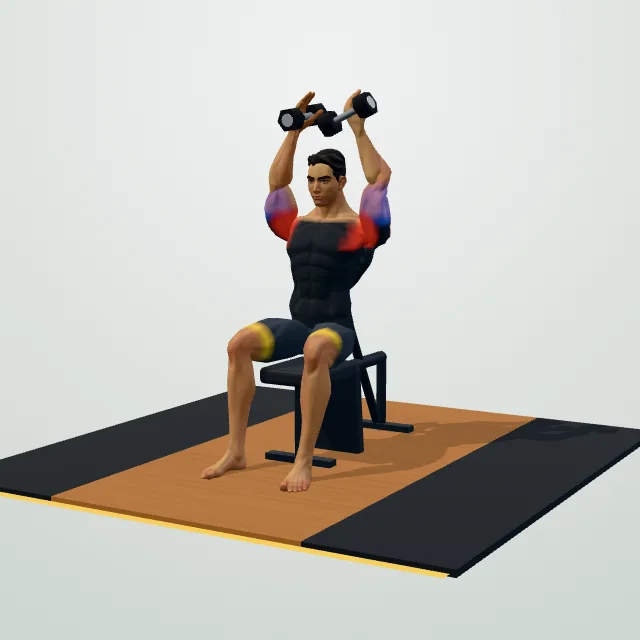
How to do it
- Sit or stand holding two dumbbells at shoulder height, palms facing you.
- Brace your core and keep your elbows in front of your torso.
- Press up while rotating your palms to face forward.
- Finish locked out overhead with palms forward, dumbbells over your ears.
- Reverse the rotation as you lower back to the start position.
- Keep the turn smooth and continuous on every rep.
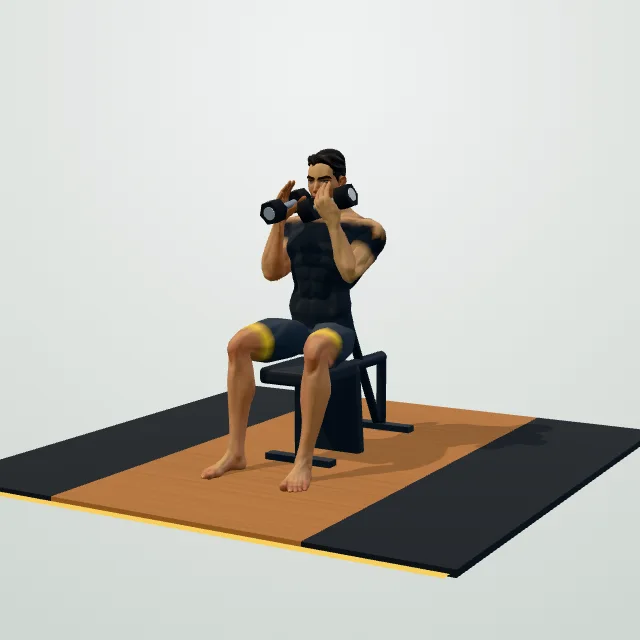
Coach cues
- Start with palms facing you at shoulder height.
- Rotate your palms out as you press up.
- Finish locked out, palms forward, overhead.
- Reverse the rotation slowly on the way down.
Breathing: Breathe in as you lower and rotate to the start, then breathe out as you rotate and press to lockout.
Common mistakes
Make it easier / Make it harder
Sets and reps by goal
| Goal | sets | reps | Rest |
|---|---|---|---|
| Strength | 3–5 | 3–6 | 2–4 min |
| Muscle growth | 3–4 | 6–12 | 90–150 s |
| Endurance | 2–3 | 15–20 | 30–60 s |
The Arnold press is a dumbbell shoulder press with a twist — literally. You start each rep with palms facing you at shoulder height, then rotate your palms to face forward as you press overhead, popularized by Arnold Schwarzenegger to hit the front delt through more of its range than a standard press.
Muscles worked by the Arnold press
Like any shoulder press, the front and side delts drive the movement and the triceps finish the lockout. What makes the Arnold press different is the rotation at the bottom: starting palms-in and turning out as you press means the front delt is under tension through a longer arc, and the small rotator cuff muscles that control shoulder rotation get more work keeping the dumbbells on a smooth path.
Benefits
- Longer front delt range. The rotation adds time under tension to the part of the rep a standard press skips over quickly.
- Built-in warm-up path. Starting palms-in is a gentler entry position for a cold shoulder than a fixed overhead grip.
- Good finisher exercise. It is harder to load heavy, which makes it a solid higher-rep finisher after your main press.
- Extra rotator cuff work. The controlled turn trains shoulder rotation strength that a straight press does not.
Technique step by step
Sit on a bench with back support or stand with feet hip-width apart. Hold two dumbbells at shoulder height with palms facing your body and elbows tucked in front of your torso, like the top of a dumbbell curl. Press up while rotating your wrists so your palms face forward by the time your arms are halfway extended, finishing with the dumbbells locked out overhead, palms forward, stacked over your ears.
Reverse the same path on the way down — rotate back to palms-in as the dumbbells return to shoulder height. Keep the rotation smooth and continuous rather than a sudden flick, and keep your core braced so you do not lean back to help the dumbbells up. Use a lighter weight than you would on a standard dumbbell press until the rotation feels natural.
Sets, reps and where it fits
| Goal | Sets × reps | Rest | Load |
|---|---|---|---|
| Muscle growth | 3 × 10–12 | 60–90 sec | RPE 7–8 |
| Endurance | 2–3 × 15+ | 45 sec | Light, smooth rotation |
The Arnold press works best as a second shoulder exercise after a heavier compound press, since the rotation makes it harder to handle maximal loads safely. Pair it with a lateral raise for side delt volume on a shoulder workout, and progress the weight only once the rotation stays smooth for every rep.
Arnold press vs dumbbell shoulder press vs overhead press
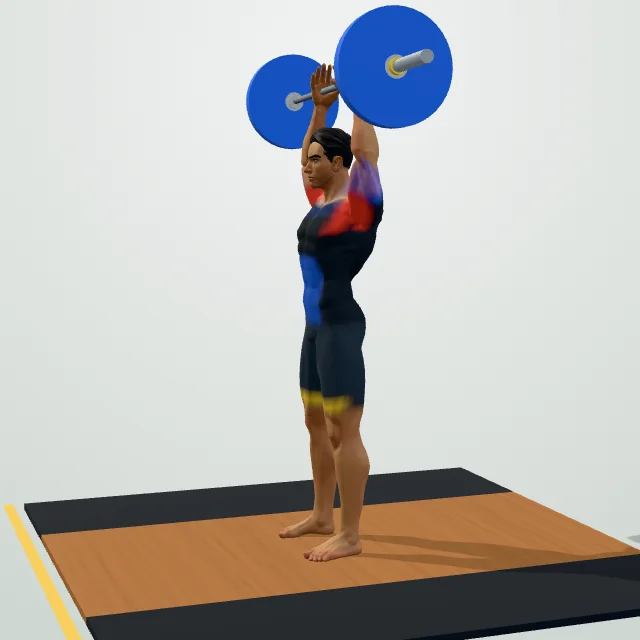
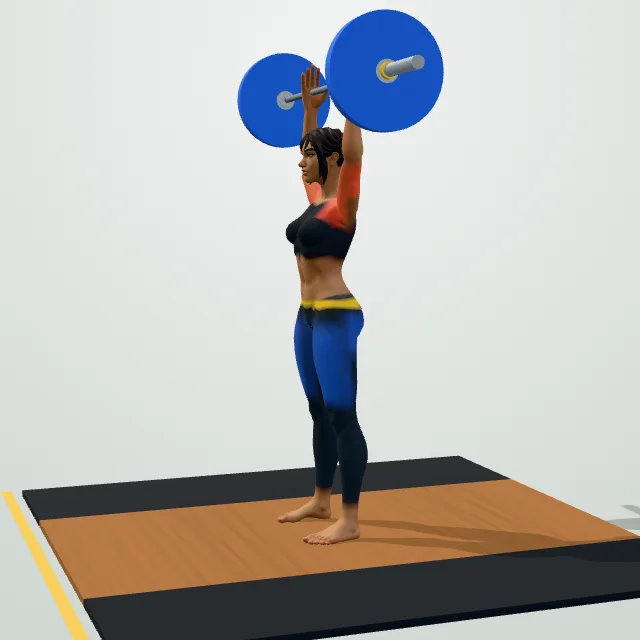
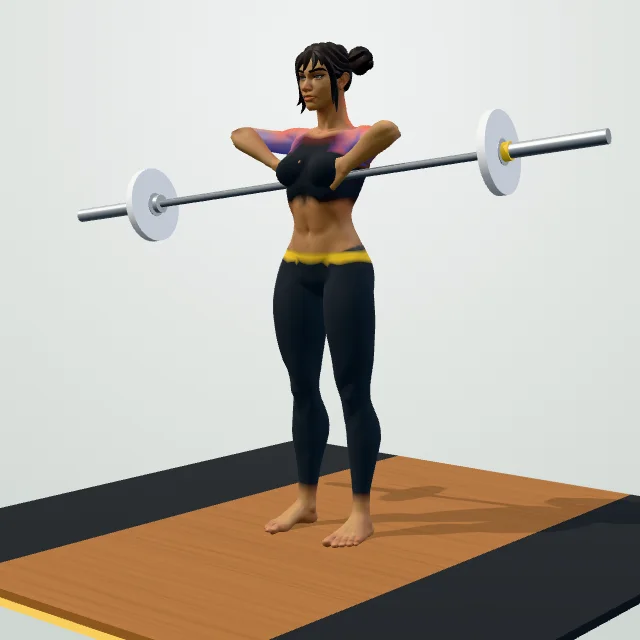
Against a plain dumbbell shoulder press, the Arnold press trades a bit of loadable weight for a longer front delt range and more rotator cuff involvement — useful variety, not a replacement. Against the barbell overhead press, it is far gentler on the shoulder joint and easier to learn, but will not build raw pressing strength as efficiently since you cannot load it as heavy.
Warming up your shoulders first
Because the Arnold press rotates the shoulder through more range than a fixed-grip press, spend a couple of minutes on arm circles and light band pull-aparts before your first set, then run one or two light warm-up sets with the empty rotation before adding weight. See our warm-up guide for a fuller pre-training routine, and use RPE and RIR to judge how much weight is appropriate once you are warm.
Safety and who should be careful
If you have shoulder impingement or pain rotating your arm, start with very light dumbbells and a small rotation, or stick with a neutral-grip press until that improves. Keep the movement slow and controlled — this is not an exercise to rush or go heavy on. Anyone with a shoulder injury history should check with a physiotherapist before adding rotational pressing work.
Used as a lighter, higher-rep addition rather than your main press, the Arnold press is a safe and effective way to add front delt volume without loading the joint as heavily as a barbell lift.
Workout plans with this exercise
More exercises for shoulders
Questions people ask
What muscles does the Arnold press work?
Is the Arnold press better than a regular shoulder press?
How do you do an Arnold press correctly?
Is the Arnold press safe for the shoulders?
Should beginners do the Arnold press?
Arnold press vs overhead press — which should I choose?
Can I do the Arnold press seated?
General fitness information, not medical advice. Check with a doctor or physiotherapist before starting if you have a health condition, an injury or are pregnant. Stop if you feel chest pain, dizziness or sharp pain.