Shoulders · Gym
Machine shoulder press: guided overhead pressing
A fixed pressing path lets you load your shoulders hard without worrying about balancing free weights, which makes the machine shoulder press an easy, low-risk, and beginner-friendly way to press heavy.
- Primary
- Front deltsSide delts
- Secondary
- Triceps
- Level
- Beginner
- Type
- Compound · Both sides together
- Sets × reps
- 3 × 10-12 reps
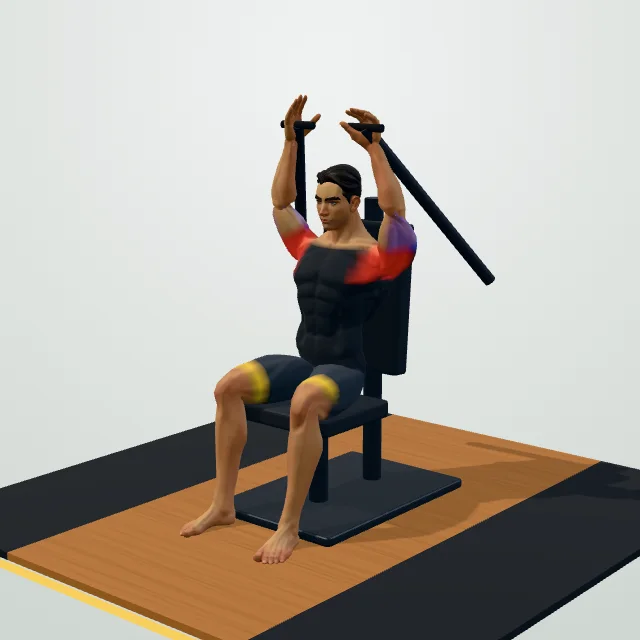
How to do it
- Set the seat so the handles start level with your shoulders.
- Sit with your back flat against the pad.
- Grip the handles with palms forward or neutral.
- Press up to full extension without locking your elbows harshly.
- Lower with control back to the start position.
- Reset your posture before each rep.
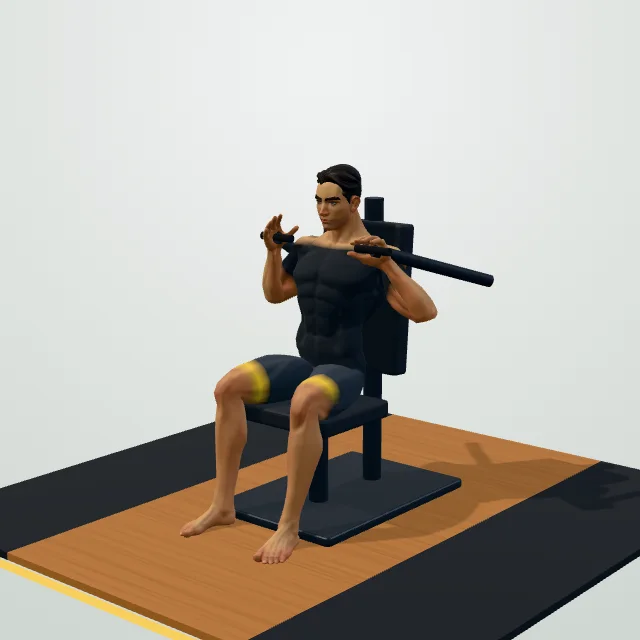
Coach cues
- Seat set so handles start at shoulder height.
- Back flat against the pad.
- Press straight up to full extension.
- Lower with control, no arching.
Breathing: Breathe in as you lower the handles, and breathe out as you press to full extension.
Common mistakes
Make it easier / Make it harder
Sets and reps by goal
| Goal | sets | reps | Rest |
|---|---|---|---|
| Strength | 3–5 | 3–6 | 2–4 min |
| Muscle growth | 3–4 | 6–12 | 90–150 s |
| Endurance | 2–3 | 15–20 | 30–60 s |
The machine shoulder press guides two handles along a fixed arc so you can press overhead without stabilizing free weights. It is a straightforward way to load your shoulders hard, especially useful when you want to push closer to fatigue safely or when balancing dumbbells overhead is not comfortable yet.
Muscles worked
The front and side delts drive the press, and the triceps finish the lockout, exactly as with any overhead pressing movement. Because the machine controls the bar or handle path, your rotator cuff and core do far less stabilizing work than on a free-weight press — which is precisely why it lets you focus the fatigue on the pressing muscles themselves rather than on balance.
Benefits
- Removes the balance demand. Lets you press hard and safely without a spotter.
- Consistent bar path. Easy to compare loads week to week since the movement never changes.
- Good for training close to failure. Safer to push the last rep or two than with a barbell overhead.
- Beginner-friendly entry to pressing. A good way to build pressing strength before adding free-weight work.
- Easy to load precisely. Weight-stack pins usually move in small, consistent increments, which makes gradual progress simple to plan.
Technique and setup
Adjust the seat height so the handles start level with your shoulders, not up by your ears or down at your chest. Grip the handles with your palms forward or neutral, whichever the machine offers, and press up until your arms are fully extended without locking your elbows harshly. Keep your head and shoulder blades resting back against the pad rather than pushing forward to help the press.
Lower with control back to the start position, keeping your back flat against the pad rather than arching to help the weight up. Keep your wrists stacked over your elbows through the whole press rather than letting them bend backward under load. Move at a steady, controlled pace rather than bouncing the handles at the bottom of each rep, since the machine's fixed path makes it easy to rely on momentum if you rush.
Sets, reps and where it fits
| Goal | Sets × reps | Rest | Load |
|---|---|---|---|
| Strength | 3–4 × 6–8 | 90 sec–2 min | RPE 7–8 |
| Muscle growth | 3 × 8–12 | 60–90 sec | RPE 8–9 |
| Endurance | 2–3 × 15+ | 45 sec | Light |
Use the machine shoulder press as your main pressing lift on days you train alone without a spotter, or as a second exercise after free-weight pressing to push the shoulders to genuine fatigue. It fits naturally into a shoulder workout or as part of a broader upper/lower split.
Machine shoulder press vs dumbbell shoulder press vs overhead press
Against the dumbbell shoulder press, the machine removes the need to stabilize each arm independently, which lets you push harder in the last few reps but does less to correct a side-to-side imbalance. Against the barbell overhead press, the machine trades core and stability demand for a safer, more isolated way to overload the shoulders directly.
Dialing in your setup
Because seat height changes the angle on your shoulder more than most people expect, spend a light warm-up set finding a position where the handles line up with your shoulders and the path feels smooth, then keep that setting written down. Progressing the weight steadily using the ideas in our progressive overload guide works well here, since the fixed path makes small weekly increases easy to judge.
Safety notes
Set the seat correctly before every session — starting with the handles too high or too low changes the angle on your shoulder joint and can cause discomfort over time. Anyone with a shoulder injury should start with a light weight and a comfortable range before progressing. Stop for sharp joint pain rather than pushing through it.
Because the path is fixed and predictable, the machine shoulder press is one of the safest ways to train close to failure on a pressing movement without a spotter.
Workout plans with this exercise
More exercises for shoulders
Questions people ask
Is the machine shoulder press as good as free weights?
How do I set up the machine shoulder press correctly?
What muscles does the machine shoulder press work?
Can beginners use the machine shoulder press?
Machine shoulder press vs dumbbell shoulder press — which should I choose?
What seat height is correct for the machine shoulder press?
Is the machine shoulder press bad for the shoulders?
General fitness information, not medical advice. Check with a doctor or physiotherapist before starting if you have a health condition, an injury or are pregnant. Stop if you feel chest pain, dizziness or sharp pain.