Shoulders · Home or gym
Rear delt fly: train the forgotten side of your shoulder
Bent over with dumbbells hanging below you, the reverse fly trains the rear delt — the muscle most desk-bound lifters neglect and most need.
- Primary
- Rear delts
- Secondary
- Upper backTraps
- Level
- Beginner
- Type
- Isolation · Both sides together
- Sets × reps
- 3 × 12-15 reps
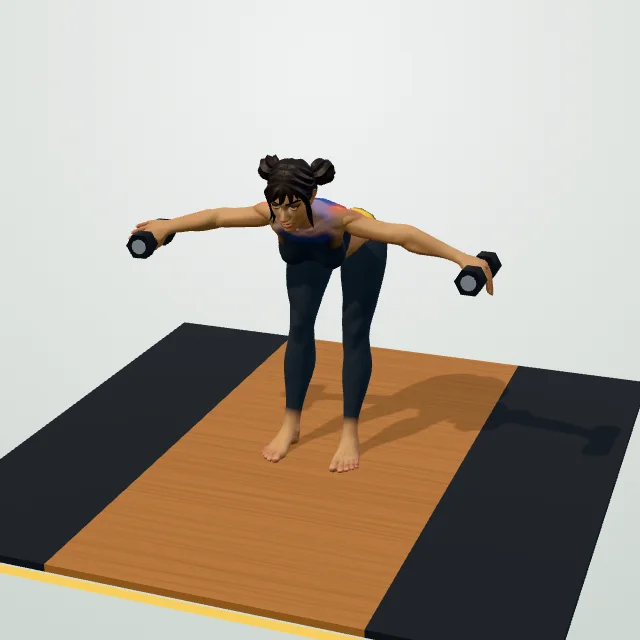
How to do it
- Hold a dumbbell in each hand and hinge forward at your hips.
- Keep your back flat and knees slightly bent.
- Let the dumbbells hang below your shoulders, elbows softly bent.
- Raise both arms out to the sides, squeezing your shoulder blades together.
- Pause briefly at the top of the movement.
- Lower with control back to the hanging start position.
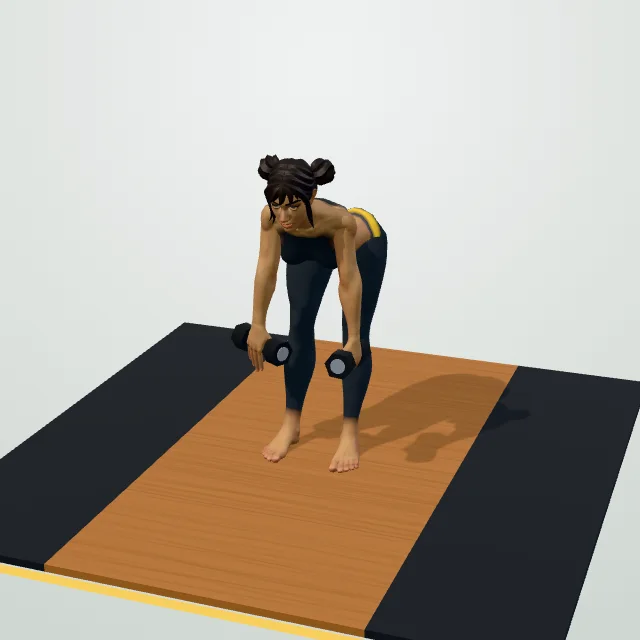
Coach cues
- Hinge forward, back flat, dumbbells hanging.
- Raise arms out to the sides together.
- Squeeze your shoulder blades at the top.
- Lower with control, no swinging.
Breathing: Breathe out as you raise the dumbbells out to the sides, and breathe in as you lower them back down.
Common mistakes
Make it easier / Make it harder
Sets and reps by goal
| Goal | sets | reps | Rest |
|---|---|---|---|
| Strength | 3–5 | 6–8 | 90–120 s |
| Muscle growth | 3–4 | 10–15 | 60–90 s |
| Endurance | 2–3 | 15–20 | 30–60 s |
The bent-over rear delt fly (also called a reverse fly) hinges you forward at the hips and lifts two dumbbells out to the sides from a hanging position, targeting the rear delt — the back-facing part of the shoulder that most pressing and pulling exercises barely touch.
Muscles worked by the rear delt fly
The rear delt is the prime mover, pulling your arms out and back against gravity. Your upper back and traps assist to retract your shoulder blades at the top of each rep, and your lower back and glutes work isometrically to hold the bent-over hinge position steady. Because so much daily life and training pulls the shoulders forward — desks, phones, pressing exercises — the rear delt fly is one of the few moves that directly reverses that pattern.
Benefits
- Balances forward-dominant training. Offsets the front-delt bias built up from bench pressing and overhead pressing.
- Supports posture. Stronger rear delts and upper back help pull rounded shoulders back into a more upright position.
- Completes shoulder development. Along with front and side raises, it trains all three heads of the deltoid.
- Low equipment need. Works with light dumbbells, bands or a machine, so it is easy to fit in anywhere.
- Fast to feel working. Most lifters notice the rear delt burning within the first set once the hinge and arc are set up correctly.
Technique
Hold a dumbbell in each hand and hinge forward from your hips until your torso is close to parallel with the floor, knees slightly bent, back flat rather than rounded. Let the dumbbells hang straight down below your shoulders with a soft bend in your elbows.
Raise both arms out to the sides in a wide arc, squeezing your shoulder blades together at the top, then lower with control back to the hanging start position. Keep your torso still throughout — using your back to heave the weight up, rather than your rear delts, is the most common way this exercise gets watered down. If holding the hinge is hard on your lower back, do it seated with your chest resting on your thighs instead.
Sets, reps and where it fits
| Goal | Sets × reps | Rest | Load |
|---|---|---|---|
| Muscle growth | 3 × 12–15 | 45–60 sec | RPE 8–9, light to moderate |
| Endurance | 2–3 × 15–20 | 30–45 sec | Light |
Fit the rear delt fly into a back and biceps workout or a shoulder workout, ideally alongside pulling work since the movement pattern is similar. Because it is easy to cheat with momentum, prioritize a strict, controlled set over a heavier weight moved sloppily.
Rear delt fly vs reverse pec deck vs face pull
A reverse pec deck trains the same rear delt from a supported seated position, which removes the lower back demand of the bent-over hinge and can let you focus purely on the muscle. A face pull hits the rear delts too, but adds more external rotation and upper-back work through a pulling rather than a raising pattern — useful to rotate between the three for variety.
Warming up your rear delts and lower back
Because the bent-over position also asks your lower back and hamstrings to hold a hinge, spend a minute on hip hinges before your first set, and rehearse the movement pattern with empty hands. If hinging over is uncomfortable, our exercise for back pain guide has useful pointers on protecting your lower back during hinge-based exercises.
Safety notes
If bending over is uncomfortable for your lower back, use the seated version with your chest supported on your thighs, or switch to a reverse pec deck machine. Keep the weight light enough that your torso stays still and your back does not round under load — this is a strict, controlled isolation exercise, not one to force heavy.
Because the load involved is light and the joint stress low, the rear delt fly is a safe, low-risk way to build the shoulder muscle most training programs neglect.
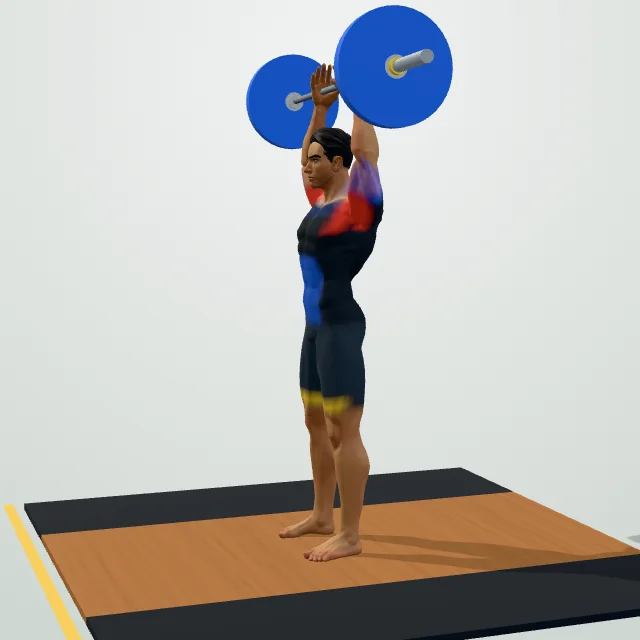
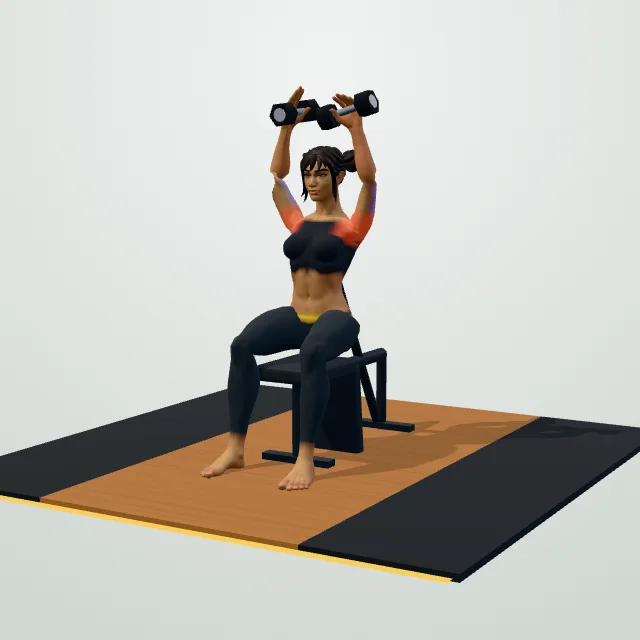
More exercises for shoulders
Questions people ask
What muscles does the rear delt fly work?
How do you do a rear delt fly correctly?
Rear delt fly vs reverse pec deck — which is better?
Why do rear delt flies matter for posture?
Can I do rear delt flies seated?
How much weight should I use for rear delt flies?
Are rear delt flies good for shoulder health?
General fitness information, not medical advice. Check with a doctor or physiotherapist before starting if you have a health condition, an injury or are pregnant. Stop if you feel chest pain, dizziness or sharp pain.