Shoulders · Gym
Push press: use your legs to press more weight overhead
The push press adds a short leg dip and drive to the overhead press, letting you move heavier loads and train explosive power at the same time.
- Primary
- Front deltsTriceps
- Secondary
- QuadsGlutesSide delts
- Level
- Advanced
- Type
- Compound · Both sides together
- Sets × reps
- 4 × 4-6 reps
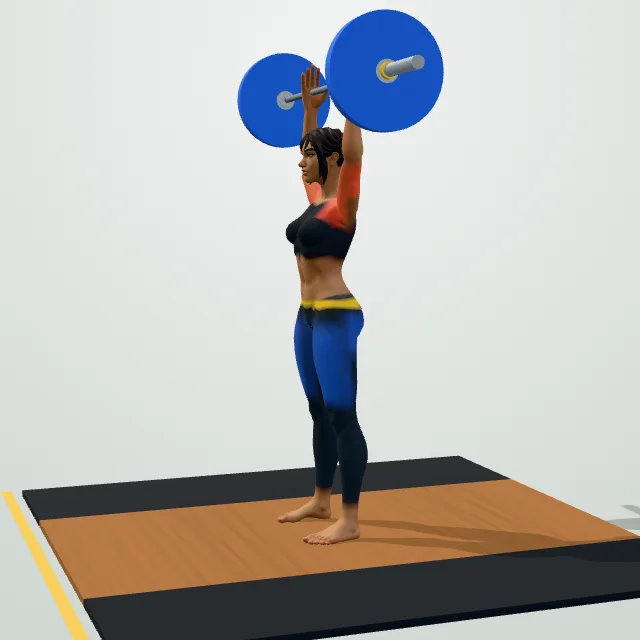
How to do it
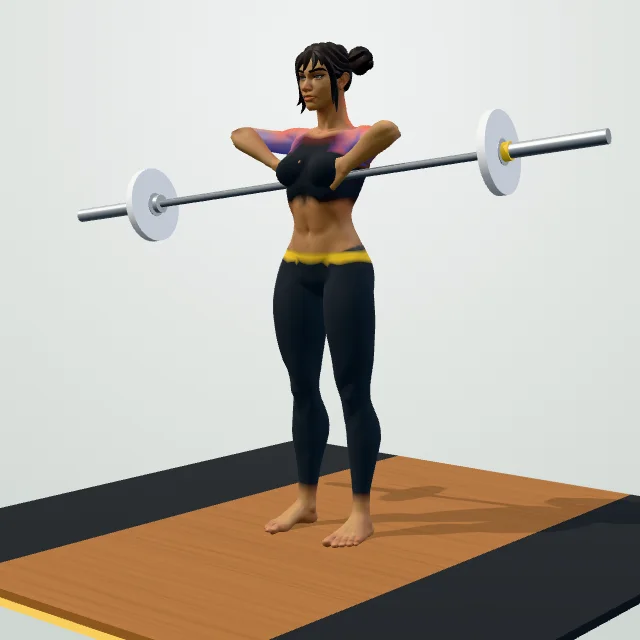
- Set the bar on your front shoulders, grip just outside shoulder width.
- Stand with feet hip-width apart, torso upright, core braced.
- Dip a short distance by bending your knees, staying tall through your torso.
- Drive up powerfully through your legs.
- Press the bar overhead using that upward momentum, locking out fully.
- Lower the bar back to your shoulders under control before the next rep.
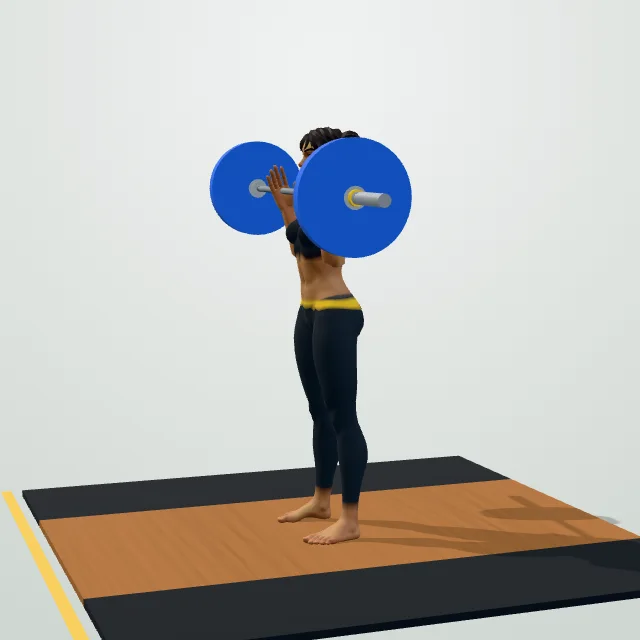
Coach cues
- Bar on your shoulders, torso tall.
- Short, quick dip through the knees.
- Drive up hard through your legs.
- Punch the bar overhead to full lockout.
Breathing: Take a breath and brace before the dip, then breathe out as you drive and press to lockout.
Common mistakes
Make it easier / Make it harder
Sets and reps by goal
| Goal | sets | reps | Rest |
|---|---|---|---|
| Strength | 3–5 | 3–6 | 2–4 min |
| Muscle growth | 3–4 | 6–12 | 90–150 s |
| Endurance | 2–3 | 15–20 | 30–60 s |
The push press is an overhead press that starts with a short, sharp dip and drive from your legs, using that leg power to help launch the bar overhead. It lets you press more weight than a strict overhead press and trains explosive hip and leg power alongside your shoulders, which is why it shows up so often in CrossFit and Olympic-lifting-influenced programs.
Muscles worked by the push press
The front and side delts and triceps still do the pressing at the top, exactly as in a strict overhead press, but the quads and glutes now generate the initial drive that gets the bar moving fast. Because the whole lift happens in under a second, your core has to brace hard and quickly to transfer force from your legs up through your torso into the bar without losing a stable position — that speed and coordination is the main thing the push press adds over a strict press.
Benefits
- Moves heavier loads overhead. The leg drive typically lets you push 10–20% more weight than a strict press.
- Trains power, not just strength. The fast dip-drive builds explosive triggering through the hips and legs.
- Useful when fatigued. A little leg drive can help you finish a hard set once your shoulders alone are gassed.
- Builds confidence overhead. Handling heavier weight safely overhead can make the strict press feel lighter by comparison.
Technique: the dip and drive
Set up exactly as you would for a strict overhead press: bar on your front shoulders, grip just outside shoulder width, feet hip-width apart. Bend your knees a short distance — about a quarter squat, staying upright through your torso — then drive up powerfully through your legs. As your legs finish extending, use that upward momentum to press the bar overhead with your arms, finishing with a full lockout and the bar over your ears.
The dip should be short and quick, not a slow squat, and your torso should stay vertical throughout — leaning forward turns the lift into a push jerk rather than a push press. Land with your knees straight and the bar locked out at the same moment, then lower the bar back to your shoulders under control before the next rep.
Sets, reps and how it fits your training
| Goal | Sets × reps | Rest | Load |
|---|---|---|---|
| Strength/power | 4–5 × 3–5 | 2–3 min | RPE 7–8, explosive drive |
| Conditioning | 3–4 × 8–10 | 60–90 sec | Moderate, unbroken sets |
Use the push press either as your main pressing lift when the goal is moving heavy weight overhead safely, or later in a session once strict pressing has fatigued your shoulders. It pairs naturally with lower-body power work, and the plate math is easy to plan with the plate calculator when you are jumping in small increments each week.
Push press vs strict overhead press vs thruster
A strict overhead press is the honest strength test — no legs allowed — so use it when you want to track pure shoulder progress. The push press is the tool for handling near-maximal overhead loads or finishing fatiguing sets. A thruster takes the same dip-and-drive idea but starts from a full front squat, turning it into more of a full-body conditioning movement than a shoulder-focused lift.
Warming up the dip-drive pattern
Because the push press moves fast under real load, spend time on bodyweight squats and a few light barbell dips before adding weight, so your knees and hips are ready for the quick dip. Following a structured plan such as the plan builder makes it easier to schedule push press sessions with enough recovery between heavy days, and pairing it with the rest between sets guide helps you rest long enough to keep each rep explosive.
Safety and who should modify it
Because the push press moves fast and uses near-maximal loads, master the strict overhead press and a basic squat pattern first. Anyone with knee, hip or lower back issues should get those checked before adding the dip-drive, and people with uncontrolled blood pressure or heart conditions should avoid straining hard through a heavy explosive lift. Stop if you feel sharp pain in the shoulders, knees or back rather than normal training fatigue.
Learned with a light bar first, the dip-drive timing is a safe and useful skill that also transfers to sports and everyday explosive movements like jumping or throwing.
Questions people ask
What is a push press?
What muscles does the push press work?
Push press vs push jerk — what is the difference?
Is the push press a good exercise?
How much more can you push press than strict press?
Do I need to learn the strict press before the push press?
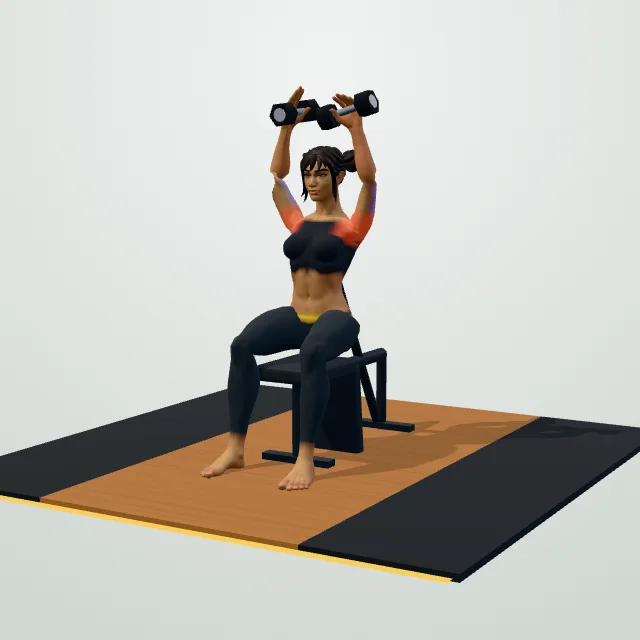
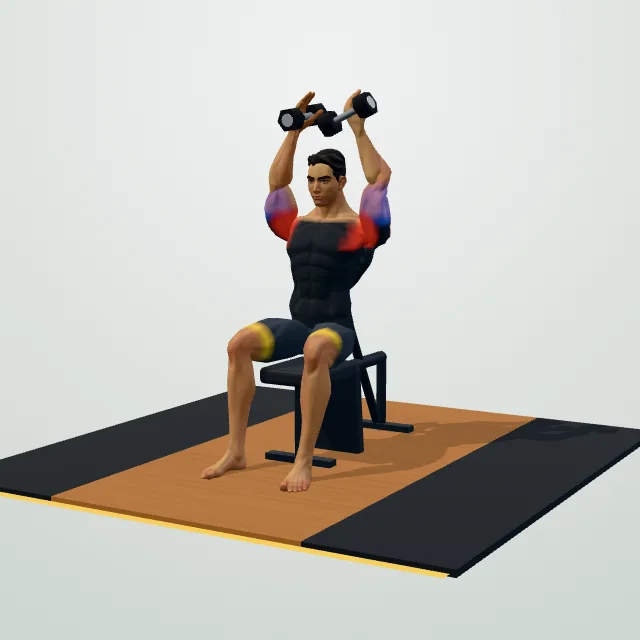
Can I push press with dumbbells?
General fitness information, not medical advice. Check with a doctor or physiotherapist before starting if you have a health condition, an injury or are pregnant. Stop if you feel chest pain, dizziness or sharp pain.