Shoulders · Home or gym
Dumbbell lateral raise: build width in your shoulders
The lateral raise isolates the side delt with a simple arc out to the sides — the exercise most responsible for shoulders that look wide from the front.
- Primary
- Side delts
- Secondary
- TrapsFront delts
- Level
- Beginner
- Type
- Isolation · Both sides together
- Sets × reps
- 3 × 12-15 reps
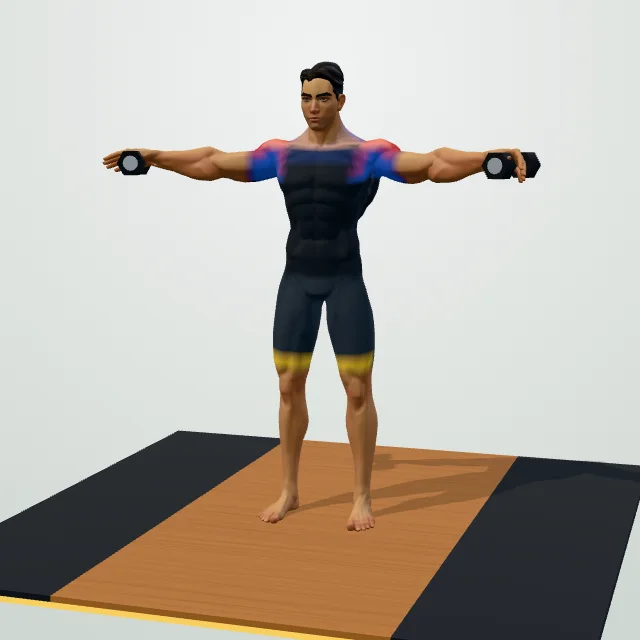
How to do it
- Stand or sit tall holding a dumbbell in each hand at your sides.
- Keep a soft, fixed bend in your elbows.
- Raise both arms out to the sides, leading with your elbows.
- Stop at roughly shoulder height, no higher.
- Lower with control back to your sides.
- Reset your posture before the next rep instead of swinging into it.
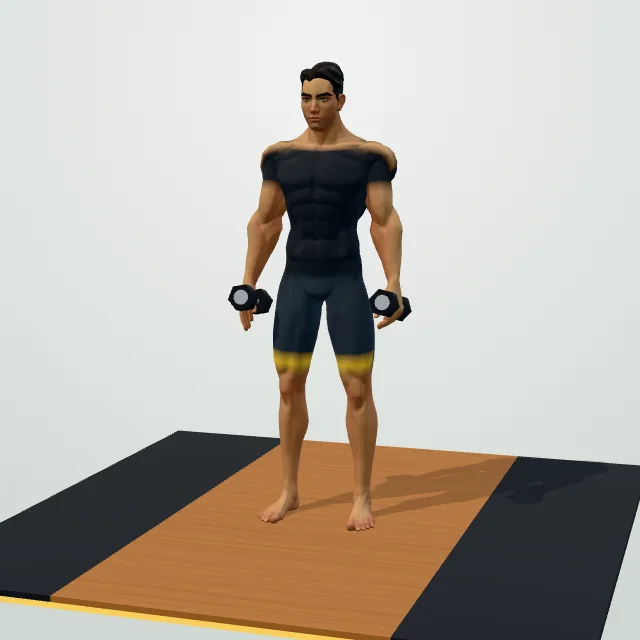
Coach cues
- Soft bend in the elbows, held steady.
- Lead with your elbows, not your hands.
- Raise to shoulder height, no higher.
- Lower slowly, no swinging.
Breathing: Breathe out as you raise the dumbbells out to the sides, and breathe in as you lower them back down.
Common mistakes
Make it easier / Make it harder
Sets and reps by goal
| Goal | sets | reps | Rest |
|---|---|---|---|
| Strength | 3–5 | 6–8 | 90–120 s |
| Muscle growth | 3–4 | 10–15 | 60–90 s |
| Endurance | 2–3 | 15–20 | 30–60 s |
The dumbbell lateral raise is a simple isolation move: standing or seated, you lift two dumbbells out to your sides until your arms are roughly level with your shoulders. It is the single best exercise for the side delt, the muscle that gives shoulders their round, capped look from the front — no pressing movement builds it nearly as directly.
Muscles worked by the lateral raise
The side delt is the prime mover, lifting your arm out and away from your body against gravity. Your traps assist to stabilize your shoulder blades, and your front delt helps out slightly at the start of the arc. Because the side delt gets very little direct work from pressing exercises — which mostly hit the front delt — the lateral raise fills a gap that heavy compound lifts leave open.
Benefits
- Builds shoulder width. A developed side delt is what makes shoulders look broad in a t-shirt, more than any pressing exercise.
- Balances your shoulder training. Presses hit the front delt hard; the lateral raise catches the side delt up.
- Low joint stress. Light-to-moderate weight and a controlled arc make it easy on the shoulder joint when done well.
- Easy to feel working. The burn in the side delt is a clear, immediate feedback signal for correct form.
Technique: the arc that actually works the side delt
Stand or sit tall holding a dumbbell in each hand at your sides, palms facing your body, a soft bend in your elbows that you hold constant through the set. Raise both arms out to the sides in a wide arc, leading with your elbows rather than your hands, until they reach roughly shoulder height — no higher, since going past that point shifts the work onto your traps.
Lower with control back to your sides rather than dropping the weight, and keep your torso still: swinging your hips or shrugging your shoulders up to your ears means the weight is too heavy. A slight forward tilt of your hands at the top, like pouring a jug, keeps tension on the side delt instead of the front delt.
Sets, reps and how heavy to go
| Goal | Sets × reps | Rest | Load |
|---|---|---|---|
| Muscle growth | 3–4 × 12–15 | 45–60 sec | RPE 8–9, light to moderate |
| Endurance | 2–3 × 15–20 | 30–45 sec | Light |
Because it is an isolation exercise, keep the weight modest and the form strict — most people get more from a controlled 12–15 rep set than from swinging a heavier dumbbell. It fits well near the end of a shoulder workout, after your pressing is done, and pairs naturally with a rear delt fly to train all three parts of the shoulder in one session.
Lateral raise vs cable lateral raise vs upright row
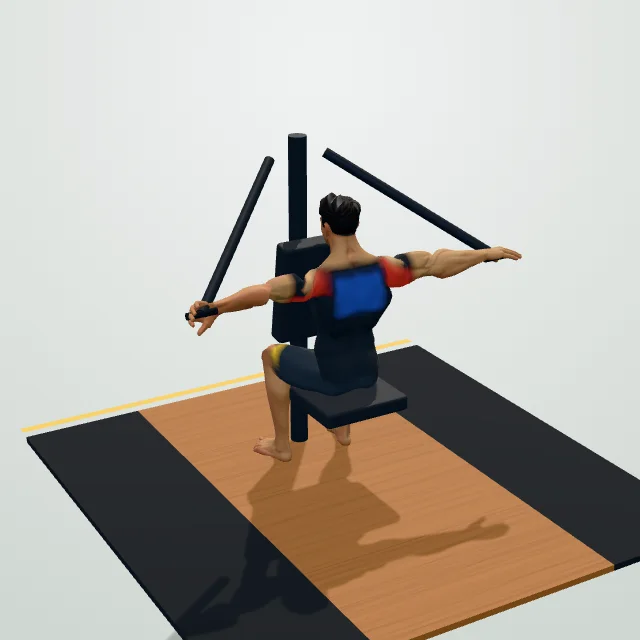
A cable lateral raise keeps tension on the side delt through the whole range, including at the bottom where a dumbbell goes slack, which many lifters find hits the muscle harder. The upright row also raises the arms out to the side but adds elbow flexion and typically more weight, so it trains the side delt alongside the traps and biceps rather than in isolation.
A quick warm-up for the side delts
The side delt is a small muscle that responds well to a short warm-up set with very light dumbbells before your working sets, priming the joint and helping you feel the muscle working before you add real weight. If you train shoulders more than once a week, spacing lateral raise sessions using the workout split guide helps you avoid overloading the same small muscle two days in a row.
Safety notes
If you feel pinching pain at the top of the raise, stop just below shoulder height instead of forcing full range. People with shoulder impingement should keep the weight light and the arc controlled, and anyone with a recent shoulder injury should check with a physiotherapist before loading this movement heavier.
Because the load is light relative to a compound lift, the lateral raise is one of the safest shoulder exercises to do frequently once your form is dialed in.
Workout plans with this exercise
General fitness · Beginner
Beginner Full-Body Gym Workout
Build muscle · Intermediate
Push Pull Legs Split (6 Days)
Strength · Intermediate
Upper/Lower Split (4 Days)
Build muscle · Intermediate
5-Day Body-Part Split (Bro Split)
Build muscle · Beginner
Full-Body Dumbbell Workout Plan
Build muscle · Intermediate
Shoulder Workout (Gym)
More exercises for shoulders
Questions people ask
How much weight should I use for lateral raises?
What muscles do lateral raises work?
How high should I raise the dumbbells?
Why do my traps take over during lateral raises?
Lateral raise vs cable lateral raise — which is better?
Can lateral raises build shoulder width?
Are lateral raises safe for the shoulders?
General fitness information, not medical advice. Check with a doctor or physiotherapist before starting if you have a health condition, an injury or are pregnant. Stop if you feel chest pain, dizziness or sharp pain.