Shoulders · Home or gym
Dumbbell shoulder press: build even, balanced shoulders
Pressing two dumbbells overhead forces each shoulder to work on its own, so weak sides and poor stability show up fast — and get fixed fast too.
- Primary
- Front deltsSide delts
- Secondary
- Triceps
- Level
- Beginner
- Type
- Compound · Both sides together
- Sets × reps
- 3 × 8-12 reps
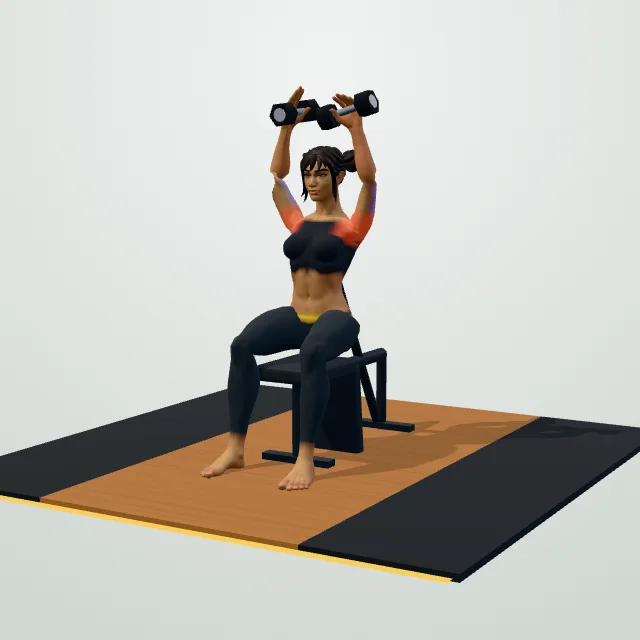
How to do it
- Sit on a bench with back support, or stand with feet hip-width apart.
- Bring both dumbbells to shoulder height, palms forward or slightly turned in.
- Brace your core and set your shoulder blades down and back.
- Press both dumbbells straight up to full lockout over your ears.
- Lower under control back to shoulder height without banging your chest.
- Reset your brace before each rep instead of bouncing between reps.
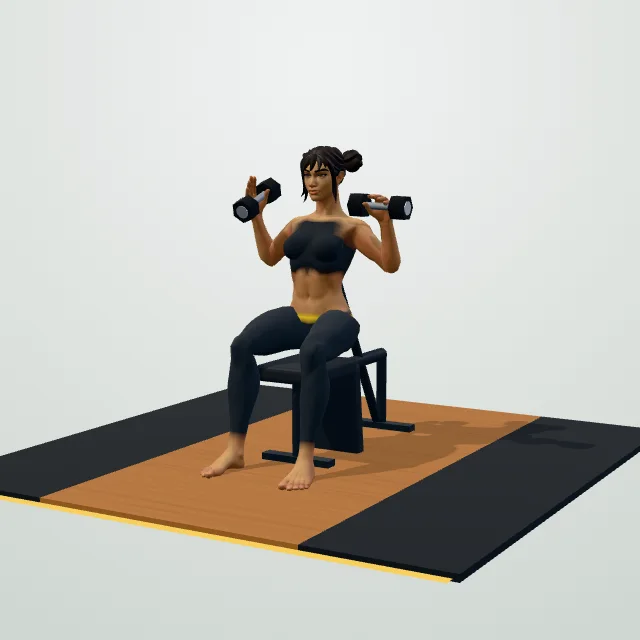
Coach cues
- Dumbbells to shoulder height, palms forward.
- Brace your core before you press.
- Press straight up, stack the weights over your ears.
- Lower under control, elbows around 45 degrees.
Breathing: Breathe in as you lower the dumbbells to shoulder height, then breathe out as you press to lockout.
Common mistakes
Make it easier / Make it harder
Sets and reps by goal
| Goal | sets | reps | Rest |
|---|---|---|---|
| Strength | 3–5 | 3–6 | 2–4 min |
| Muscle growth | 3–4 | 6–12 | 90–150 s |
| Endurance | 2–3 | 15–20 | 30–60 s |
The dumbbell shoulder press takes the overhead press and splits the load across two independent dumbbells, seated on a bench or standing. That single change matters: each shoulder now has to press, stabilize and control the weight on its own, which builds more even strength than a barbell and lets your wrists and elbows travel in whatever path feels natural to your joints.
Muscles worked by the dumbbell shoulder press
The front delts drive the dumbbells up off your shoulders, and the side delts take over as your arms move outward on the way to lockout, so the two together set your pressing strength. Your triceps finish the lockout at the top of each rep. Because each arm moves independently, your rotator cuff and shoulder blade muscles have to work harder than on a barbell press to keep the dumbbells tracking straight instead of drifting apart or together.
Benefits
- Fixes side-to-side imbalances. A weaker shoulder cannot hide behind a stronger one, since each arm carries its own dumbbell.
- Joint-friendly path. Your wrists can rotate slightly through the press, which is often more comfortable than a fixed barbell grip.
- Works seated or standing. Seated removes leg and core drive so the shoulders take the full load; standing adds a bracing challenge.
- Scales easily. Dumbbells go up in small 1–2 kg jumps, which makes steady progressive overload simple.
Technique: seated and standing
Sit on a bench with back support, or stand with feet hip-width apart. Bring the dumbbells to shoulder height with your palms facing forward (or turned slightly in for a more shoulder-friendly neutral grip) and your elbows roughly under your wrists. Brace your core, then press both dumbbells straight up until your arms are fully extended and the dumbbells are stacked over your ears, without banging them together at the top.
Lower with control back to shoulder height, keeping your elbows from flaring wider than about 45 degrees from your torso at the bottom. Standing, keep your ribs down and avoid leaning back to launch the weight — if you need to lean, the load is too heavy for strict form. Seated, keep your lower back gently in contact with the pad rather than arching hard to grind out a rep.
Sets, reps and progression
| Goal | Sets × reps | Rest | Load |
|---|---|---|---|
| Strength | 4 × 6–8 | 2 min | RPE 7–8 |
| Muscle growth | 3–4 × 8–12 | 60–90 sec | RPE 8–9 |
| Endurance | 2–3 × 15+ | 45 sec | Light, strict form |
Because it is easier to control than a barbell, the dumbbell shoulder press fits well as either your main shoulder lift on a push or shoulder day, or as a second pressing movement after the barbell overhead press. Add weight once you can complete every set at the top of your rep range with a clean lockout — track your numbers in my workouts so you know when to move up.
Dumbbell shoulder press vs overhead press vs Arnold press
Compared with the barbell overhead press, the dumbbell version is easier on the wrists and shoulders and better exposes a weak side, but it usually limits how much total weight you can handle. The Arnold press is the same movement with an added rotation, starting palms-in and finishing palms-forward, which brings the front delt in through a longer range at the cost of a slightly more technical rep. If balance is the issue rather than strength, a machine shoulder press removes the stability demand entirely so you can push closer to failure.
Safety and who should modify it
If you have shoulder impingement or pain reaching overhead, use a neutral (palms-in) grip and stop the range where your shoulder blade starts to shrug up toward your ear. People with high blood pressure or a heart condition should avoid straining or holding their breath on a heavy top set. Stop and see a doctor or physiotherapist for sharp joint pain rather than pushing through it.
Because you can adjust grip, seat back angle and load independently for each arm, the dumbbell shoulder press is one of the most adaptable ways to keep pressing overhead as you get older or come back from a minor shoulder niggle.
Workout plans with this exercise
General fitness · Beginner
Beginner Full-Body Gym Workout
Strength · Intermediate
Upper/Lower Split (4 Days)
Build muscle · Intermediate
4-Day Muscle-Building Workout Plan
Build muscle · Beginner
Full-Body Dumbbell Workout Plan
Fat loss · Beginner
4-Week Fat-Loss Workout Plan
General fitness · Beginner
Beginner Gym Workout Plan for Women
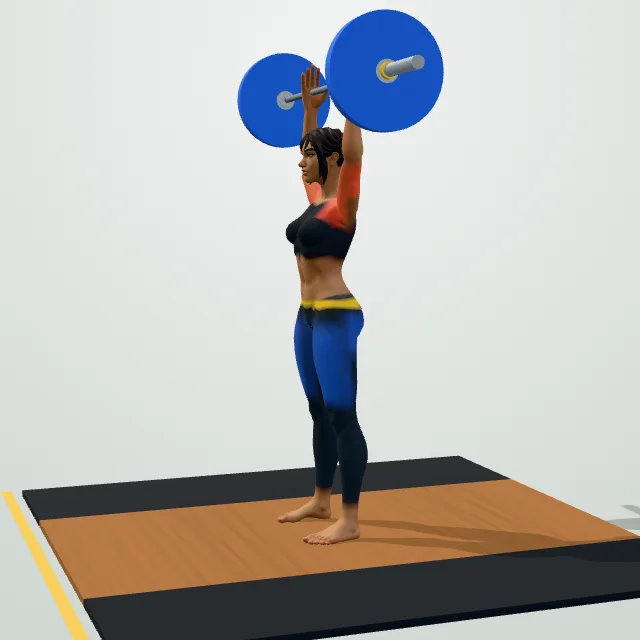
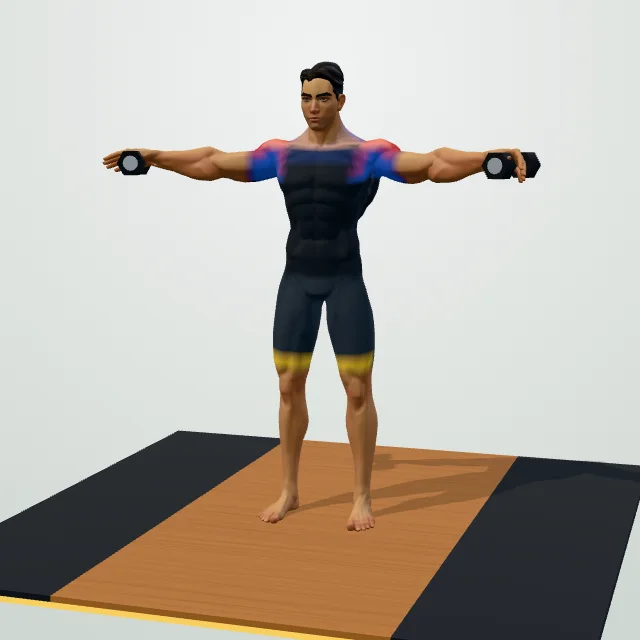
More exercises for shoulders
Questions people ask
Is the dumbbell shoulder press as good as the barbell overhead press?
Should I do the dumbbell shoulder press seated or standing?
What muscles does the dumbbell shoulder press work?
What is a good starting weight for the dumbbell shoulder press?
Can I do the dumbbell shoulder press without a bench?
Is the dumbbell shoulder press bad for the shoulders?
Dumbbell shoulder press vs Arnold press — which is better?
General fitness information, not medical advice. Check with a doctor or physiotherapist before starting if you have a health condition, an injury or are pregnant. Stop if you feel chest pain, dizziness or sharp pain.