Back · Gym
Barbell shrug: build your traps without hurting your neck
Hold a loaded bar and lift your shoulders straight up toward your ears — a simple isolation move that is easy to do with far too much weight and far too little control.
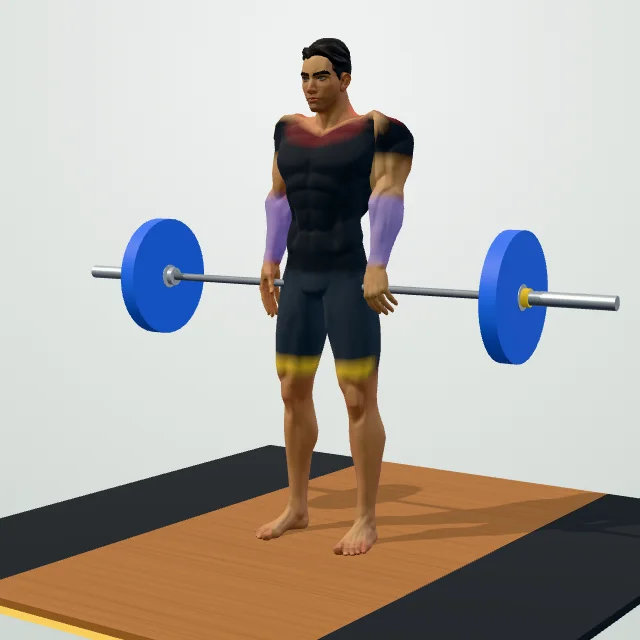
How to do it
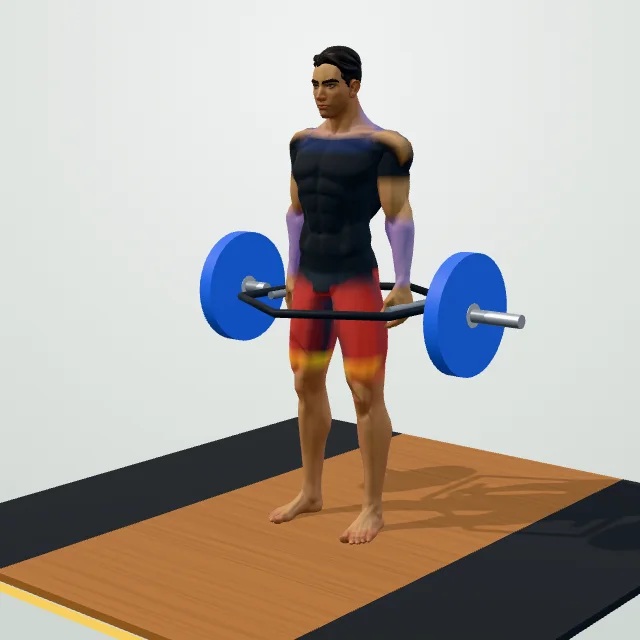
- Stand holding the bar with an overhand grip just outside your hips.
- Let your arms hang straight and your shoulders relax down.
- Lift your shoulders straight up toward your ears, no rolling.
- Pause briefly at the top, squeezing your traps.
- Lower back down under control until your shoulders fully relax.
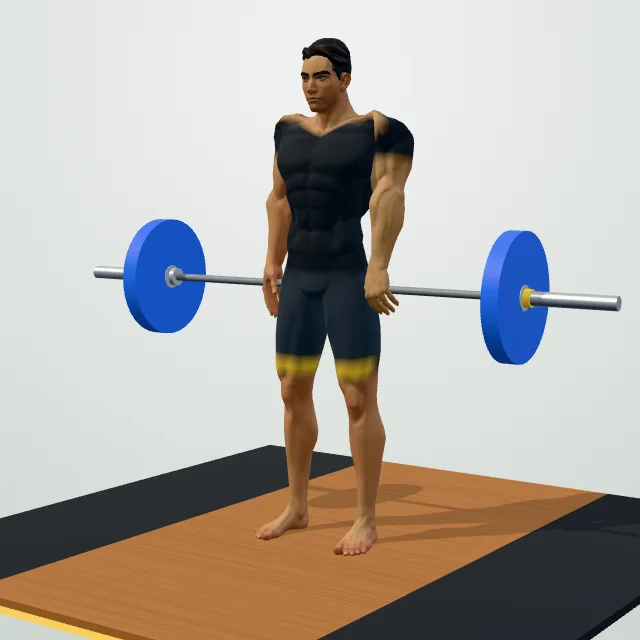
Coach cues
- Straight up, not in a circle.
- Pause and squeeze at the top.
- Keep your neck neutral.
- Lower all the way down under control.
Breathing: Breathe out as you lift your shoulders up, breathe in as you lower them back down.
Common mistakes
Make it easier / Make it harder
Sets and reps by goal
| Goal | sets | reps | Rest |
|---|---|---|---|
| Strength | 3–5 | 6–8 | 90–120 s |
| Muscle growth | 3–4 | 10–15 | 60–90 s |
| Endurance | 2–3 | 15–20 | 30–60 s |
What muscles does the barbell shrug work
The barbell shrug isolates your upper traps, the muscle running from the base of your skull out to your shoulders that lifts your shoulder blades straight up. Your forearms and grip work hard the whole set just to hold the bar, which is often what limits the exercise before the traps themselves feel fully worked. Unlike a deadlift or row, almost nothing else is involved — this is a true single-joint isolation move for one muscle.
Benefits
Strong traps support the upper back during heavy pulling and carrying — a deadlift, farmer's walk or row all rely partly on your traps holding your shoulders in place — so training them directly can support performance in those bigger lifts as well as build visible upper-back and neck thickness. Because the barbell lets you load both sides evenly and heavily, it is usually the highest-load way to train this muscle directly. Many lifters also simply like the look a thicker set of traps gives the upper body in a t-shirt, which is a fair enough reason on its own to add a dedicated shrug to a back or shoulder day.
Technique: grip, bar path and the top position
Stand holding a loaded barbell with an overhand grip just outside your hips, arms straight, shoulders relaxed down at the start. Lift your shoulders straight up toward your ears — a vertical line, not a circular "rolling" motion — and pause briefly at the top where your traps feel fully squeezed. Lower back down under control until your shoulders are fully relaxed again before the next rep. The most common technical error is rolling the shoulders backward or forward in a circle; this does not train the traps any harder and adds unnecessary strain to the shoulder joint for no benefit. Keep your neck neutral and avoid tilting your head back to "help" — the traps do the lifting, not your neck muscles.
You should feel this squarely across the top of your shoulders and the base of your neck. If your lower back rounds or your knees bend to help heave the bar up, the weight is too heavy for strict form.
Barbell shrug vs dumbbell shrug
A barbell generally lets you load more total weight since both hands share one bar, while a dumbbell shrug allows a slightly longer range of motion and lets each side move independently, which can help even out any left-right imbalance. Neither is clearly superior — many lifters use the barbell version for heavier, lower-rep work and dumbbells for higher-rep finishing sets.
How to program barbell shrugs
3 sets of 10–15 reps, resting 60–90 seconds, is standard for trap size and endurance. Because grip often fatigues before the traps do, using lifting straps for your final sets can let you keep training the traps hard once grip becomes the limiting factor — though training grip without straps some of the time has its own carryover to pulling exercises. Shrugs are typically placed near the end of a back or pulling-focused session, after heavier compound lifts like rows or deadlifts have already been done.
Safety
Avoid rolling the shoulders in a circle, and avoid tilting the head back to gain a few extra centimeters of range — both add unnecessary strain to the neck and shoulder joint. Choose a weight that lets you control the full lift and lower without swinging the bar or rounding your lower back; heaving too heavy a shrug is one of the more common ways lifters aggravate their neck or upper back.
Questions people ask
What muscles do barbell shrugs work?
Barbell shrug vs dumbbell shrug: which is better?
How much weight should I use for barbell shrugs?
Are barbell shrugs bad for your neck?
Should I roll my shoulders during shrugs?
How often should I train shrugs?
Do I need straps for barbell shrugs?
General fitness information, not medical advice. Check with a doctor or physiotherapist before starting if you have a health condition, an injury or are pregnant. Stop if you feel chest pain, dizziness or sharp pain.