Back · Home or gym
Dumbbell shrug: a longer range for bigger traps
Hold a dumbbell in each hand and lift your shoulders straight up — a simple, joint-friendly way to build the traps with a fuller range than a bar allows.
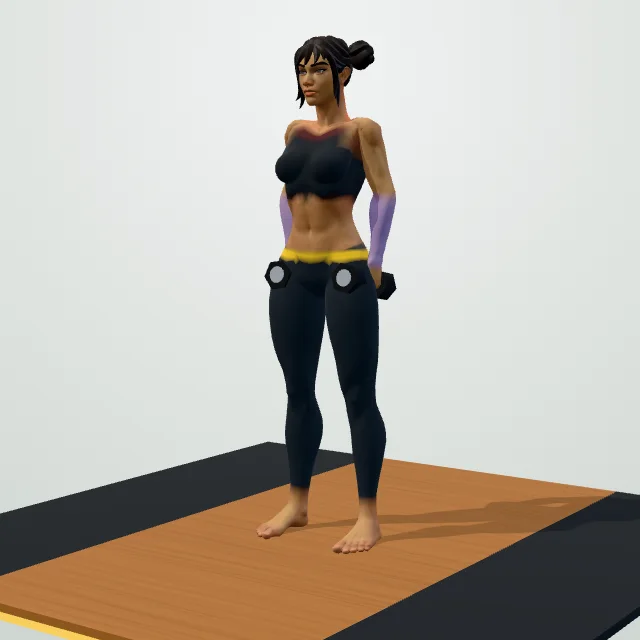
How to do it
- Hold a dumbbell in each hand, arms straight at your sides.
- Let your shoulders fully relax down at the start.
- Lift your shoulders straight up toward your ears, no rolling.
- Pause briefly at the top, squeezing your traps.
- Lower slowly, letting your shoulders drop back down fully.
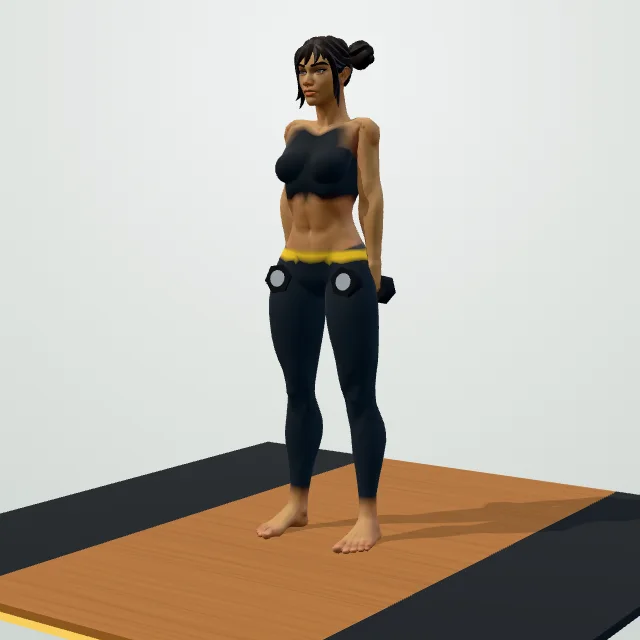
Coach cues
- Arms straight, shoulders relaxed to start.
- Lift straight up, not in a circle.
- Pause and squeeze at the top.
- Lower all the way down slowly.
Breathing: Breathe out as you lift your shoulders up, breathe in as you lower them back down.
Common mistakes
Make it easier / Make it harder
Sets and reps by goal
| Goal | sets | reps | Rest |
|---|---|---|---|
| Strength | 3–5 | 6–8 | 90–120 s |
| Muscle growth | 3–4 | 10–15 | 60–90 s |
| Endurance | 2–3 | 15–20 | 30–60 s |
What muscles does the dumbbell shrug work
This is a targeted exercise for your upper traps, the muscle across the top of your shoulders and base of your neck that lifts your shoulder blades straight up. Your forearms and grip hold the dumbbells the entire set, which for many people fatigues before the traps feel fully worked. Because each dumbbell moves independently, each side of your upper back also has to stabilize and lift on its own, which can help even out any strength difference between your left and right shoulder.
Benefits
Dumbbells hang at your sides rather than in front of your hips, which lets your shoulders travel through a slightly longer, more natural range of motion than a barbell shrug typically allows. This can make the top squeeze and the bottom stretch both feel more complete. It is also a convenient home-gym option — a single pair of adjustable dumbbells is enough to train the traps directly without a barbell or rack. Because the load sits at your sides rather than in front of your body, dumbbell shrugs also tend to feel more comfortable on the lower back for people who find bent-over rows or barbell work irritating.
Technique: stance, range and the top squeeze
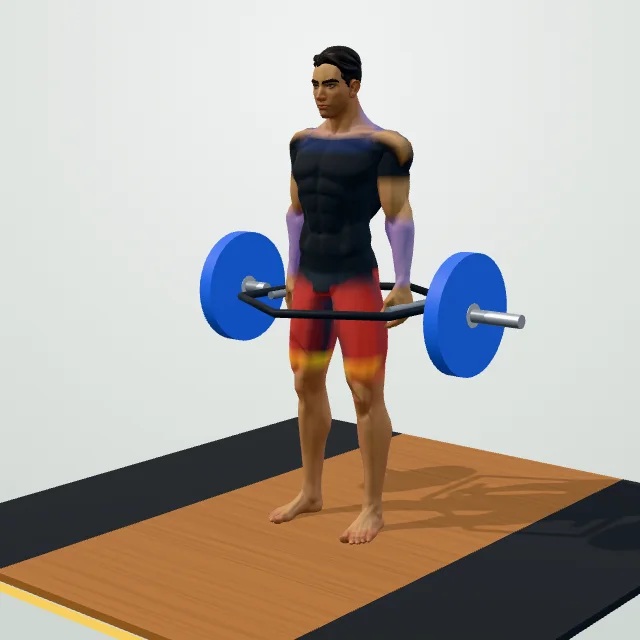
Stand with a dumbbell in each hand, arms straight at your sides, feet about hip-width apart. Let your shoulders relax fully down at the start of every rep — this is where the extra range over a barbell shrug comes from. Lift your shoulders straight up toward your ears, not in a circular rolling motion, and pause for a moment at the top where the traps feel fully contracted. Lower back down slowly, actually letting your shoulders drop below their normal resting position before the next rep, rather than bouncing reps off a half-relaxed position.
Keep your arms straight and your elbows soft but not bent, and resist the urge to swing the dumbbells or use your legs to help heave the weight up — this is a small, controlled range of motion done with the upper traps alone, not a whole-body lift. Your neck should stay neutral throughout; tilting your head back does not add useful range and can strain the neck.
Dumbbell shrug vs barbell shrug
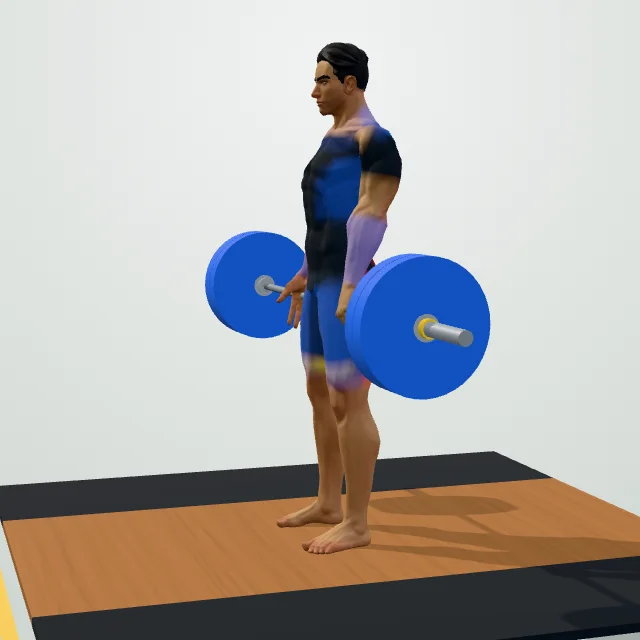
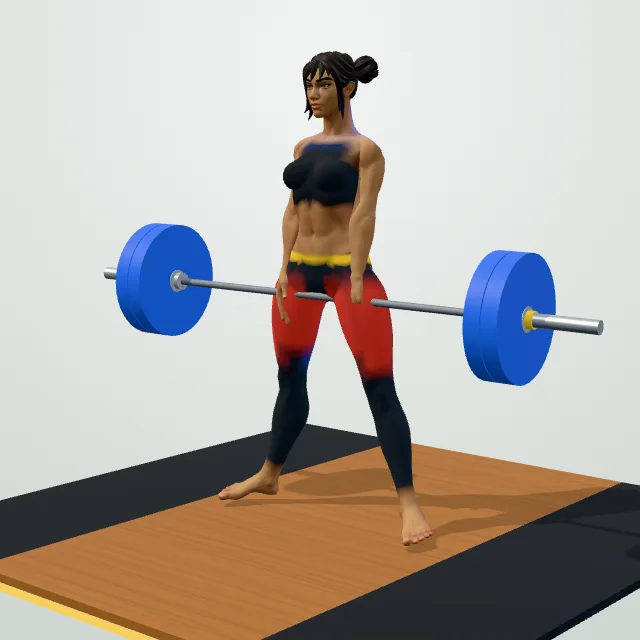
A barbell shrug usually allows more total weight since both hands share the load on one bar, which suits lower-rep, heavier work. The dumbbell version trades some maximum load for a longer, more natural range of motion and independent side-to-side control, which suits higher-rep sets and can help correct imbalances. Many lifters use one for heavy sets and the other for lighter, higher-rep finishing work across a week rather than picking permanently between them. If you train at home with only dumbbells, you are not missing anything essential — the dumbbell version builds the traps just as effectively over time.
How to program dumbbell shrugs
3 sets of 12–15 reps, resting 60–90 seconds, works well for most goals, since the traps generally respond well to moderate load and higher volume. Choose a weight where the last few reps are genuinely hard to control without your grip giving out first or your form breaking down into a shoulder roll, and add load gradually over time following the same idea as progressive overload. It fits naturally near the end of a back, shoulder, or pull-focused session, after compound lifts like rows or carries such as farmer's walks.
Safety
Avoid rolling the shoulders in a circle and avoid tilting your head back — both add strain to the neck without adding useful muscle work. If you have ongoing neck pain, keep the weight light and check with a physiotherapist before loading this movement heavily, since shrugs place direct, repeated tension through the same area. A general warm-up of a few light-weight reps before your working sets is a simple way to prepare the traps and surrounding muscles for heavier loads later in the exercise.
Questions people ask
What muscles do dumbbell shrugs work?
Dumbbell shrugs vs barbell shrugs: which is better?
How heavy should dumbbell shrugs be?
Are dumbbell shrugs bad for your neck?
Can I do dumbbell shrugs with just one dumbbell?
How often should I train dumbbell shrugs?
General fitness information, not medical advice. Check with a doctor or physiotherapist before starting if you have a health condition, an injury or are pregnant. Stop if you feel chest pain, dizziness or sharp pain.