Glutes · Home or gym
Clamshell exercise: small movement, real hip strength
The clamshell exercise has you lie on your side and open your top knee like a shell, a small range of motion that isolates the outer hip better than most bigger exercises.
- Primary
- Outer hips
- Secondary
- Glutes
- Level
- Beginner
- Type
- Isolation · One side, then the other
- Sets × reps
- 3 × 15 reps per side
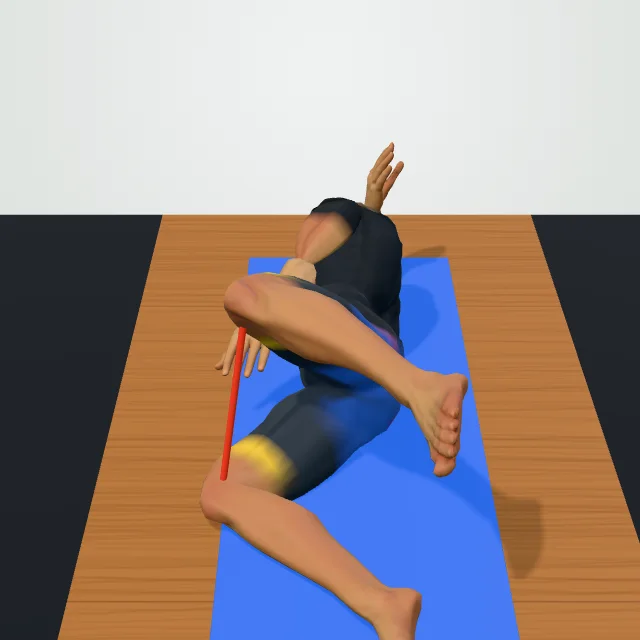
How to do it
- Lie on your side, knees bent to about 45 degrees, feet together.
- Stack your hips directly on top of each other.
- Keep your feet touching throughout the movement.
- Lift your top knee without rolling your top hip backward.
- Pause briefly at the top of the range.
- Lower with control and repeat for the set, then switch sides.
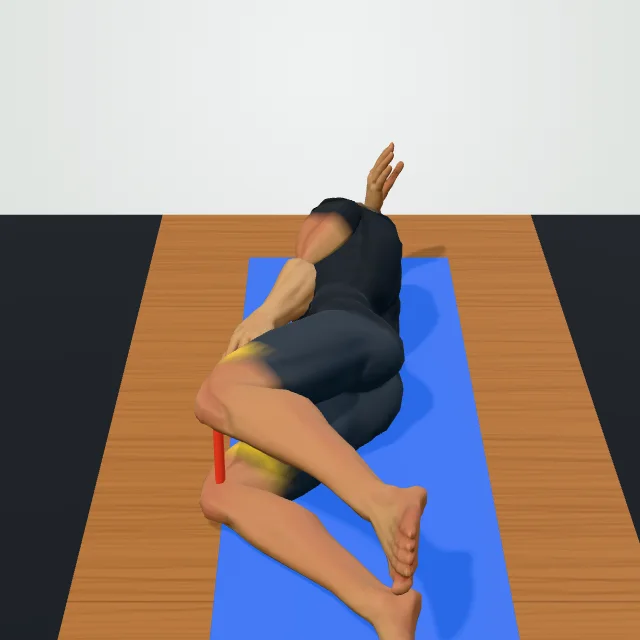
Coach cues
- Hips stacked, feet together.
- Lift the knee, not the hip.
- Stop before your hip rolls back.
- Lower slowly, stay controlled.
Breathing: Breathe out as you lift your top knee, breathe in as you lower it back down.
Common mistakes
Make it easier / Make it harder
Sets and reps by goal
| Goal | sets | reps | Rest |
|---|---|---|---|
| Strength | 3–5 | 6–8 | 90–120 s |
| Muscle growth | 3–4 | 10–15 | 60–90 s |
| Endurance | 2–3 | 15–20 | 30–60 s |
The clamshell exercise is done lying on your side with your knees bent and stacked, feet together, opening your top knee upward like a clamshell while keeping your feet touching. It looks small, but it targets one of the most commonly under-trained hip muscles.
Muscles worked and why the range is so short
The outer hip muscles (abductors and rotators, mainly glute medius) drive the movement, with the glute max assisting. The clamshell's short range is deliberate: this muscle group is small and easy for bigger muscles like the hip flexors or lower back to take over from if the range gets too large or the rep too fast, so keeping it slow and short is what actually isolates the target muscle.
Benefits
Physiotherapists prescribe clamshells often, since they build outer hip strength with almost no risk of aggravating a sensitive back or knee, which makes them a reliable early exercise in a return-to-training plan. Strengthening this area supports better pelvis control during walking, running, and single-leg standing, and the exercise is gentle enough to use daily as part of a warm-up or a rehab program.
Technique in detail
Lie on your side with your hips stacked, knees bent to about 45 degrees, and feet together in line with your spine. Rest your head on your arm or a cushion, and keep your feet touching throughout the set. Keeping your hips stacked and still — do not let the top hip roll backward — lift your top knee as high as you can without rotating your pelvis, pause briefly, then lower with control. The moment your hip starts rolling back to "cheat" more range is the moment to stop and reset. It can help to place a light hand on your top hip during your first few sessions, so you can feel immediately if it starts to tip backward as you fatigue.
How to program it
3 sets of 15 reps per side works well as a warm-up or accessory exercise, often paired with fire hydrants and lateral band walks in a short hip-activation circuit. Because the range is small and the muscle is easy to fatigue, high reps with strict form beat a few heavy, sloppy ones — this is one exercise where more control matters far more than more weight.
Variations: band and weight progressions
A resistance band looped above the knees adds meaningful resistance without changing the pattern, and is the most common way to progress once bodyweight reps feel too easy. A double clamshell (lifting both the top knee and top foot together, keeping only the bottom leg on the ground) is a more advanced variation that challenges balance and core control as well as the hip. A light dumbbell rested on the top knee is another simple way to add resistance once a band feels too easy.
Clamshell vs. lateral band walk
The clamshell isolates the outer hip in a static, lying position, making it easier to feel the exact muscle working without any balance demand. The lateral band walk trains the same muscles standing and moving, closer to how they actually work during walking or running. Many warm-up routines use both: clamshells to activate the muscle, band walks to reinforce it functionally.
Safety notes
Keep your hips stacked throughout — rolling the top hip backward is the most common way people lose the benefit of this exercise and it usually means the range is too large for current strength. Anyone with hip impingement or recent hip surgery should confirm a safe range with a physiotherapist. Stop if you feel pinching in the hip joint rather than a muscular burn on the outside of your hip.
Why physiotherapists prescribe it so often
The clamshell is one of the most frequently prescribed hip exercises after knee or hip injuries because it strengthens the outer hip in a fully supported, low-load position, with almost no risk of overloading a healing joint. It is also common in return-to-running programs, since weak outer hips are linked with poor knee control on landing. If you are following a physiotherapy plan, follow its specific rep and band guidance rather than the general programming here, since rehab dosing is tailored to your recovery stage.
Workout plans with this exercise
Questions people ask
What muscles does the clamshell exercise work?
How do you do clamshells correctly?
What are clamshell exercises good for?
How do I make clamshells harder?
Why does my hip roll back during clamshells?
How many clamshells should I do?
Can clamshells replace lateral band walks?
General fitness information, not medical advice. Check with a doctor or physiotherapist before starting if you have a health condition, an injury or are pregnant. Stop if you feel chest pain, dizziness or sharp pain.