Glutes · Gym
Barbell hip thrust: how to build serious glute strength
The barbell hip thrust loads your glutes at the exact point in the range where they work hardest: full hip extension. Get the setup right and it out-builds almost every other glute exercise.
- Primary
- Glutes
- Secondary
- HamstringsQuadsOuter hips
- Level
- Intermediate
- Type
- Compound · Both sides together
- Sets × reps
- 4 × 8-12 reps
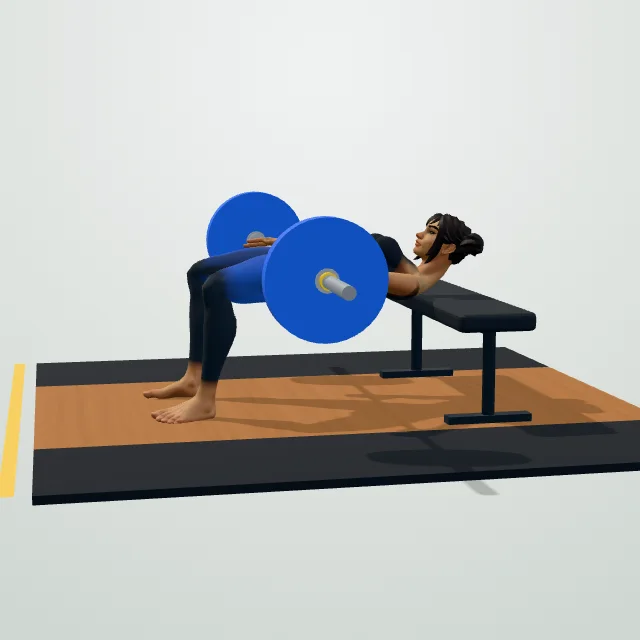
How to do it
- Sit on the floor with your upper back against a padded bench edge.
- Roll a padded barbell over your hips and plant your feet flat, knees bent.
- Brace your core and drive through your feet to lift your hips.
- Squeeze your glutes hard at the top, ribs down, hips fully extended.
- Lower under control until your hips are just short of the floor.
- Repeat for the set without resting your hips on the ground.
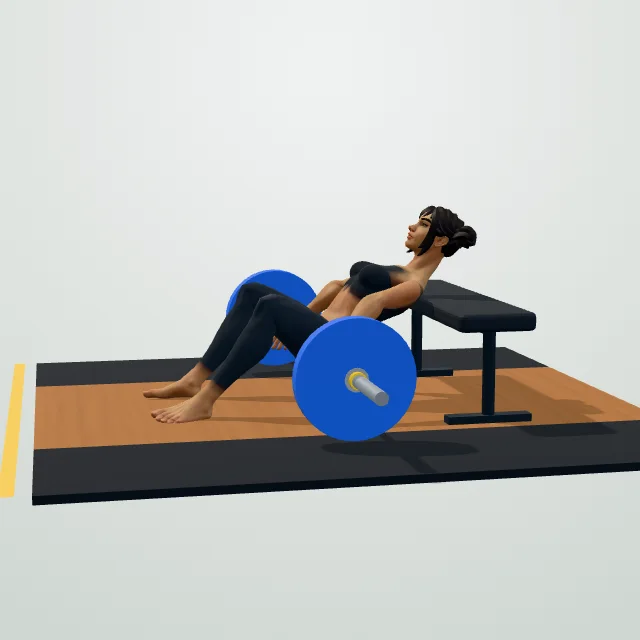
Coach cues
- Chin tucked, ribs stacked over hips.
- Drive through your whole foot.
- Squeeze glutes hard at the top.
- Lower with control, no bouncing.
Breathing: Breathe in as you lower your hips, and breathe out as you drive up and squeeze at the top.
Common mistakes
Make it easier / Make it harder
Sets and reps by goal
| Goal | sets | reps | Rest |
|---|---|---|---|
| Strength | 3–5 | 3–6 | 2–4 min |
| Muscle growth | 3–4 | 6–12 | 90–150 s |
| Endurance | 2–3 | 15–20 | 30–60 s |
The barbell hip thrust puts a loaded bar across your hips while your shoulder blades rest on a bench, so you drive the weight up through a pure hip-extension arc. Few exercises put this much resistance directly at lockout, which is why it has become the standard for building glute size and strength.
Muscles worked and why the position matters
The glutes are the prime mover, with the hamstrings, quads, and outer hips (abductors) assisting to stabilize the hips and knees. Because your torso is supported by the bench, your lower back barely has to work to hold you up — unlike a squat or deadlift, where the spine also has to stabilize the load. That lets you push the glutes hard without your lower back becoming the limiting factor.
Benefits
The hip thrust is one of the most direct ways to add glute strength and size, which supports faster sprinting, harder jumping, and a more stable pelvis for squats and deadlifts. It is also one of the few heavy compound lifts that is comfortable for people with lower-back sensitivity, since the bench removes most of the spinal loading found in standing lifts.
Technique: setup matters more than the rep
Sit on the floor with your upper back against the edge of a bench, roll the barbell over your hips, and pad it with a barbell pad or a folded towel — this single detail is what most beginners get wrong, and an unpadded bar makes people quit the exercise before they build any strength. Plant your feet flat, roughly under your knees, so your shins are close to vertical at the top of the rep. Drive through your whole foot, squeezing your glutes hard to finish with your hips fully extended and your ribs stacked over your pelvis — do not overarch your lower back to gain extra height. Lower under control until your hips are just short of the floor, then drive back up.
How to program it
For most lifters, 3–4 sets of 8–12 reps works well for building glute size, leaving 1–3 reps in reserve (an RPE of 7–9). Strength-focused lifters can work in the 4–6 rep range with heavier loads and longer rests of 2–3 minutes; for higher-rep, muscle-endurance work, 15–20 reps with a hard top-end squeeze is common. Train it once or twice a week, either as your main glute lift or after squats or deadlifts, and add weight in small 5–10% jumps once every set feels controlled. See our guide to progressive overload for how to plan that increase.
Variations: b-stance and single-leg
The b-stance hip thrust shifts most of the load onto one leg while the other foot stays lightly planted for balance — a good bridge between the two-leg lift and a true single-leg version. For a true unilateral option with no barbell at all, the single-leg glute bridge trains one hip at a time from the floor, which is useful for correcting a side-to-side strength difference.
Hip thrust vs. glute bridge
A glute bridge is performed flat on the floor and is easier to learn, making it a good starting point or a home-gym staple with no bench required. The hip thrust adds a longer range of motion (your hips travel further because your upper back is elevated) and is much easier to load heavily, which is why most lifters graduate to it once they have the glute bridge pattern down.
Safety notes
Pad the bar well — bruising across the hip bones is common and avoidable. Anyone with a hip replacement, recent pelvic surgery, or pregnancy should get guidance from a physiotherapist before loading this pattern heavily. Stop if you feel sharp pain in the hip or lower back rather than the expected glute burn, and keep your ribs down to avoid overextending your spine at the top.
No barbell? Train the same pattern anyway
If you train at home or a bench and barbell pad are not available, a dumbbell hip thrust across the hips or a two-hand kettlebell held on the pelvis loads the same range with less setup. Bodyweight glute bridges with a slow tempo and a 2-second top hold can also build real strength before you ever need external load, which makes the movement accessible whether you train in a full gym or a small home space.
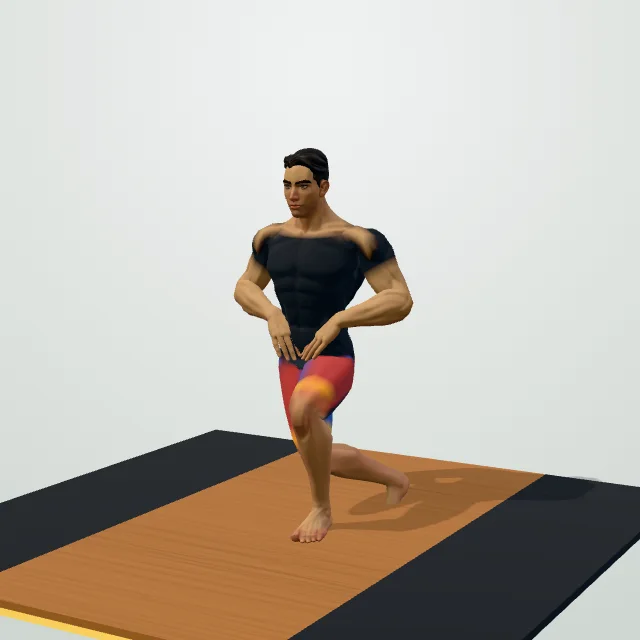
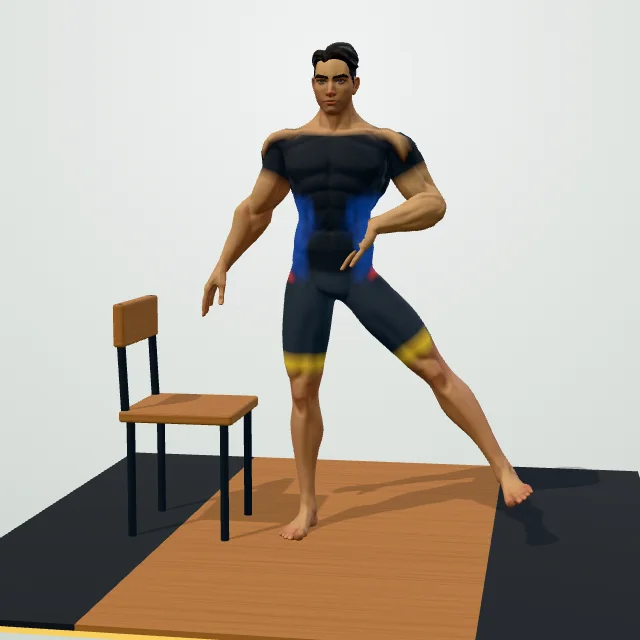
More exercises for glutes
Questions people ask
What muscles do barbell hip thrusts work?
Are barbell hip thrusts a compound movement?
What is a b-stance hip thrust?
Hip thrusts vs. glute bridges: which is better?
How much weight should I use for a hip thrust?
Do hip thrusts work the lower back?
What is a good barbell hip thrust alternative?
General fitness information, not medical advice. Check with a doctor or physiotherapist before starting if you have a health condition, an injury or are pregnant. Stop if you feel chest pain, dizziness or sharp pain.