Glutes · Home, no equipment
Donkey kick exercise: quadruped hip extension for glutes
The donkey kick trains hip extension from all fours, no equipment needed. Done correctly it is a straightforward glute exercise; done with a big kick-up, it mostly works your lower back instead.
- Primary
- Glutes
- Secondary
- HamstringsAbs
- Level
- Beginner
- Type
- Isolation · One side, then the other
- Sets × reps
- 3 × 12-15 reps per side
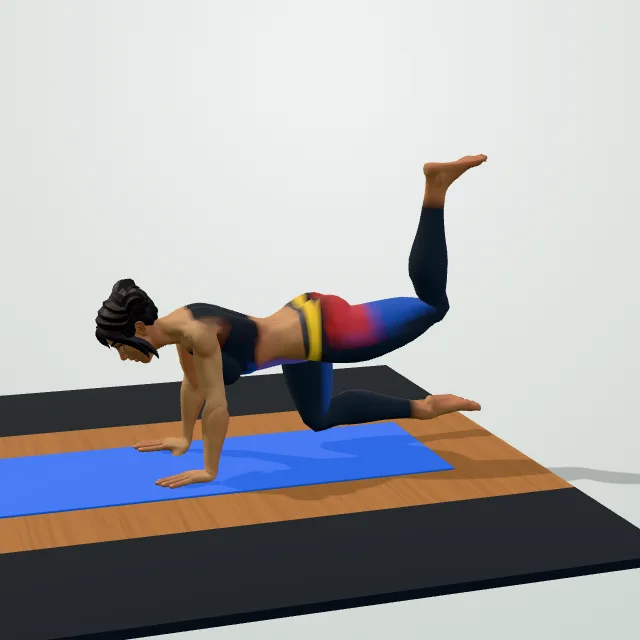
How to do it
- Start on hands and knees, hands under shoulders, knees under hips.
- Brace your core to keep your back flat.
- Drive one foot toward the ceiling, keeping the knee bent.
- Stop once your thigh is roughly in line with your torso.
- Squeeze your glute for a moment at the top.
- Lower with control without letting your knee touch down.
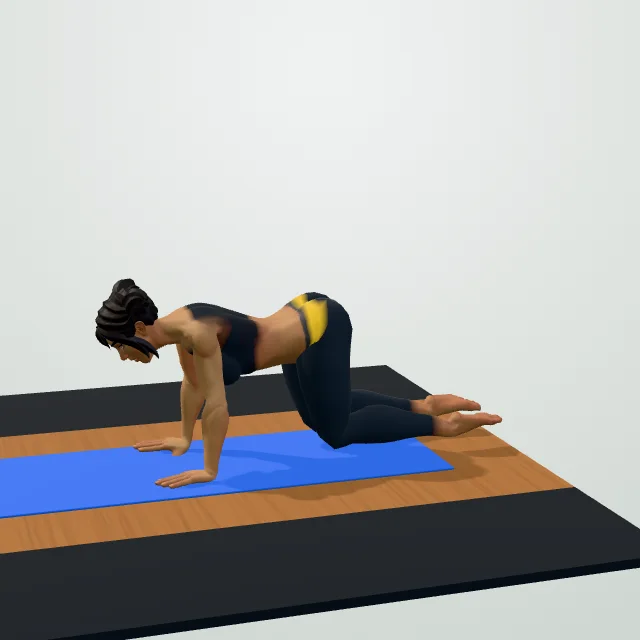
Coach cues
- Flat back, core braced.
- Drive with the hip, not the back.
- Stop level with your torso.
- Squeeze, then lower slowly.
Breathing: Breathe out as you extend your leg back, breathe in as you lower it under control.
Common mistakes
Make it easier / Make it harder
Sets and reps by goal
| Goal | sets | reps | Rest |
|---|---|---|---|
| Strength | 4–5 | 6–8 | 90–120 s |
| Muscle growth | 3–4 | 10–15 | 60–90 s |
| Endurance | 2–3 | 15–25+ | 30–60 s |
The donkey kick (also called quadruped hip extension) is done on your hands and knees, driving one leg up and back so your knee stays bent and your foot moves toward the ceiling. It is a floor-based, no-equipment way to isolate the glutes.
Muscles worked and the difference between a kick and a lift
The glutes extend the hip, with the hamstrings and abs stabilizing your pelvis and spine so the movement stays isolated at the hip. The name is slightly misleading — this is not a kick at all. Real hip extension moves your thigh only a short distance before your lower back has to arch to lift the foot any higher, which is exactly the compensation you want to avoid.
Benefits
The donkey kick needs no equipment and very little space, making it an easy addition to a home glute routine or a superset with squats. Because it isolates the glute without any spinal loading, it is also a low-risk way to add extra glute volume on days when you do not want to load your back further. It is also a useful teaching tool: many people struggle to feel their glutes working in bigger lifts like squats, and the slow, controlled kneeling position makes the sensation much easier to find before you carry it into heavier compound exercises.
Technique in detail
Start on your hands and knees, hands under your shoulders, knees under your hips. Brace your core to keep your back flat — no sagging or rounding — then drive one foot toward the ceiling by extending your hip, keeping your knee bent at roughly a right angle throughout. Stop once your thigh is roughly in line with your torso; going higher almost always means you are arching your lower back rather than working the glute harder. Squeeze at the top, then lower with control back to the start without letting your knee touch down between reps.
How to program it
3 sets of 12–15 reps per side works well as an accessory exercise, either after a compound lift like a squat or as part of a floor-based glute circuit alongside fire hydrants and clamshells. Add a resistance band looped above your knees, or ankle weights, once bodyweight reps feel easy and controlled. Rest 30–45 seconds between sets, since the muscle group is small and recovers quickly compared with a heavy compound lift.
Donkey kick vs. fire hydrant
Both exercises are done on all fours, but the donkey kick drives the leg straight back (hip extension), targeting mainly the glute maximus, while the fire hydrant lifts the leg out to the side (hip abduction), targeting the outer glutes more. Many home routines pair them back to back since they train the same joint from two directions with no rest needed between.
Donkey kick vs. cable kickback
The donkey kick uses only body weight and loses most of its resistance once your leg is roughly parallel with the floor, since gravity is doing most of the work by that point. The cable glute kickback keeps constant tension through the entire range from a standing position, which makes it easier to progressively overload once bodyweight donkey kicks stop being challenging.
Safety notes
The most common issue is lifting the leg too high and arching the lower back to do it — keep the range modest and let the glute, not the spine, do the work. Anyone with knee pain from kneeling should pad the floor with a mat or folded towel. Stop if you feel pain in the lower back or hip joint rather than a muscular burn in the glute.
Building donkey kicks into a home routine
Because it needs only floor space and a mat, the donkey kick fits naturally into any bodyweight workout or a short glute circuit before bed or after a desk-bound day. Slow the tempo down and focus on the squeeze rather than rushing through reps — with such a light exercise, control is what makes it worth doing at all. A few sets before bed also double as gentle hip mobility work on a rest day.
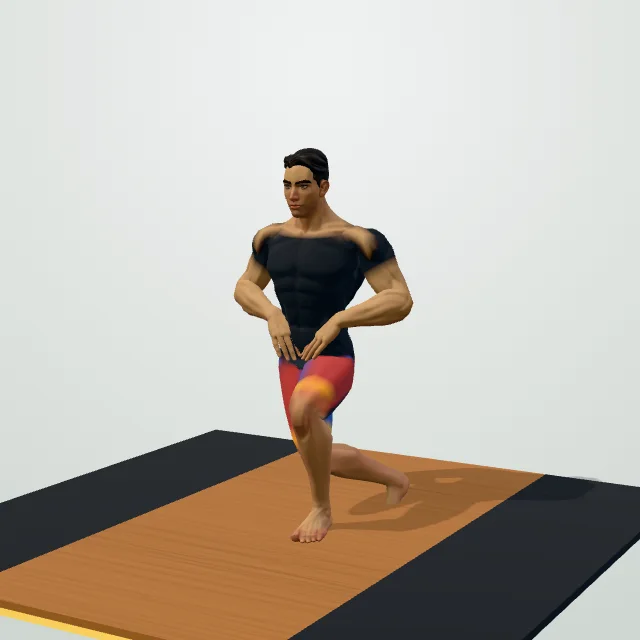
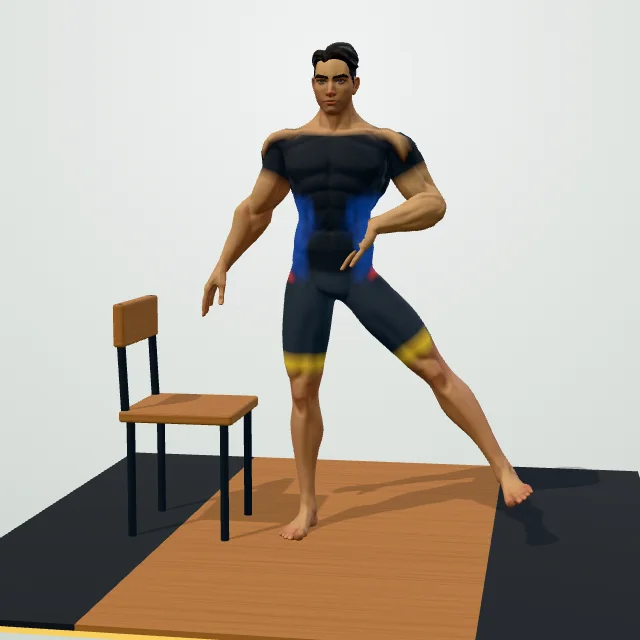
Workout plans with this exercise
Questions people ask
What muscles do donkey kicks work?
How do you do donkey kicks correctly?
Are donkey kicks effective for glutes?
What is the difference between a donkey kick and a fire hydrant?
How do I make donkey kicks harder?
What is a good donkey kick alternative?
Is a donkey kick the same as a glute kickback?
General fitness information, not medical advice. Check with a doctor or physiotherapist before starting if you have a health condition, an injury or are pregnant. Stop if you feel chest pain, dizziness or sharp pain.