Glutes · Home, no equipment
How to do the curtsy lunge with good form
The curtsy lunge steps one leg diagonally behind the other, hitting the glutes and outer hip from an angle a normal lunge misses. Here is the setup, the form cues, and how to program it.
- Secondary
- Outer hipsInner thighs
- Level
- Beginner
- Type
- Compound · Alternate sides
- Sets × reps
- 3 × 10-12 reps per side
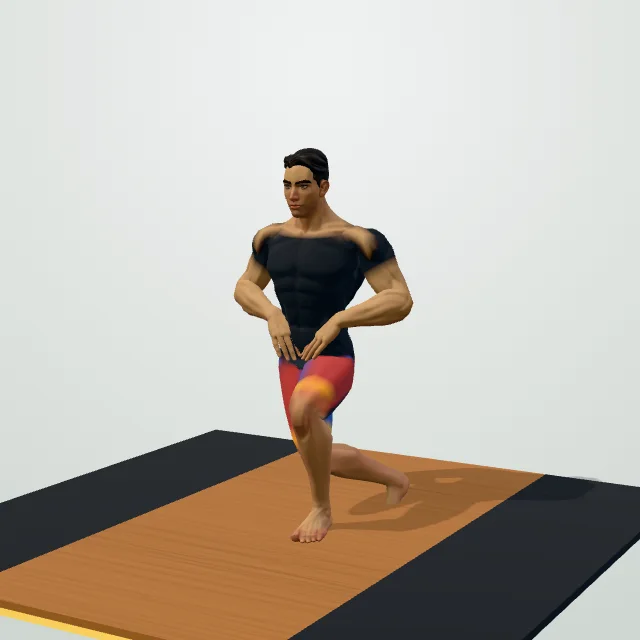
How to do it
- Stand tall, feet hip-width apart, hands on hips or held at your chest.
- Step one leg diagonally back and across behind your standing leg.
- Bend both knees, lowering your back knee toward the floor.
- Keep your front knee stacked over your front foot and your torso upright.
- Push through your front heel to stand back up to the start.
- Complete all reps on one side, or alternate sides each rep.
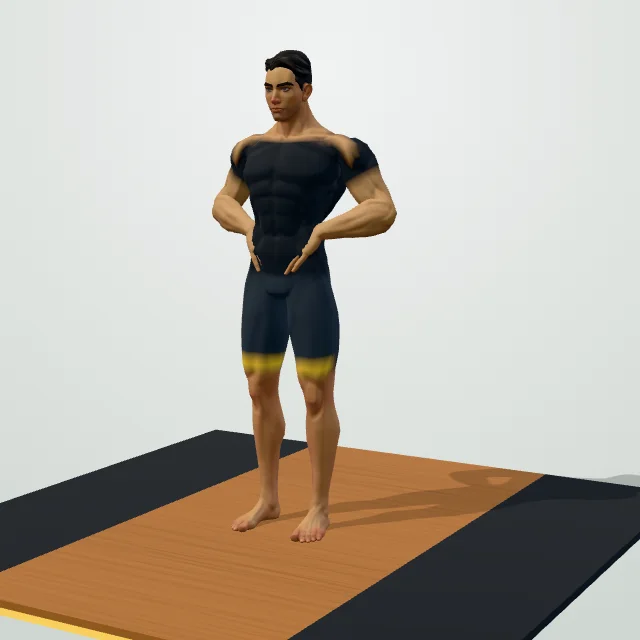
Coach cues
- Step diagonally behind you, not straight back.
- Front knee tracks over your toes.
- Keep your chest tall, weight on the front heel.
- Push the floor away to stand back up.
Breathing: Breathe in as you step back and lower, breathe out as you push through the front heel to stand.
Common mistakes
Make it easier / Make it harder
Sets and reps by goal
| Goal | sets | reps | Rest |
|---|---|---|---|
| Strength | 4–5 | 3–6 | 2–4 min |
| Muscle growth | 3–4 | 6–12 | 90–150 s |
| Endurance | 2–3 | 15–25+ | 30–60 s |
The curtsy lunge is a bodyweight lunge variation where the back leg steps diagonally behind and across the front leg, like a small curtsy, instead of straight back. That crossing step turns a normal front-to-back lunge into a move that also loads the side of the hip, which is why it shows up in most glute and lower-body routines built around home workouts.
What muscles does the curtsy lunge work?
The front leg's glutes and quads do most of the work lowering and lifting your body weight, while the crossing motion recruits the glute medius on the side of the hip (the abductors) to stop your pelvis from dropping. The rear leg's adductors (inner thigh) also switch on to control the cross-behind step. Because the stance is narrower and rotated, curtsy lunges hit the outer glute harder than a forward lunge or split squat, which mostly load the front-to-back plane.
Curtsy lunge benefits
- Glute and hip strength from a new angle. The diagonal step trains the side of the glute that straight-plane lunges and squats undertrain.
- Balance and control. Crossing one leg behind the other challenges single-leg stability more than a standard lunge.
- No equipment needed. It is a bodyweight exercise you can do anywhere, and it scales easily with dumbbells later.
- Useful for daily movement. The crossing step pattern mirrors how you turn, pivot and change direction outside the gym.
Curtsy lunge proper form
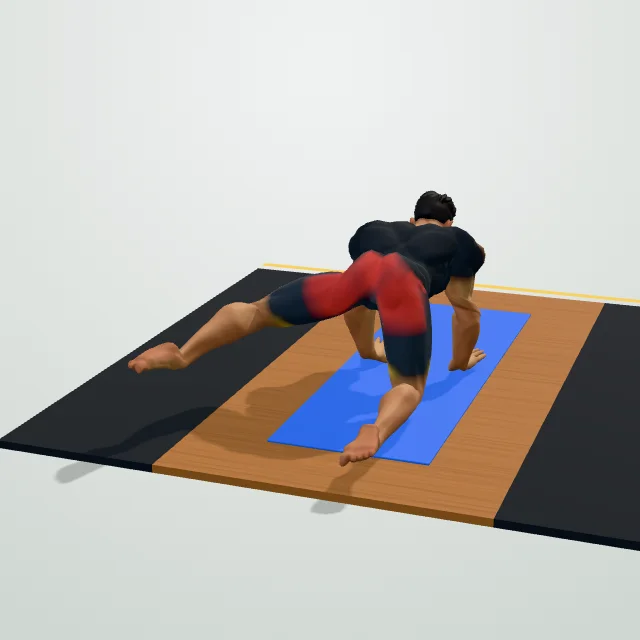
Stand with feet hip-width apart and hands on your hips or in front of your chest for balance. Step one leg diagonally behind and across your standing leg, as if crossing behind it toward the opposite back corner of the room. Bend both knees to lower your back knee toward the floor while your front knee stays stacked over your front foot, not caving inward. Keep your torso upright and your front heel planted — most of your weight should stay on the front leg, with the back leg acting mainly for balance and to add a small extra glute stretch. Push through the front heel to stand back up, and either reset your feet between reps or keep alternating sides continuously.
Depth matters more than speed: lower until your front thigh is close to parallel with the floor, or as deep as you can go without your knee drifting past your toes or your torso leaning forward. Keep your ribs stacked over your hips instead of arching your lower back to reach a deeper cross.
How to program curtsy lunges
| Goal | Sets | Reps (each side) | Rest |
|---|---|---|---|
| Strength / control | 3 | 8-10 | 60-90 sec |
| Muscle / shape | 3-4 | 10-12 | 45-60 sec |
| Endurance / conditioning | 2-3 | 15-20 | 30-45 sec |
Bodyweight curtsy lunges are usually programmed by reps, not load, so aim for a pace where the last 2-3 reps per side feel hard but your knee tracking stays clean (roughly 2-3 reps in reserve). Two to three sessions a week is plenty for a single-leg accessory move; fit it into a glute-focused workout or a home workout plan after your main squat or hinge pattern.
Curtsy lunge variations and progressions
Once bodyweight curtsy lunges with clean form feel easy, add load or complexity rather than just more reps:
- Curtsy lunge with dumbbells: hold a light dumbbell in each hand at your sides, or one goblet-style at your chest.
- Curtsy lunge pulses: add 2-3 small pulses at the bottom of each rep before standing to increase time under tension.
- Deficit curtsy lunges: stand on a low step so the back leg reaches deeper, increasing the stretch and range.
- Curtsy lunge to knee drive, side kick or lateral raise: add a knee drive, a side kick, or a lateral raise as you stand up from the front leg to combine strength with balance and a touch of cardio.
- Curtsy lunge landmine or smith machine: more advanced gym options that let you add heavier load through a fixed bar path once your balance is solid.
Curtsy lunge vs reverse lunge vs side lunge
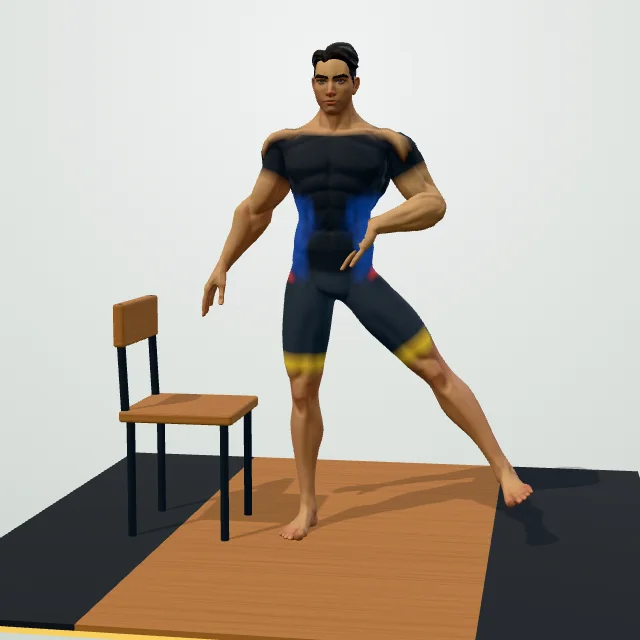
A reverse lunge steps straight back and mainly loads the quads and glutes in the front-to-back plane. A side lunge steps directly out to the side and emphasizes the inner thigh (adductors) of the moving leg. The curtsy lunge sits between the two: the diagonal, crossing step adds outer-hip (abductor) work that neither of the other two lunges trains as directly, which is why coaches often rotate all three through a program rather than picking just one.
Safety and who should modify it
Curtsy lunges load the knee and hip through a rotated, single-leg position, so build up range and control gradually rather than going straight to a deep, weighted version.
If you have knee pain, a history of hip or ACL injury, or balance issues, hold onto a wall or chair for support, or use a shallower range until you feel stable. Stop if you feel sharp joint pain, not just normal muscle effort, and check with a doctor or physiotherapist before adding load if you are recovering from injury or have persistent joint pain.
Workout plans with this exercise
Questions people ask
How do you do a curtsy lunge?
What muscles do curtsy lunges work?
Are curtsy lunges effective?
How many curtsy lunges should I do?
Curtsy lunge vs reverse lunge: what is the difference?
What is a good curtsy lunge alternative for bad knees?
Can you do curtsy lunges with dumbbells?
General fitness information, not medical advice. Check with a doctor or physiotherapist before starting if you have a health condition, an injury or are pregnant. Stop if you feel chest pain, dizziness or sharp pain.