Glutes · Home or gym
Lateral band walk: building hip stability step by step
The lateral band walk loops a band around your legs and has you step sideways in a half-squat, keeping constant tension on the outer hips the whole time.
- Primary
- Outer hipsGlutes
- Secondary
- Quads
- Level
- Beginner
- Type
- Isolation · Alternate sides
- Sets × reps
- 3 × 12 reps per side
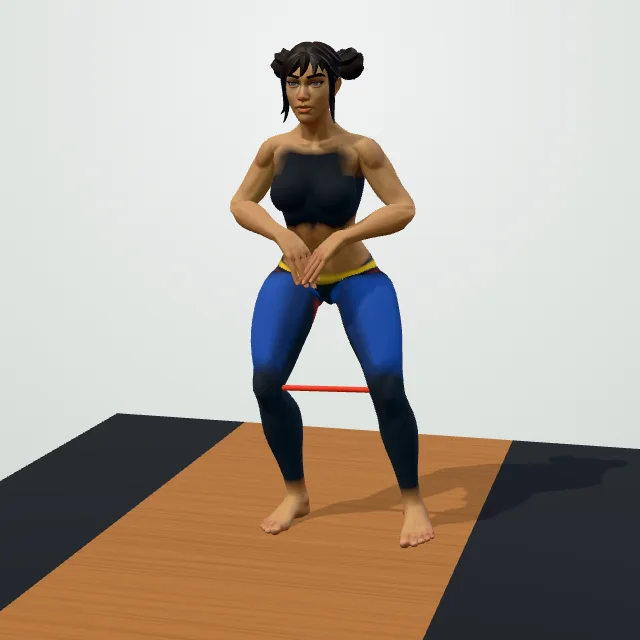
How to do it
- Loop a resistance band around your ankles or above your knees.
- Set your feet hip-width apart and drop into a quarter-squat.
- Keep your chest up and hips back slightly.
- Step sideways with control, keeping tension on the band.
- Bring the trailing foot in just enough to maintain tension.
- Repeat for the set, then switch direction.
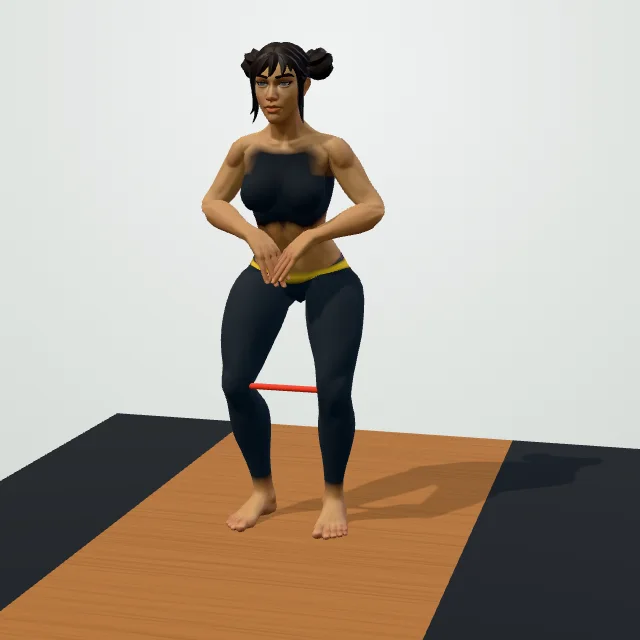
Coach cues
- Quarter-squat, chest up.
- Step sideways, stay low.
- Keep tension on the band always.
- Knees track over your toes.
Breathing: Breathe steadily throughout the set; do not hold your breath while stepping.
Common mistakes
Make it easier / Make it harder
Sets and reps by goal
| Goal | sets | reps | Rest |
|---|---|---|---|
| Strength | 3–5 | 6–8 | 90–120 s |
| Muscle growth | 3–4 | 10–15 | 60–90 s |
| Endurance | 2–3 | 15–20 | 30–60 s |
The lateral band walk (also called the monster walk) has you loop a resistance band around your ankles or above your knees, drop into a quarter-squat, and step sideways while keeping the band under tension the entire time.
Muscles worked and why constant tension matters
The outer hip muscles (abductors and glutes) drive each sideways step, with the quads helping hold the half-squat position throughout. Unlike a rep-based exercise where the muscle rests briefly between reps, the band never goes slack here if you keep good tension, which is why even a light band produces a noticeable, steady burn after a short set.
Benefits
This exercise is a staple in knee-injury prevention and running-rehab programs because strong outer hips help keep your knee tracking correctly when you land on one leg, which matters for anyone whose knees drift inward during squats, lunges, or running strides. It also builds the kind of low-level, sustained hip strength that squats and lunges do not directly train, and it needs only a cheap resistance band, making it one of the most accessible warm-up exercises for gym or home.
Technique in detail
Loop the band around your ankles for more difficulty or just above your knees for an easier version, and set your feet hip-width apart. Bend your knees into a quarter-squat, hips back slightly, chest up, and keep this position throughout the set — standing up between steps lets the band go slack and removes most of the benefit. Step sideways with control, letting the trailing leg follow just enough to keep tension on the band, without letting your feet drift together. Keep your toes pointed forward and your knees tracking over your feet, not caving inward.
How to program it
3 sets of 10–15 steps per direction works well as a warm-up before squats, lunges, or a run, or as part of a knee or hip rehab routine. Keep the band tension light to moderate — the goal is a controlled, steady burn in the outer hips, not a heavy grinding effort, and going too heavy usually causes the knees to cave inward, the opposite of what the exercise is meant to fix.
Variations: band placement and tempo
Moving the band from above the knees to around the ankles increases the resistance arm and makes the exercise noticeably harder for the same band strength. A slower tempo, holding each step for a second before the next, increases time under tension without needing a heavier band. Walking forward and backward in a small square, rather than only sideways, adds variety once basic lateral steps feel easy. A heavier band naturally increases the challenge too, but only once you can complete a full set without your knees drifting inward on a lighter one.
Lateral band walk vs. clamshell
Both train the outer hip, but the lateral band walk is a standing, dynamic exercise that also challenges balance and coordination, while the clamshell is done lying down in a more isolated, static way. Many warm-up routines use the clamshell first to "wake up" the muscle, then the lateral band walk to reinforce the same muscles in a standing, functional position.
Safety notes
Keep your knees tracking over your toes throughout — if they cave inward under band tension, reduce the resistance and focus on control before adding more. Anyone recovering from a hip, knee, or ankle injury should confirm this exercise is appropriate with a physiotherapist first. Stop if you feel sharp joint pain rather than a muscular burn in the outer hip.
Why runners and lifters use it
Runners often add lateral band walks before a run because weak outer hips are commonly linked with knee pain and poor hip control during single-leg landing. Lifters use the same exercise as a squat warm-up: a short set with light band tension can help you feel your hips and glutes working before you load a squat or lunge pattern with a bar. In both cases, treat it as a short primer, not a hard training set — the goal is a light, steady burn, not fatigue that carries into your main session.
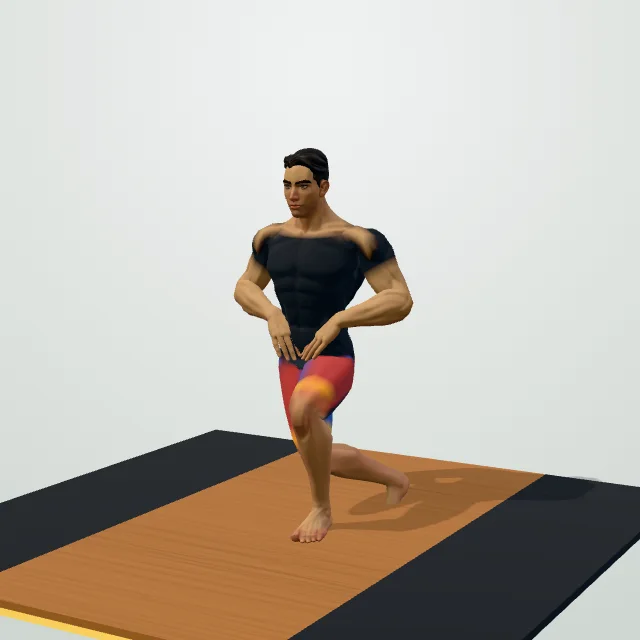
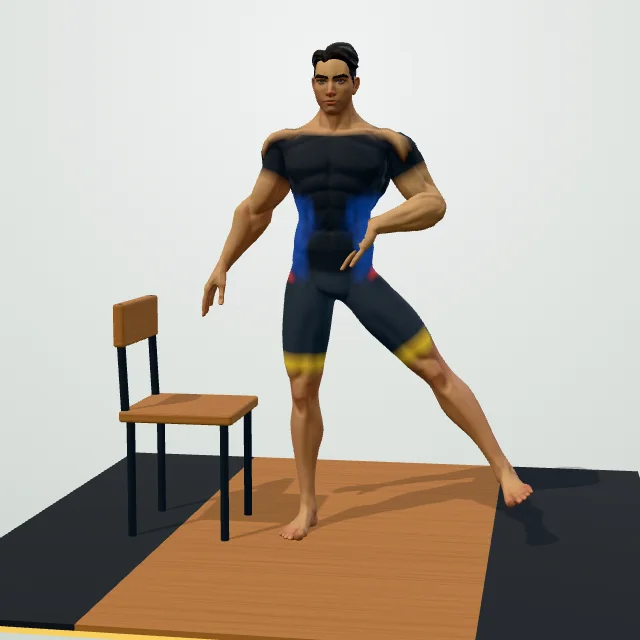
More exercises for glutes
Questions people ask
What muscles does the lateral band walk work?
How do you do a lateral band walk correctly?
What is a monster walk?
Why do my knees cave in during lateral band walks?
Are lateral band walks good for knee pain?
How many lateral band walks should I do?
Should the band go around my ankles or above my knees?
General fitness information, not medical advice. Check with a doctor or physiotherapist before starting if you have a health condition, an injury or are pregnant. Stop if you feel chest pain, dizziness or sharp pain.