Glutes · Home, no equipment
Glute bridge: the simplest way to train your glutes
The glute bridge is a floor-based exercise anyone can start with today: lie down, drive your hips up, and squeeze. It builds real glute strength and doubles as a warm-up before squats or deadlifts.
- Primary
- Glutes
- Secondary
- HamstringsLower backAbs
- Level
- Beginner
- Type
- Compound · Both sides together
- Sets × reps
- 3 × 12-15 reps
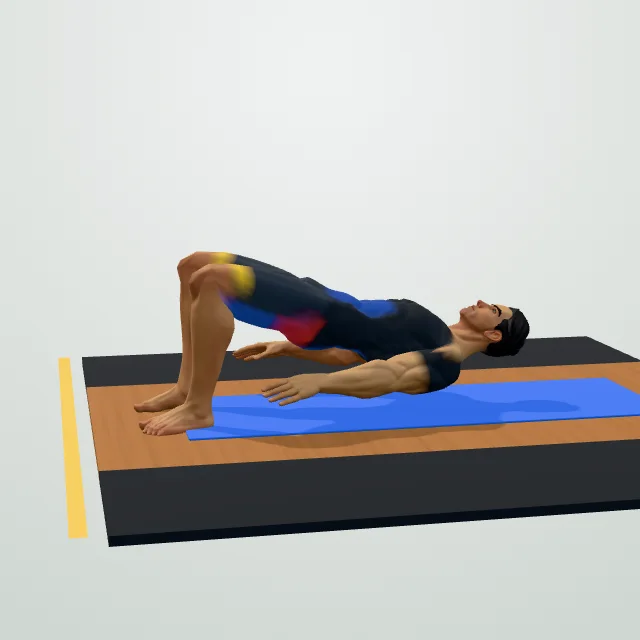
How to do it
- Lie on your back with knees bent, feet flat and hip-width apart.
- Brace your core and press through your heels.
- Drive your hips up until your body forms a straight line from shoulders to knees.
- Squeeze your glutes hard at the top for a moment.
- Lower under control back to the floor.
- Repeat without letting your lower back arch to make up the range.
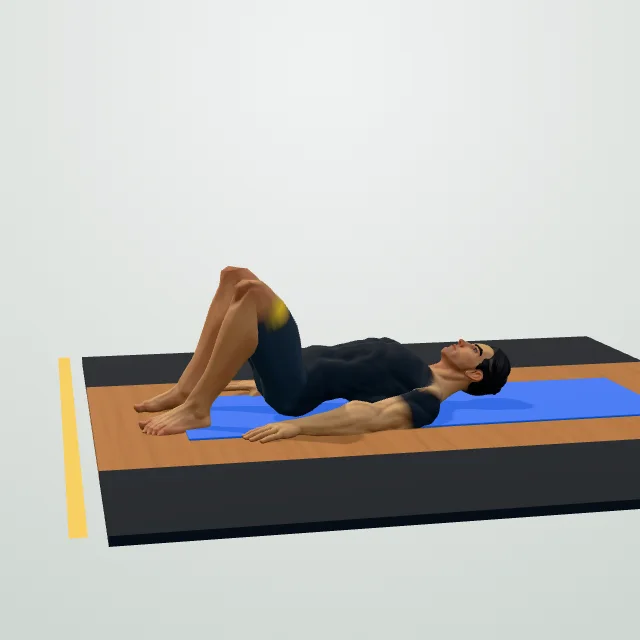
Coach cues
- Feet flat, heels near your fingertips.
- Drive through your heels.
- Squeeze glutes, not your lower back.
- Stop level, hold, then lower.
Breathing: Breathe out as you lift your hips and squeeze, breathe in as you lower back down.
Common mistakes
Make it easier / Make it harder
Sets and reps by goal
| Goal | sets | reps | Rest |
|---|---|---|---|
| Strength | 4–5 | 3–6 | 2–4 min |
| Muscle growth | 3–4 | 6–12 | 90–150 s |
| Endurance | 2–3 | 15–25+ | 30–60 s |
The glute bridge is a floor exercise where you lie on your back, feet flat, and lift your hips until your body forms a straight line from shoulders to knees. It needs no equipment, is gentle on the joints, and is often the very first glute exercise people learn.
Muscles worked and why it feels different lying down
Your glutes drive the hip extension, with your hamstrings, lower back, and abs helping stabilize your spine and pelvis. Because you are supported by the floor rather than standing or holding a bar, the exercise removes balance and loading demands and lets you focus purely on squeezing the right muscle — which is exactly why it is used so often to teach people what a genuine glute contraction feels like before they add load elsewhere.
Benefits
The glute bridge builds hip-extension strength with almost no equipment or space, making it one of the most accessible glute exercises for home training. It also works well as a warm-up: a few sets before squats or deadlifts wake up the glutes so they share the load properly instead of your lower back or hamstrings taking over. Many physiotherapists also use it for people managing lower back discomfort, since it strengthens the hips without compressing the spine — though anyone with an active back or hip injury should check with a professional first.
Technique in detail
Lie on your back with knees bent, feet flat and hip-width apart, heels a few inches from your fingertips when your arms are stretched down. Press through your heels and drive your hips up, squeezing your glutes hard at the top rather than arching your lower back to get there — the movement should stop once your body forms a straight line from shoulders to knees. Hold the squeeze for a second, then lower under control back to the floor. Keep your ribs down and your core braced throughout so the lift comes from your hips, not from your spine.
How to program it
As a standalone exercise for beginners, 3 sets of 12–15 reps with a strong top squeeze works well; add a 1–2 second hold at the top to make each rep count more. As a warm-up before heavier lifting, 1–2 sets of 10–15 reps at bodyweight is enough to activate the glutes without adding fatigue. Once bodyweight reps feel easy, add a dumbbell or a resistance band across your hips, or move up to the barbell hip thrust for heavier loading.
Variations: marches, pulses, and single-leg
Glute bridge marches (lifting one foot at a time at the top while keeping your hips level) add a stability challenge without extra load. Pulses — small up-and-down movements at the top of the range — increase time under tension for a stronger burn. For a real step up in difficulty, the single-leg glute bridge removes one leg from the base entirely, doubling the demand on each hip.
Glute bridge vs. hip thrust
The glute bridge is performed flat on the floor, which limits how far your hips can travel and how much weight you can comfortably load. The barbell hip thrust elevates your upper back on a bench, extending the range and making it much easier to add real weight. Most people start with the glute bridge to learn the movement pattern, then progress to hip thrusts once they want to load it heavily.
Safety notes
The glute bridge is one of the gentler hip exercises, but stop if you feel sharp pain in your lower back or hips rather than a muscular burn in your glutes. Pregnant people and anyone recovering from a hip or back injury should get guidance from a physiotherapist on load and range. Avoid overarching your lower back at the top — the squeeze should come from your glutes, not from bending your spine.
Building it into a home routine
Because it needs nothing but floor space, the glute bridge fits easily into a short morning routine, a rest-day mobility session, or the warm-up of any home workout plan. Pair it with a stretch for the hip flexors afterward, since tight hip flexors can make it harder to fully extend your hips and feel the glutes working.
Workout plans with this exercise
General fitness · Beginner
30-Day Home Workout Plan (No Equipment)
Fat loss · Beginner
4-Week Fat-Loss Workout Plan
Build muscle · Beginner
Glute Workout Plan (Gym and Home)
Strength · Beginner
Calisthenics Workout for Beginners
General fitness · Beginner
10-Minute Morning Workout
More exercises for glutes
Questions people ask
How do you do a glute bridge correctly?
What muscles does the glute bridge work?
Is the glute bridge the same as a hip thrust?
Can beginners do glute bridges?
How many glute bridges should I do a day?
Are glute bridges good for lower back pain?
What is a good glute bridge progression?
General fitness information, not medical advice. Check with a doctor or physiotherapist before starting if you have a health condition, an injury or are pregnant. Stop if you feel chest pain, dizziness or sharp pain.